An iced green tea and yerba mate tasting worksheet
A controlled preparation and sensory worksheet for tasting iced green tea beside one documented yerba mate cube batch without guessing at caffeine or naming a winner.
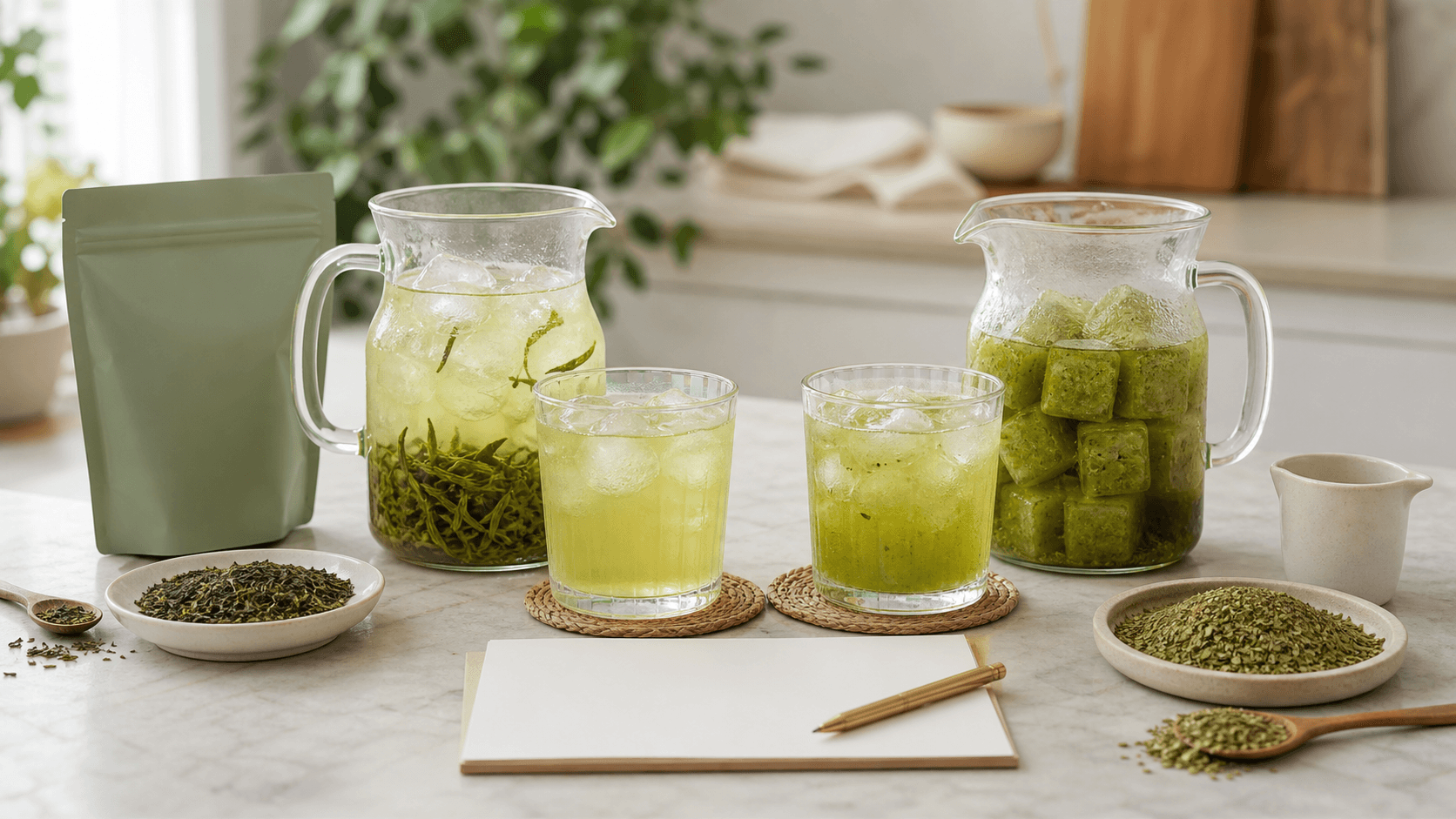
Iced green tea and yerba mate can share a tasting table without turning the exercise into a contest. The useful question is not “Which drink wins?” It is: what did you prepare, what did you observe, and which glass would you make again?
This worksheet compares one green tea made according to its package directions with one identified batch of frozen yerba mate cubes. It does not estimate caffeine from color, bitterness, leaf type, or cube count.
Start with two documented preparations
Use the directions on the exact green tea package in front of you. Record the amount of tea, water temperature, steep time, cooling method, and finished volume. If the package offers several methods, choose one and write it down.
For the mate glass, use cubes from one batch. Record the batch name or freeze date, cube count, added water, and finished volume. Do not copy the green tea directions onto the mate preparation; these are different plant materials and formats.
| Preparation note | Green tea | Yerba mate cubes |
|---|---|---|
| Product or batch | Exact package | Identified cube batch |
| Tea or cube amount | ||
| Initial water | ||
| Temperature or method | Package direction | Batch preparation note |
| Steep or melt time | ||
| Cooling method | ||
| Finished volume | ||
| Ice added |
Match the finished volume and glassware if you want the side-by-side appearance to be easier to read. That does not make the drinks chemically equivalent. It simply removes two obvious presentation differences.
Why keep the method consistent?
Washington State University held its brewing method consistent when 31 participants tasted eight teas made from *Camellia sinensis* in 2025. The score sheet covered color, aroma, taste strength, bitterness, dryness, aftertaste, descriptive characters, and overall quality.
That WSU tasting was not a yerba mate comparison, and its brewing recipe should not be transferred to your two drinks. Its useful lesson is the tasting structure: document preparation and ask the same sensory questions about every sample.
For this home worksheet, keep these points consistent:
- identical glasses
- the same finished volume
- the same ice amount, or no ice in either glass
- the same rest time before tasting
- the same observation fields
The two preparation recipes can remain different because each should follow its own documented method.
Taste without declaring a category winner
Look at both glasses before tasting. Smell each one, take a small sip, and use plain descriptive words. Water between samples may help reset the tasting.
| Observation | Green tea | Yerba mate cubes |
|---|---|---|
| Color | ||
| Aroma strength | ||
| Aroma words | ||
| Bitterness | ||
| Flavor strength | ||
| Dryness or mouthfeel | ||
| Finish or aftertaste | ||
| Would make again? | ||
| Next preparation change |
“More bitter,” “lighter aroma,” and “longer finish” describe this tasting. “Cleaner energy,” “healthier,” and “better for focus” would be outcome claims that this worksheet cannot support.
If tasting order seems to affect your notes, repeat the exercise another day in the opposite order. A preference is still useful even when it is personal and batch-specific.
What the worksheet cannot tell you about caffeine
Green tea and yerba mate contain caffeine, but this tasting does not measure it. The FDA publishes a typical green-tea value for a stated 12-fluid-ounce drink while also noting that specific products and container sizes vary. That category value is not the amount in the package you prepared unless the manufacturer says so.
A homemade mate batch has its own unknowns, including leaf amount, brewing conditions, batch volume, tray volume, and cube count. Do not use the tasting to:
- assign caffeine milligrams to either glass
- infer caffeine from bitterness, color, aroma, or strength
- copy a broad tea value onto a specific package
- convert cube count into caffeine
- promise a stronger, smoother, or longer-lasting effect
If the green tea package declares caffeine, record its exact serving basis separately from the sensory card. Do not compare it with the mate glass unless the mate batch has a reliable measurement using an aligned serving denominator.
For a broader denominator-first comparison, read yerba mate vs green tea. The yerba mate label-reading guide shows how serving size and servings per container change what a number means.
Make one useful adjustment
Choose one preparation change from your notes rather than changing everything at once.
- If one glass felt too concentrated, test more water next time.
- If aroma was hard to notice, adjust only the preparation variable allowed by that product's directions.
- If ice diluted one glass unevenly, prepare both to the same finished volume before chilling.
- If you preferred one drink, record what you preferred without turning it into a universal ranking.
For more cold preparation context, see the cold yerba mate guide. If you want to test water levels within one mate batch instead of comparing two drinks, use the plain-water mate cube tasting flight.
A finished Yerba Melt cube should eventually make the batch identity, preparation, serving basis, and tested caffeine amount clear. Until that formula exists, the honest home comparison is a preparation record plus a sensory note. Join the waitlist and tell us which label details would make that easiest to understand.