Yerba mate vs green tea: compare the preparation first
Compare yerba mate and green tea by exact brewing methods, study units, finished serving and caffeine disclosure, with a blank drink worksheet.
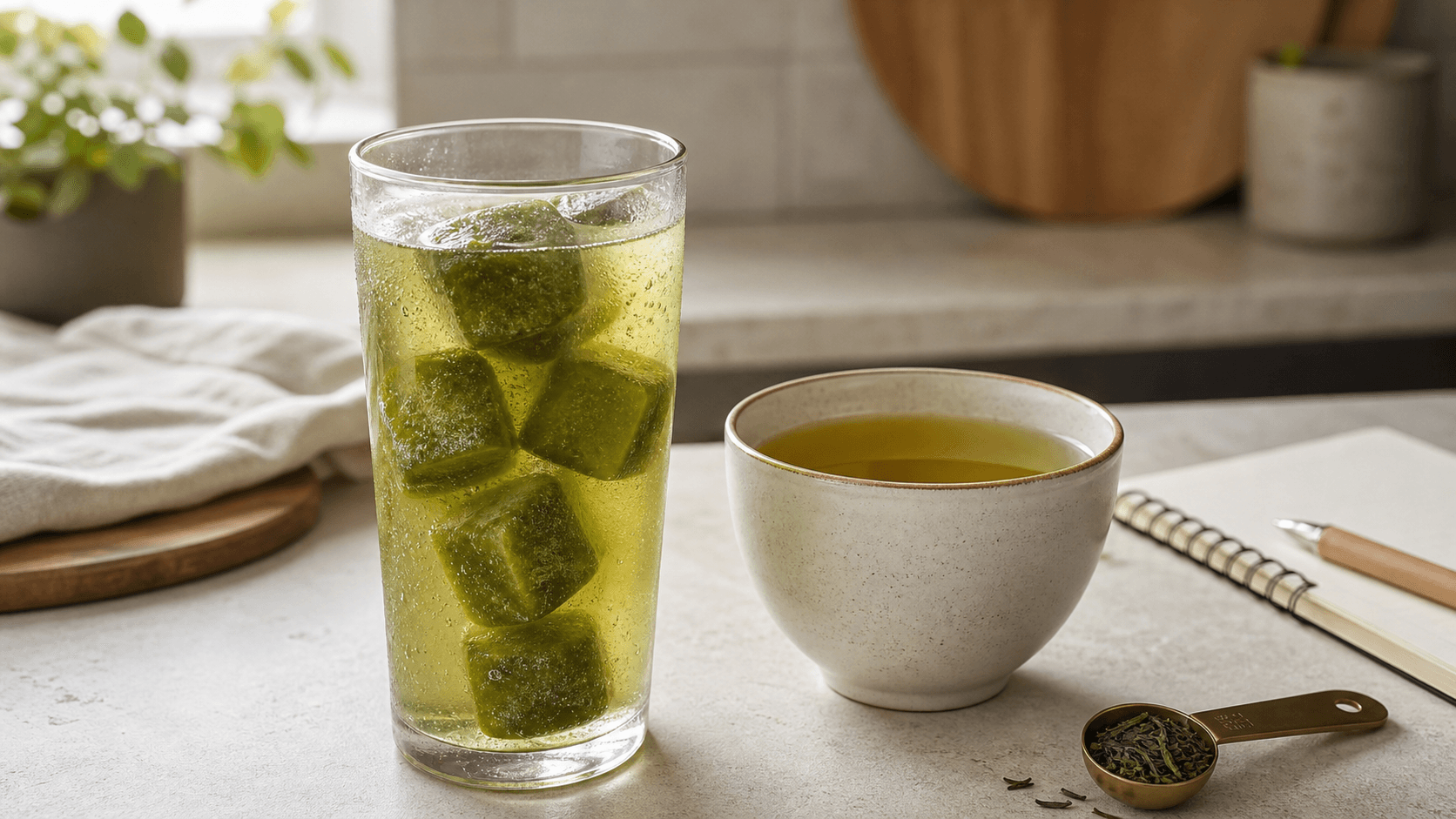
Yerba mate and green tea are both plant-based drinks that naturally contain caffeine. That shared fact does not make every cup directly comparable.
A yerba mate serving might be made with loose leaves and repeated pours, steeped once in a pitcher, sold ready to drink, or prepared from frozen cubes. Green tea might come from a tea bag, loose leaves, a bottle, or another format with its own directions. Water, dry material, time, temperature, repeated infusions, ice, and finished volume can all differ.
So the useful comparison starts with the drinks in front of you, not a category winner.
The short comparison
| Question | Yerba mate | Green tea |
|---|---|---|
| What is prepared? | Leaves and stems from yerba mate are infused in water. | Green tea leaves are infused in water. |
| What can change the cup? | Product, leaf amount, water, method, repeated pours, straining, and dilution. | Product, leaf amount or bag size, water, time, temperature, infusion count, and dilution. |
| What might the label provide? | Serving directions and sometimes a product-specific caffeine statement. | Serving directions and sometimes a product-specific caffeine statement. |
| Where do frozen cubes fit? | Prepared mate can be portioned, frozen, and finished later with a measured liquid. | A brewed cup or packaged drink follows its own preparation or label. |
| Can the category name predict one exact caffeine amount? | No. Use a value tied to the specific product or measured preparation. | No. Use a value tied to the specific product or measured preparation. |
Neither column establishes that one drink is stronger, better, or more suitable for every person.
Keep the caffeine number attached to its denominator
The FDA caffeine guide gives a typical green-tea value for a stated drink size and notes that product amounts and container sizes vary. That reference is context, not a measurement of your tea or mate.
The same caution applies to yerba mate. A laboratory result for dry material, a measured infusion, a ready-to-drink label, and a homemade cube batch describe different things. Do not carry a value from one of them into another format without the information needed to align the serving.
Use this worksheet before comparing caffeine:
| Field | Yerba mate drink | Green tea drink |
|---|---|---|
| Exact product or recipe | ||
| Dry material or packaged serving | ||
| Water used | ||
| Time and temperature | ||
| Infusion count | ||
| Added ice, water, milk, or other liquid | ||
| Finished drink volume | ||
| Caffeine value, if stated | ||
| What amount the value describes | ||
| Source and date checked |
If either caffeine cell is unknown, leave it unknown. Taste, color, leaf spoon count, or cube count cannot fill it in.
What two brewing studies actually prepared
The 2024 yerba mate paper and 2025 tea paper describe separate experiments. The table records their methods; these are laboratory conditions, not serving instructions.
| Method field | Yerba mate study, 2024 | Tea study, 2025 |
|---|---|---|
| Sample scope | Three Paraguayan commercial mate products, bought through a distributor in Poland. | 68 commercial tea products across several tea types; the full set was not all green tea. |
| Dry material and water | 5.0 g with 100 mL distilled water. | 2 g with 200 mL ultrapure water. |
| Brewing conditions | 70 °C or 100 °C; covered for 10 minutes. | 80 °C or 100 °C; 2, 5 or 10 minutes in a sealed brewing container. |
| Infusion sequence | First infusion filtered; the retained material brewed again by the same procedure. | Two separately prepared infusions per condition, averaged; duplicate preparation is distinct from rebrewing spent leaves. |
| Filtration for analysis | Clear filtered infusions used for testing. | Caffeine samples passed through a 0.45 µm filter before HPLC analysis. |
| Caffeine reporting basis | Figure 5 reports mg/g dry matter, abbreviated d.m. | Caffeine results are reported as mg/200 mL infusion. |
Methods and units checked in the original full texts on September 13, 2026: mate sections 3.1 and 2.2.2/Figure 5; tea sections 2.1–2.3.1 and 3.1.
Why those rows do not produce a cup-to-cup ranking
Our interpretation: changing units would not make these experiments a matched comparison. They start with different material-to-water proportions, sample sets and brewing procedures. The mate figure's dry-matter basis also needs to stay visible; it is not already a number per glass.
Do not place the two papers' results under a shared “caffeine per cup” heading. Neither experiment measured a Yerba Melt cube, and neither supplies a caffeine label for a homemade frozen batch. Keep unknown values blank until evidence describes that exact preparation and portion.
For a home comparison, record what you can observe and repeat:
1. Use the exact products you want to compare.
2. Follow each product's preparation directions.
3. Record the dry amount, water, time, and temperature.
4. Record added liquid separately; measure the fully melted finished volume before sipping if you use ice or cubes.
5. Compare taste and workflow separately from caffeine.
6. Compare caffeine only when both values describe clearly stated portions.
This method may produce no numeric winner. That is a valid result.
Compare taste without turning it into a health ranking
Describe the two drinks you actually prepared. The words below are optional prompts for your notes; they are not predicted results or fixed traits of either category:
| Taste note | What to record |
|---|---|
| Aroma | Light, roasted, grassy, earthy, or another description in your own words. |
| Bitterness | Low, noticeable, or strong in this prepared serving. |
| Body | Light, rounded, or more concentrated. |
| Finish | Short, lingering, dry, or another sensory note. |
| Adjustment | More water, less dry material, a different steep, or a smaller serving. |
Do not use taste to infer caffeine. A darker, more bitter, or more concentrated-looking drink does not provide a milligram measurement.
Let routine be a separate decision
The practical differences may be clearer than a broad caffeine comparison.
Green tea can fit a familiar tea-bag or loose-leaf routine. Yerba mate can be prepared with traditional equipment, steeped and strained in a kitchen, served cold, or made ahead in frozen portions. Each format has different equipment, cleanup, and planning.
A frozen mate cube changes the workflow, not the basic evidence standard. The mate is brewed and portioned earlier, then finished with water or another drink base. The final glass still needs a defined cube size, cube count, added liquid, and tested caffeine statement before it can be compared precisely with a labeled green tea.
For a practical side-by-side record, use the green tea and mate iced tasting worksheet. For the frozen workflow, see the make-ahead mate cube guide. The yerba mate label-reading guide explains how to keep serving size and servings per container visible, while the yerba mate vs matcha guide uses the same measurement-first approach for a powdered tea format.
What a clear Yerba Melt label should make easy
A future Yerba Melt package should state:
- how many cubes make a serving
- the size or volume of a cube
- servings per package
- ingredients
- tested caffeine per cube and prepared serving
- the liquid amount used for the prepared serving
- straightforward hot and iced directions
- freezer handling instructions
Until the formula is final and tested, the blog should not estimate a per-cube value from loose-leaf research, another product, or a category average.
The useful answer to “yerba mate vs green tea” is therefore specific: compare the exact drinks, keep preparation and serving denominators attached, and leave unknown values blank. If that kind of clear cube label matters to you, join the waitlist and tell us what you would want to compare first.