Make-ahead yerba mate cubes for iced tea
Plan make-ahead yerba mate cubes with measured batch, portion and finished-drink records, plus clear limits on storage and caffeine estimates.
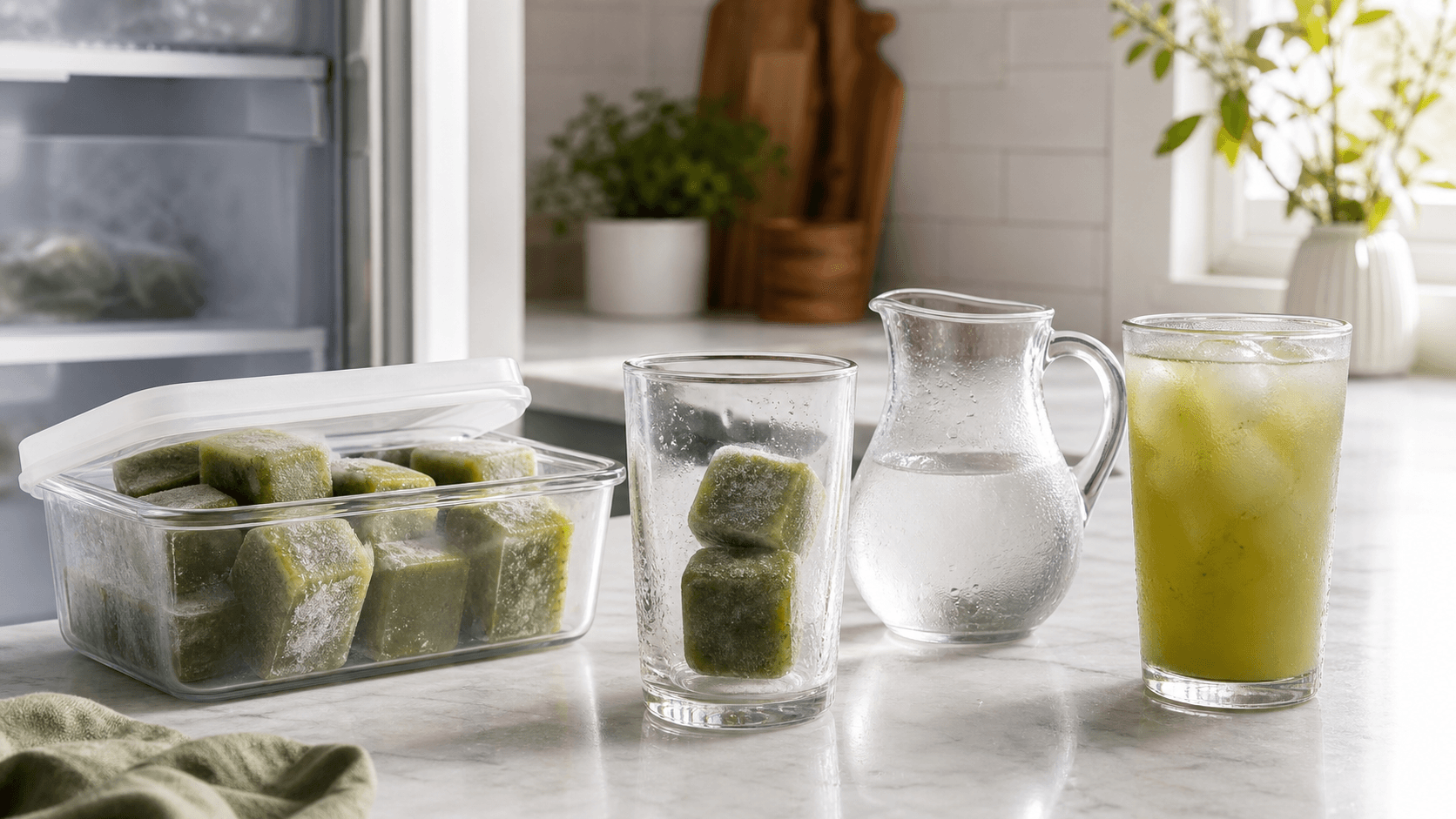
Make-ahead yerba mate cubes move brewing and portioning to an earlier part of the routine. At drink time, the frozen brew still has to melt into the added liquid. That is the practical distinction between a frozen portion and an instant powder.
But “two standard cubes” does not describe a repeatable drink. Trays and fill levels differ. Start with a record of the actual batch and portion, then keep the added water or iced tea separate.
This is a planning worksheet, not a tested recipe. It does not establish a preferred cube count, brewing or cooling schedule, freezer duration, or caffeine amount.
Write down the batch before counting cubes
Keep the product's preparation and handling directions with your notes. If you change ingredients or methods, give that batch a separate entry.
| Batch field | Your record |
|---|---|
| Batch name and preparation date | |
| Exact mate product and other ingredients | |
| Dry mate amount, with unit | |
| Brewing water volume, in mL | |
| Preparation directions followed; actual time and temperature | |
| Straining method and finished batch volume | |
| Cooling and storage instructions followed | |
| Tray identity and measured liquid fill per compartment | |
| Number of portions filled; any leftover brew |
Use a liquid measuring vessel for liquid volume and a suitable scale for mass. NIST's culinary measurement guidance explains that these are different measurements and recommends reading a liquid measure at eye level on a level surface. Write mL or a clearly identified fluid-ounce unit for volume; an ounce of weight is a different quantity.
A tray's advertised capacity is useful equipment information, but it does not tell you how much liquid you actually put in each compartment. Record the fill you measured. Do not label it “standard.”
Keep storage instructions separate from the worksheet
A batch date identifies when you made something; it does not establish an expiry date. Likewise, a measured portion does not validate the way a batch was cooled or stored.
FDA's food-storage guidance recommends prompt refrigeration or freezing for perishables, following label storage directions, and checking appliance temperatures. It specifies a refrigerator at or below 40°F (4°C) and a freezer at 0°F (-18°C).
Those are general appliance and handling guidelines, not a tested cooling schedule or shelf life for homemade mate cubes. This worksheet supplies neither. Do not interpret “make ahead” as permission to leave a brew cooling on the counter indefinitely. Use handling instructions appropriate to the exact ingredients and preparation; the batch record is a place to document them, not a replacement for them.
For organizing the record, see the freezer label guide. The frozen mate format explainer describes the product concept separately from its unresolved specifications.
Record one finished drink
Choose either cold water or an exact prepared iced tea for the record. If you use tea, note its product, preparation and any added ingredients. These are two possible combinations to document, not tested ratios or predicted taste results.
| Serving field | Your record |
|---|---|
| Batch name | |
| Cube count and recorded liquid fill per cube | |
| Added liquid: exact water or tea | |
| Added liquid volume, in mL | |
| Other additions, each with amount and unit | |
| Elapsed time and stirring observations | |
| Fully melted finished volume, before sipping | |
| Taste notes from this glass | |
| One change to record on a later trial |
Measure the finished volume rather than assuming the glass size or starting water amount describes the whole drink. Keep observations in your own words; a blank taste field is better than an invented result.
University of Nevada, Reno Extension's recipe-development guide emphasizes exact measured ingredients and testing for reliable results. The blank rows above apply that recordkeeping principle. They are not evidence that a particular frozen-mate recipe has been tested.
For more detail on portion records, use the mate cube size and dilution worksheet.
Leave caffeine unknown when it has not been measured
Yerba mate contains caffeine. FDA's caffeine overview notes variation among products and individual sensitivity. Added iced tea may bring another caffeine source into the glass.
Cube count, liquid volume and taste notes do not measure caffeine. Do not borrow a milligram value from a canned drink or another brewing method. A future Yerba Melt label needs evidence for its own defined cube and prepared serving.
Decide whether the routine fits
After an actual trial, record the work involved: preparation, portioning, cleanup, freezer space and finishing the drink. Leave time savings blank until you have compared your own routines.
A ready-made cube is a product idea for moving some of that work out of the kitchen. If it would fit your day, join the waitlist and tell us whether clear portions, preparation directions or freezer packaging would matter most to you.
Sources
- https://www.nist.gov/pml/owm/metric-si/metric-kitchen/metric-kitchen-culinary-measurement-tips
- https://extension.unr.edu/publication.aspx?PubID=4643
- https://www.fda.gov/consumers/consumer-updates/are-you-storing-food-safely
- https://www.fda.gov/consumers/consumer-updates/spilling-beans-how-much-caffeine-too-much