Cold yerba mate guide: chilled, blended, and frozen formats
A guide to the difference between chilled brewed mate, cold-infused mate blended with ice, and brewed mate frozen into cubes.
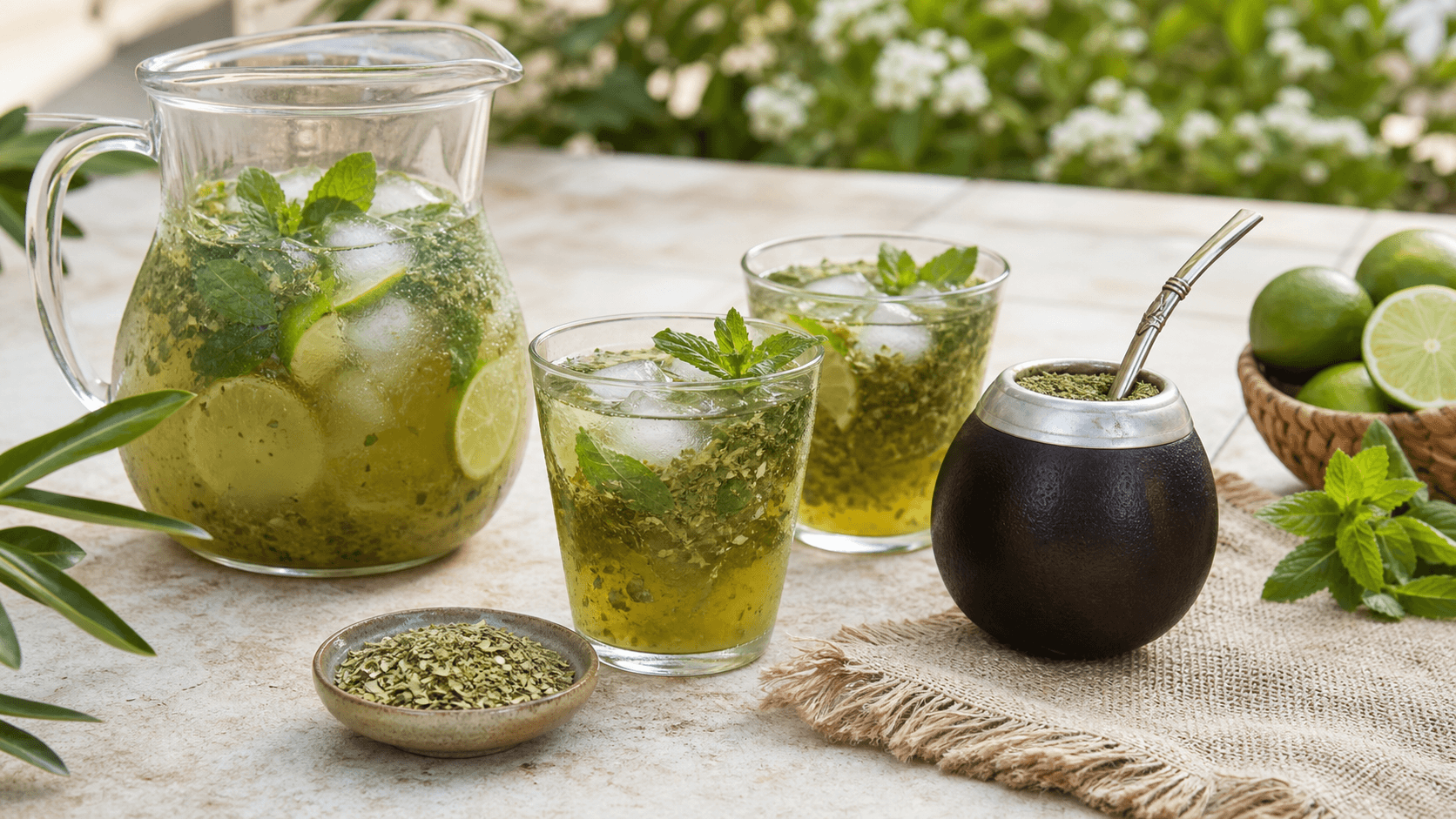
“Cold yerba mate” describes the temperature of a drink, but it does not tell you how the drink was made. The useful first question is whether the mate was brewed hot and chilled, infused in cold water, blended with ice, or brewed ahead and frozen.
Follow the preparation, not the name
The Instituto Nacional de la Yerba Mate (INYM) offers three concrete examples. Its cold mate cocido is prepared with heat, cooled, strained, and served with ice. Its fruit-and-ice drink also starts with a hot infusion before chilling. Its “mate frozen” starts with a cold infusion and uses a blender with fruit and ice to make a granita. In that recipe, “frozen” names the finished blended drink; the brewed mate is not frozen into portions first.
<table>
<thead><tr><th scope="col">Format</th><th scope="col">What happens before serving</th><th scope="col">What the source establishes</th></tr></thead>
<tbody>
<tr><th scope="row">Chilled mate cocido</th><td>Mate is prepared with heat, cooled, strained, then poured over ice.</td><td><a href="https://yerbamateargentina.org.ar/es/mate-cocido.html">INYM method</a>; its quantities belong to that method, not to cube directions.</td></tr>
<tr><th scope="row">Chilled fruit mate</th><td>A hot infusion is cooled before it is served with fruit and ice.</td><td><a href="https://yerbamateargentina.org.ar/es/noticias/tragos/79664-mate-helado-frutal.html">INYM drink example</a>; this is not a cold extraction.</td></tr>
<tr><th scope="row">Blended “mate frozen”</th><td>A cold mate infusion is blended with fruit and ice.</td><td><a href="https://yerbamateargentina.org.ar/es/noticias/recetas-para-el-mate/79139-mate-frozen.html">INYM granita example</a>; its ingredient list has no reproducible quantities.</td></tr>
<tr><th scope="row">Pre-frozen brewed cubes</th><td>Strained brewed mate is frozen in a tray, then finished later with water.</td><td>This is the <a href="/blog/what-is-frozen-yerba-mate/">Yerba Melt format</a>, not a step in the three INYM examples.</td></tr>
</tbody>
</table>
The distinction helps when choosing a routine. If you already have chilled brewed mate, pour it over ice. If you want a slushy drink, the INYM blender example is a different workflow. If you want to keep prepared mate in a freezer, learn how brewed mate cubes are made and add them to water later. These are preparation descriptions, not interchangeable recipe quantities or tested flavor results.
Traditional Paraguayan tereré has its own context and deserves more than a shorthand label for any iced mate drink. This guide does not present a tereré method or call frozen brewed cubes tereré. For a separate vocabulary introduction, see tereré, iced mate, and cold brew; for a practical hot-versus-cold starting point, see how to make yerba mate cold or hot.
What a cold glass does not tell you
The temperature of the finished drink does not reveal its caffeine amount. Yerba mate contains caffeine, while product, preparation, and serving details still matter. The FDA's caffeine overview describes variation among caffeinated drinks; it supplies no Yerba Melt per-cube figure. A cube count or finished glass volume is not a caffeine test.
For a home comparison, keep the brewed batch, cube size, added water, and final drink volume visible in the cube-size and dilution worksheet. That record can explain how you finished a drink, but it cannot establish a caffeine number or preferred ratio. If you want a freezer-ready cold mate option, join the waitlist for updates on Yerba Melt.
Sources
- https://yerbamateargentina.org.ar/es/mate-cocido.html
- https://yerbamateargentina.org.ar/es/noticias/recetas-para-el-mate/79139-mate-frozen.html
- https://yerbamateargentina.org.ar/es/noticias/tragos/79664-mate-helado-frutal.html
- https://www.fda.gov/consumers/consumer-updates/spilling-beans-how-much-caffeine-too-much