Cold brew yerba mate: what to check before you steep
Separate cold extraction from hot-brewed iced mate, check recipe instructions, and record exact ingredients without guessing steep times or caffeine.
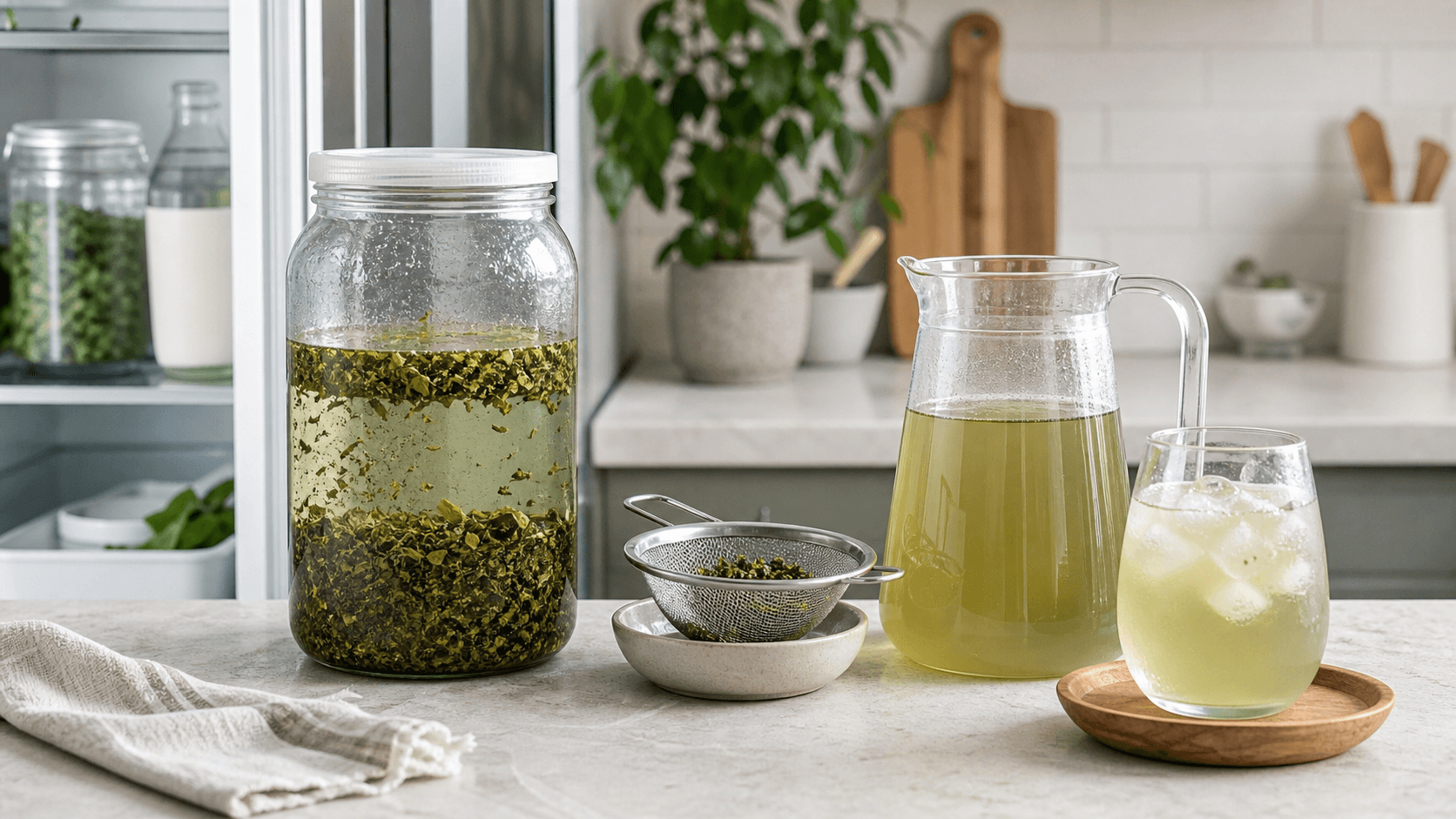
A cold glass of yerba mate does not tell you how it was brewed. The leaves may have met cold water during extraction, or the drink may have been brewed hot and chilled afterward. That distinction matters when choosing instructions for your own batch.
This guide helps you check those instructions. It does not provide a tested cold-brew recipe: we have not established a leaf-to-water ratio, steep duration or storage life for a homemade batch.
Cold extraction and a cold finished drink
Here, cold brew means extraction with cold water. Iced mate describes the finished drink and can include a hot-brewed base. Frozen mate cubes describe a later format: prepared liquid has been frozen into portions.
INYM's English cold mate cocido page describes hot preparation followed by cooling and ice. Its Spanish mate cocido page also heats the mate and water before cooling, straining and adding ice. Those pages support a format distinction; they do not document cold extraction. Neither specifies the water quantity for the cold mate cocido example, so neither supplies a complete ratio to copy here.
| Format | What the name tells you | What still needs instructions |
|---|---|---|
| Cold brew | Cold water is used for extraction. | Exact product, quantities, temperature, duration, filtration and handling. |
| Hot-brewed iced mate | Hot preparation precedes the cold serving. | Brewing, cooling, handling and finished portion. |
| Frozen mate cubes | Prepared liquid is frozen in portions. | Original preparation, cube size, handling and added liquid. |
For the broader format comparison, see our cold yerba mate guide.
Read the recipe before measuring the leaves
Look for directions that name the exact product and intended preparation. If the package gives only hot-brewing instructions, ask the maker whether it has cold-brew directions; do not turn a hot-brew time into an overnight steep by assumption.
A useful set of instructions should identify the amount of mate and water, the temperature and time, how to strain, and how to handle the prepared drink. A general tea recipe or a laboratory extraction method does not, by itself, establish those details for your mate.
The University of Nevada, Reno recipe-development guide emphasizes exact ingredients, measurements and testing for repeatable results. That is a reason to look for complete instructions, not evidence that any particular mate ratio has been tested.
What the sources can answer
Original pages checked September 19, 2026. The two INYM language pages belong to the same source family.
| Source | Useful here | Does not establish |
|---|---|---|
| INYM mate cocido pages | Hot preparation can precede a cold mate serving. | A complete cold-extraction recipe. |
| NIST culinary measurement | How to measure ingredients and read liquid volume. | The right mate-to-water ratio. |
| Nevada recipe development | Why exact ingredients and repeated testing matter. | Results from a Yerba Melt kitchen trial. |
| FDA food storage | General handling guidance and limits of sensory checks. | A mate-specific steep duration or shelf life. |
| FDA caffeine guidance | Product and container variability. | Caffeine in your homemade batch. |
Record the instructions and the actual batch separately
Use this blank record only alongside suitable preparation and handling directions. Empty cells are missing information, not an invitation to invent a time or temperature.
| Field | Instructions and source | Actual batch |
|---|---|---|
| Exact mate product and ingredients | ||
| Dry amount, with unit | ||
| Water amount, with unit | ||
| Preparation temperature and duration | ||
| Container and filtration | ||
| Strained liquid yield | ||
| Handling and storage directions | ||
| Portion poured and added liquid or ice | ||
| Finished volume and when measured |
NIST's measurement guidance recommends an appropriate scale for ingredient mass. For liquid volume, use a liquid measure on a level surface and read the meniscus at eye level. Keep units attached to every entry; a spoon measure is not a measured gram amount.
A batch date records when you made something. It does not establish an expiry date. Likewise, a pleasant taste is a sensory observation, not confirmation of safe handling. FDA storage guidance explains that food can be unsafe without looking, smelling or tasting spoiled. Follow applicable product storage directions rather than using a tasting note to decide safety.
Leave an unknown caffeine amount unknown
The FDA caffeine guide notes that caffeine amounts and container sizes vary by product. A label value needs to stay attached to the product and portion it describes.
Our interpretation: neither this blank worksheet nor the words “cold brew” supply a caffeine measurement. Do not fill that gap with a category average or a value from another drink. The cold mate caffeine guide explains how study methods and measured portions limit comparisons.
Where cubes fit
Freezing a prepared drink is a separate step from brewing it. The mate cube guide introduces that format, but a cube count still needs its batch, size and preparation context. It cannot stand in for a tested serving or caffeine statement.
Yerba Melt remains a waitlist-stage concept. If you want clearer preparation and portion directions on a future cube package, join the waitlist and tell us which details you need first.
Sources
- https://www.nist.gov/pml/owm/metric-si/metric-kitchen/metric-kitchen-culinary-measurement-tips
- https://extension.unr.edu/publication.aspx?PubID=4643
- https://www.fda.gov/consumers/consumer-updates/are-you-storing-food-safely
- https://www.fda.gov/consumers/consumer-updates/spilling-beans-how-much-caffeine-too-much
- https://yerbamateargentina.org.ar/en/iced-cold-mate.html
- https://yerbamateargentina.org.ar/es/mate-cocido.html