Does cold yerba mate have caffeine?
Cold yerba mate can contain caffeine. See what original cold-extraction research tested, why serving size matters, and what remains unknown for frozen cubes.
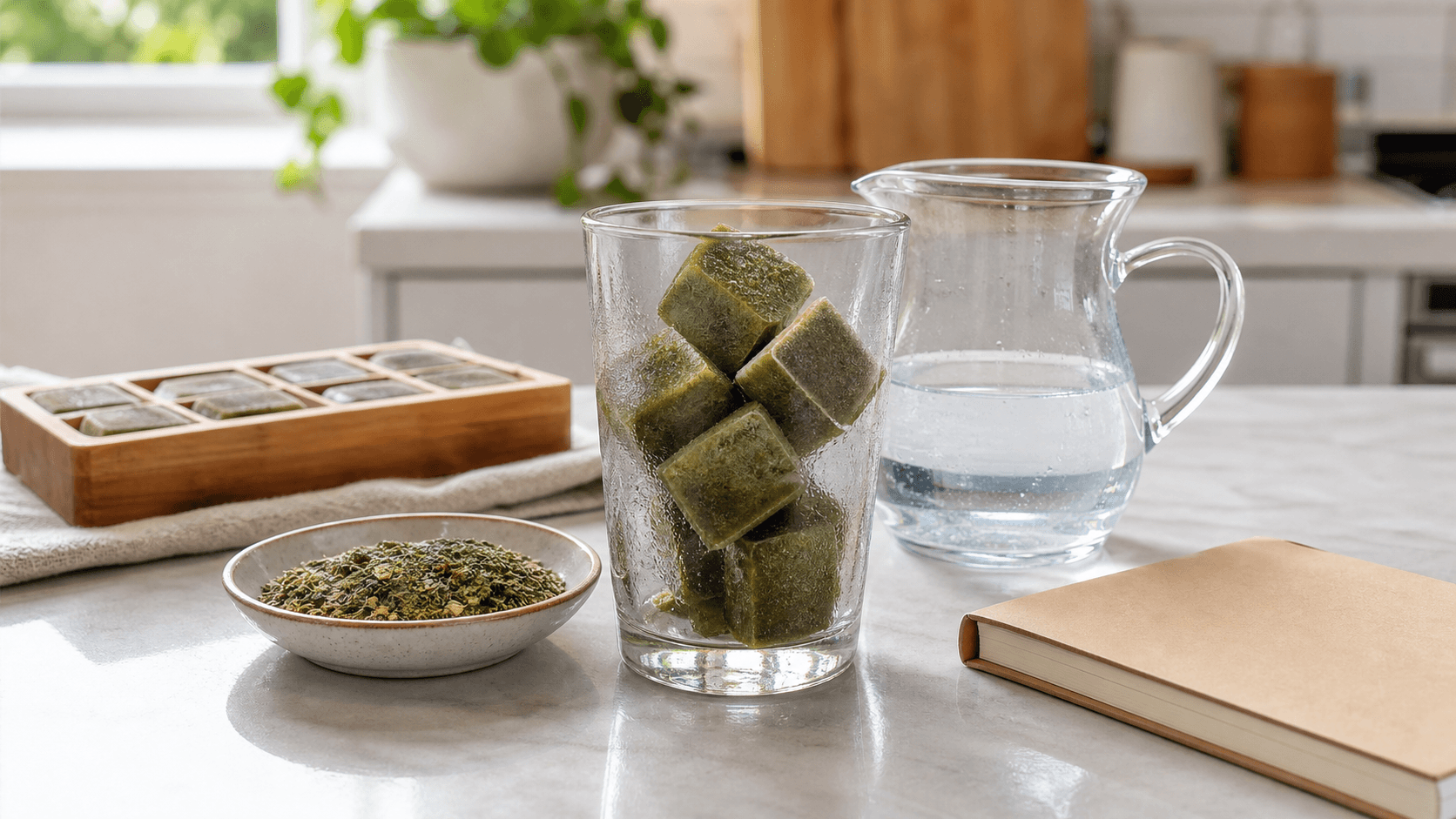
Yes. Cold yerba mate can contain caffeine. Researchers have measured caffeine in cold-water mate infusions; a cold drink is not automatically caffeine-free. But the temperature of your glass does not tell you its caffeine amount.
The useful questions are how the mate was prepared, which product was used, and how much of that preparation is in the serving. A result from one laboratory infusion cannot supply a number for every homemade glass or frozen cube.
Cold extraction and a cold serving are different
“Cold mate” can describe several workflows. Keep the extraction step separate from what happens when you serve it.
| Format | Preparation to identify | Information still needed for a caffeine amount |
|---|---|---|
| Hot-brewed mate served cold | Mate is infused with hot water before chilling or serving over ice. | Evidence for that brew and the portion used in the drink. |
| Cold-water infusion | The material is extracted in cold water. | Exact product, material-to-water ratio, time, temperature and measured result. |
| Frozen brewed cubes | A prepared infusion is portioned and frozen before serving. | Evidence for the final cube formula and a defined prepared serving. |
The cold yerba mate guide explains these format distinctions. None of the names alone is a caffeine label.
What the cold-water experiment actually tested
A 2024 hot- and cold-infusion study compared laboratory preparations. Its methods and sample table matter as much as its results.
| Study detail | What the researchers used |
|---|---|
| Material and water | 1.0 g of sample with 25 mL distilled water. |
| Final comparison | 10 minutes at 3 °C versus 10 minutes at 80 °C, followed by paper filtration. |
| Sample set | 13 products: plain mate, mixtures with added ingredients, and one Ilex guayusa product. Two mixtures listed guarana. |
| Chemical analysis | LC-MS/MS, a laboratory separation and mass-spectrometry method, measured caffeine alongside other compounds. |
| Method selection | Preparation was optimized using laboratory antioxidant measurements, not a target caffeine serving for consumers. |
Methods and sample identities checked in the original full text on September 17, 2026 (sections 2.2–2.3, 3.1–3.2 and Table 2).
The experiment establishes that cold extraction can yield a caffeine-containing infusion. Our interpretation: it does not establish a universal cold-mate caffeine range. Pooling plain mate with guayusa or guarana-containing mixtures would also blur what was actually tested.
The temperatures and times above describe the experiment. They are not a home preparation or storage recommendation. Laboratory antioxidant measurements do not establish a health benefit for a drink.
Why another brewing study cannot fill in your glass
A separate 2024 brewing-conditions study used 5.0 g of mate with 100 mL distilled water, brewed under cover for 10 minutes at 70 °C or 100 °C. The filtered material was brewed again to examine a second infusion.
Its caffeine figure reports milligrams per gram of dry matter. That is a different reporting basis from milligrams in a finished glass. It is also a hot-extraction experiment, not a direct test of a cold-water household recipe.
Our interpretation: neither paper provides a caffeine value for a Yerba Melt cube. They do not test freezing, frozen storage or the final prepared cube drink. Their findings should stay attached to their own samples, procedures and units.
For more on keeping those details together, read brew variables that change a caffeine estimate.
What to record before comparing drinks
A batch note can help describe your preparation. It cannot measure caffeine on its own.
| Field | Record for your actual drink |
|---|---|
| Product | Exact name and ingredients, including any added caffeine-bearing ingredients. |
| Extraction | Dry material mass, water volume, time, temperature and whether leaves were reused. |
| Portion | Amount of brewed liquid used, or cube count together with measured cube size. |
| Additions | Water, ice, milk or other ingredients added at serving. |
| Finished volume | Measured liquid volume; distinguish a level with solid ice from a fully melted drink. |
| Caffeine evidence | A product-specific statement or test result, its units and the portion it describes; otherwise unknown. |
Keep flavor notes separate. Color, bitterness and cube count do not provide a milligram measurement. If the caffeine value is unknown, leave it unknown rather than borrowing a number from a different product or study.
The same approach applies when comparing mate with coffee: identify both servings before comparing their labels.
What a packaged label can tell you
The FDA caffeine overview notes that caffeine amounts and container sizes vary, and many packaged products voluntarily state caffeine quantities. Check what portion a stated amount describes. If the information is missing, ask the manufacturer rather than inferring it from the drink's name.
Yerba Melt is still a waitlist-stage concept. A future package should define cube size, cubes per serving, added liquid and tested caffeine per cube and prepared serving. These studies do not substitute for that product testing.
If clear portion and caffeine information matters to you, join the waitlist and tell us how you would prepare your first glass.