Cold-brew cubes vs hot-brew yerba mate cubes
A controlled home taste test for comparing cold-brew and hot-brew yerba mate cubes without assuming one method has more caffeine or better compounds.
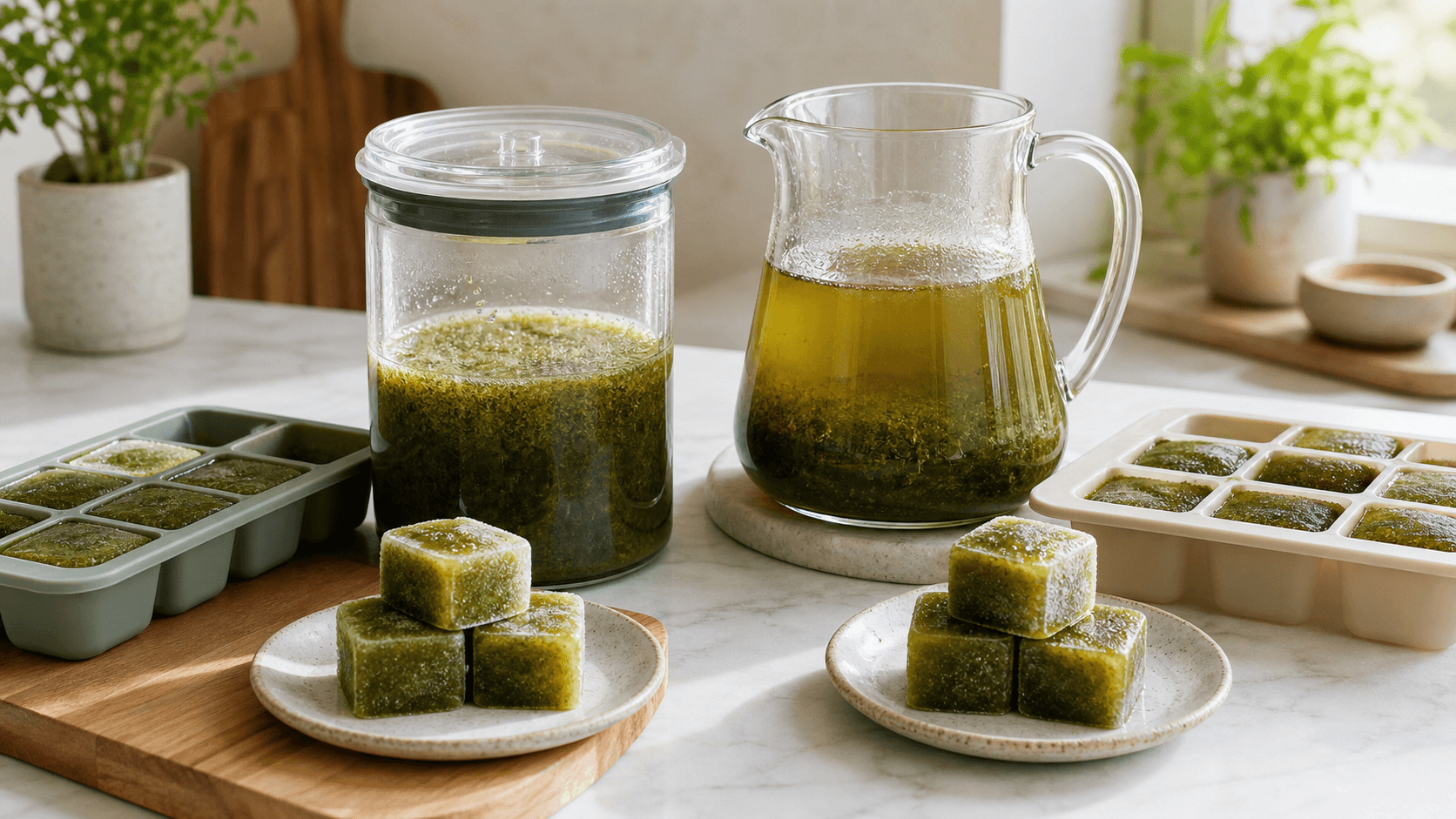
Cold-brew and hot-brew yerba mate cubes start with different preparation methods, but freezing gives them the same next job: turn a prepared batch into portions for a later glass.
The interesting comparison is flavor and workflow. Which batch tastes better after freezing? Which is easier to make consistently? Which cube works with the amount of water you usually add?
This is not a shortcut to a caffeine ranking. Leaf amount, water, time, temperature, stirring, straining, cube size, and dilution can all change the finished drink. Without laboratory testing, the honest result is a home taste note, not a milligram claim.
What changes between the two methods
| Method | Preparation sequence | Practical tradeoff |
|---|---|---|
| Cold-brew batch | Combine mate and cold water, refrigerate, then strain. | More waiting before freezing, with no cooling step. |
| Hot-brew batch | Brew with hot water, strain, then cool before filling the tray. | Faster extraction step, followed by cooling time. |
| Either batch as cubes | Freeze equal portions, cover, label, then finish with the same amount of water. | Moves the slow step earlier and makes the serving test repeatable. |
Temperature is only one variable. If one batch uses twice as much leaf or a much longer steep, the final glasses are not really a cold-versus-hot comparison.
Set up a fair two-batch test
Start small. The goal is not to find a universal winner; it is to learn which method works in your kitchen and your glass.
1. Choose one yerba mate and use the same measured amount for each batch.
2. Use the same total water in both batches.
3. Prepare one batch with cold water in the refrigerator and the other with your usual hot-brew method.
4. Strain both batches the same way. Let the hot-brew batch cool before it goes into the tray.
5. Fill matching tray compartments to the same level.
6. Freeze the trays flat, then move the cubes into separate covered containers.
7. Label the batches `cold brew` and `hot brew` only after setting aside cubes for a blind tasting, if you want one.
For the basic freezer workflow, use the DIY yerba mate cube guide. If you are still choosing a cold method, the cold yerba mate guide separates iced mate, cold brew, and terere context.
Keep the serving test equal
The cube is only part of the drink. Compare both batches in matching glasses so dilution does not decide the result for you.
| Test detail | Keep it the same | Record after tasting |
|---|---|---|
| Cube count | Use the same number and tray size. | Did either batch need another cube? |
| Water | Add the same amount at the same temperature. | Did either glass taste too strong or too light? |
| Melt time | Wait the same number of minutes and stir both. | Did one cube soften or mix faster? |
| Additions | Taste both plain before adding citrus, milk, or sweetener. | Which additions worked with each batch? |
| Tasting order | Alternate the first sip, or taste blind. | Color, aroma, bitterness, body, and finish. |
A difference in color does not prove a difference in caffeine or a better nutrient profile. Record appearance, aroma, and taste as sensory observations only.
Use a simple taste worksheet
You do not need a scoring system that pretends to be scientific. A few plain notes are more useful for the next freezer batch.
| Question | Cold-brew cubes | Hot-brew cubes |
|---|---|---|
| What color is the finished glass? | ||
| How strong is the aroma? | ||
| How bitter or smooth does it taste? | ||
| Does the flavor hold up after dilution? | ||
| How easy was the batch to prepare? | ||
| Would you make it again? |
If neither version tastes right, adjust one variable in the next round. Changing the leaf amount, steep time, cube count, and water all at once makes the result harder to interpret.
Keep freezer claims modest
FDA consumer guidance says a home freezer should be kept at 0 F (-18 C). It also distinguishes safety from quality: flavor, aroma, and color can change during frozen storage even when food remains frozen.
That general guidance does not establish a tested shelf life for homemade mate cubes. Make manageable batches, keep them covered, label the method and date, and discard a batch if storage was uncertain or it develops an unexpected odor or appearance. The freezer label guide has a repeatable batch card.
Do not guess the caffeine difference
Yerba mate naturally contains caffeine, and both batches are caffeinated drinks. A home comparison cannot tell you the caffeine amount from taste, color, or brewing temperature alone.
FDA guidance notes that caffeine amounts vary among products and that individual sensitivity varies. For homemade cubes, record the mate, recipe, cube size, cube count, and finished serving instead of assigning an untested number. The cold mate caffeine guide explains why the whole preparation matters.
A future packaged Yerba Melt cube should use tested caffeine amounts for its final formula. Until then, `cold brew` and `hot brew` describe the method, not a promise about strength or effect.
Choose by routine, not by a universal ranking
Cold brew may fit someone who likes an overnight refrigerator batch. Hot brew may fit someone who wants to prepare, cool, and freeze a batch on the same day. Either can become a useful cube if the recipe is repeatable and the finished glass tastes good.
That is the real product question for Yerba Melt: not which method wins everywhere, but which carefully prepared cube is worth keeping in the freezer.