15 ways to use frozen yerba mate cubes
Fifteen practical ways to finish frozen yerba mate cubes with water, citrus, fruit, herbs, milk, or a warm mug, without turning a serving idea into a wellness claim.
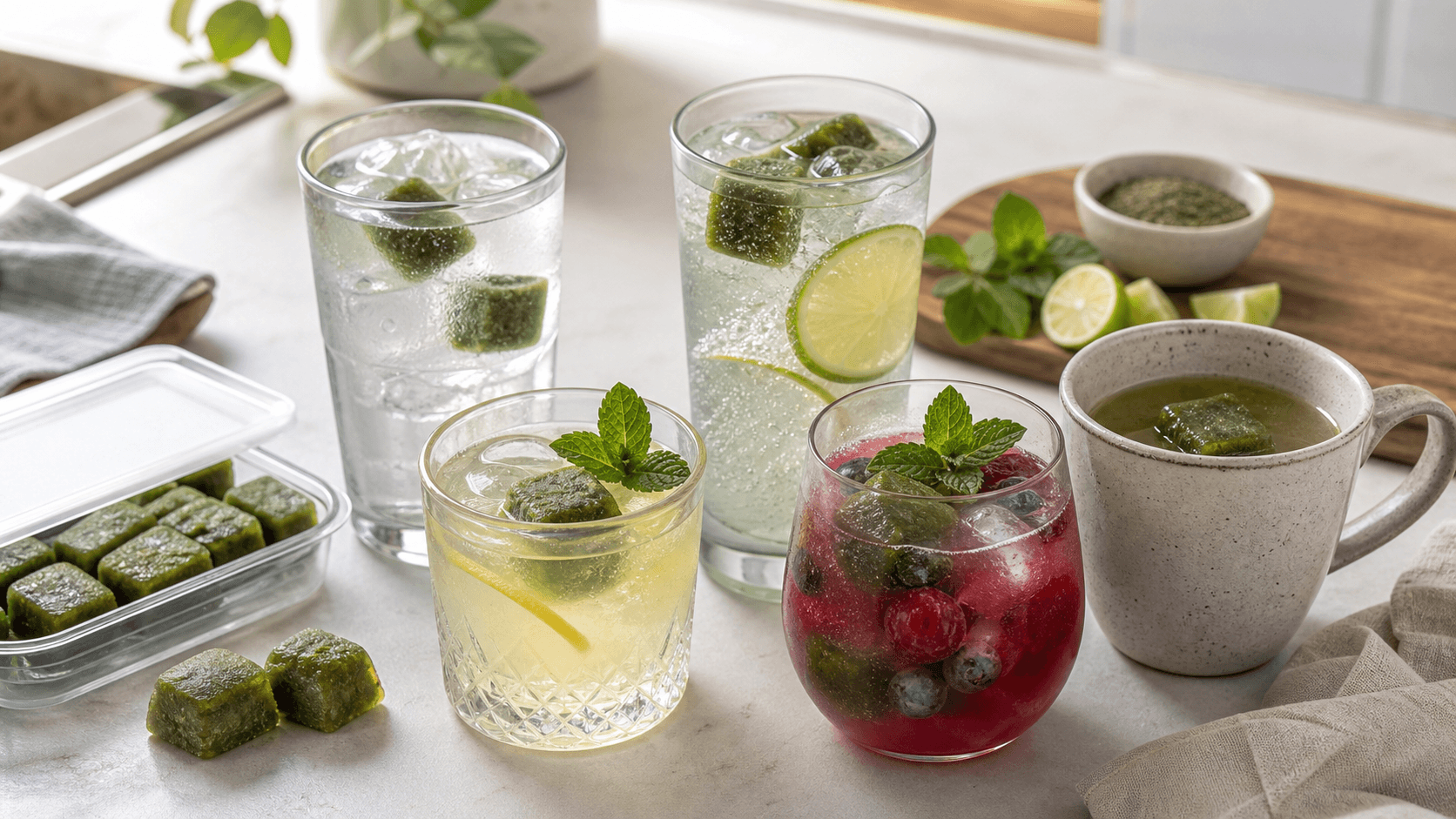
Frozen yerba mate cubes do not need one official serving ritual. Their most useful feature is flexibility: keep the prepared mate in the freezer, then decide what kind of glass or mug you want when you use it.
The ideas below are preparation starting points, not fixed recipes. Homemade cube size and brew strength vary, so begin with a small number of cubes, add liquid, stir as they soften, and adjust by taste. Yerba mate naturally contains caffeine, but a homemade cube count does not reveal a milligram amount.
Start with the simplest three
These versions make it easiest to learn what your frozen batch tastes like.
| Idea | Start with | Adjust after tasting |
|---|---|---|
| 1. Plain iced mate | 2 to 4 cubes plus 6 to 8 ounces cold water | Add another cube for more mate flavor or more water for a lighter glass. |
| 2. Sparkling mate | 2 to 3 cubes plus plain sparkling water | Pour slowly because the cold cubes can make carbonation foam. |
| 3. Warm mate mug | 2 to 3 cubes plus comfortably hot water | Stir until melted, then add water if the brew tastes concentrated. |
For a first batch, plain water is the best baseline. It lets you judge bitterness, dilution, and cube count before citrus, fruit, or milk changes the flavor.
If you are still making the freezer batch, use the DIY yerba mate cube guide. The hot-or-cold preparation guide has more detail on choosing the finished drink temperature.
Add a citrus direction
Citrus gives earthy or bitter mate a brighter edge. Add a little first; a heavily concentrated cube can make an already tart drink feel sharp.
| Idea | Build the glass | Useful note |
|---|---|---|
| 4. Lemon water mate | Cubes, cold water, and a squeeze of lemon | Taste before adding sweetener. |
| 5. Lime and mint fizz | Cubes, sparkling water, lime, and lightly pressed mint | Keep the mint restrained so it does not cover the mate. |
| 6. Mate lemonade | Cubes plus prepared lemonade | Use fewer cubes at first because the lemonade already brings a strong flavor. |
| 7. Orange-citrus cooler | Cubes, cold water, and a small splash of orange juice | Use the juice as a flavor addition rather than the whole drink base. |
The full yerba mate lemonade recipe and sparkling mint lime version offer more repeatable starting ratios.
Use fruit and herbs for flavor
Fruit and herbs belong here for taste, aroma, and color. They do not need a functional story.
| Idea | Build the glass | Useful note |
|---|---|---|
| 8. Berry mate cooler | Cubes, cold water, and lightly crushed berries | Strain the berries if you want a smoother drink. |
| 9. Hibiscus berry glass | Plain cubes plus chilled hibiscus tea and berries | Start with more water if both the mate and hibiscus are strong. |
| 10. Ginger lemon cooler | Cubes, cold water, lemon, and a small amount of fresh ginger | Ginger can take over quickly, so add it gradually. |
| 11. Cucumber mint mate | Cubes, cold water, cucumber slices, and mint | Let the additions sit briefly, then taste before adding more. |
For tested flavor directions, see the berry hibiscus cube recipe and the lemon ginger cooler.
Try a creamier glass
Milk and plant-based drinks change the texture and soften some of mate's sharper edges. They can also separate when combined with strong citrus, so keep these ideas separate from the lemonade group.
| Idea | Build the glass | Useful note |
|---|---|---|
| 12. Iced mate latte | Cubes plus cold milk or an unsweetened plant-based drink | Let the cubes soften, stir, and adjust the ratio by taste. |
| 13. Vanilla mate glass | An iced mate latte with a small amount of vanilla | Vanilla changes aroma quickly; begin with a drop or small splash. |
| 14. Banana mate smoothie | A small number of cubes blended with banana and your preferred liquid | Confirm that your blender is designed to handle frozen cubes. |
These are serving ideas, not meal replacements or nutrition promises. The milk, plant-based drink, and fruit you choose determine the final ingredients and nutrition.
Make a small flavor flight
The fifteenth idea is less about a single drink and more about learning what belongs in the freezer.
Set out three small glasses with the same cube count and water amount:
1. Leave one plain.
2. Add citrus to the second.
3. Add mint, berry, or another single flavor to the third.
Taste them side by side and write down which one you would actually make again. Keeping the cube count and water consistent makes the comparison more useful than changing every ingredient at once.
Keep the freezer routine practical
University of Minnesota Extension guidance describes freezing portions in trays, leaving space for expansion, and moving frozen portions into airtight containers. That is general home-freezing technique, not a tested shelf-life claim for mate cubes.
FDA consumer guidance says a home freezer should be kept at 0 F (-18 C) and notes that frozen-food quality can change over time. For homemade mate cubes:
- cool the brew before filling the tray
- leave a little space for expansion
- freeze the tray flat
- move solid cubes into a covered freezer container
- label the batch with the date, brew style, and cube size
- discard a batch if storage was uncertain or it develops an unexpected appearance or odor
The freezer label guide makes repeat batches easier to compare. The broader frozen yerba mate explainer shows where a ready-made cube could remove the home brewing, cooling, portioning, and cleanup steps.
The best use is the one you repeat
Fifteen options can sound like a lot, but the practical test is small: choose one drink base and one flavor direction. If the glass works, write down the cube count and make it again.
That is what Yerba Melt is trying to learn before launch. Should the first cube stay plain and flexible, or should it arrive with a citrus, mint, or berry direction already built in? Join the waitlist and tell us which version would earn space in your freezer.