Lemon ginger yerba mate cooler: choose your ginger first
Plan a lemon ginger yerba mate cooler with clear ingredient choices: fresh ginger, bottled juice, and syrup need different notes before you mix.
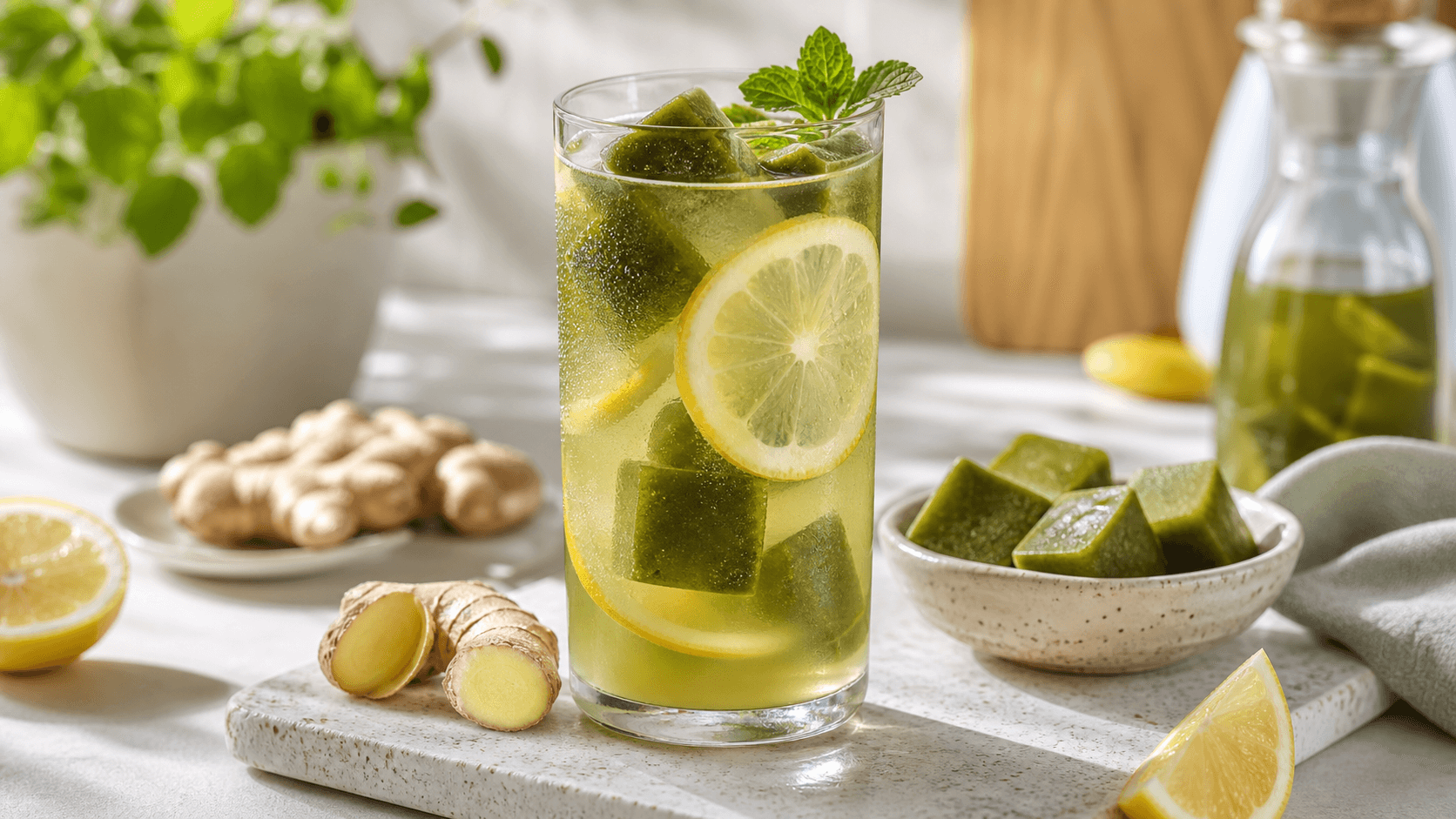
For a lemon ginger yerba mate cooler, decide what you mean by “ginger” before choosing a quantity. A fresh slice, bottled ginger juice, and ginger syrup are different ingredients. Writing “a slice or a splash” leaves too much unknown to repeat the drink.
This is an ingredient guide for a serving idea. We have not established a kitchen-tested lemon-to-ginger ratio, cube count, or preferred mixing order for this cooler.
Choose one ginger form
| Ginger form | Make the ingredient specific | What to record |
|---|---|---|
| Fresh ginger | State whether it is sliced, grated, or prepared another way. | Prepared weight, cut or texture, and whether pieces remain in the glass or are removed. |
| Bottled ginger juice | Name the exact product and read its ingredient list. | Measured amount and the directions on that bottle. |
| Ginger syrup | Name the exact product or the complete homemade recipe. | Measured amount, ingredients, and any separate sweetener added. |
Two manufacturer examples make the distinction concrete. On September 10, 2026, The Ginger People's US Organic Ginger Juice – 5oz page listed ginger at 99.7% and citric acid as an acidity regulator. Its US Organic Ginger Syrup page listed organic cane sugar and organic ginger.
These are dated webpage observations, not an inspection of your bottle. Check the package you have. The syrup example includes sugar as an ingredient; it should therefore be recorded when you describe what went into the drink. Neither list establishes an equal-tasting substitution for fresh slices, a preferred dose in mate, or a winner between products.
Make lemon and water equally clear
Use the same care with the rest of the glass. Write down whether the lemon component is freshly squeezed juice, a particular bottled juice, or prepared lemonade. The mate lemonade guide explains why juice and lemonade need separate ingredient notes.
For the mate, identify the cube batch and how it was prepared. Keep the added water amount separate from the finished liquid volume. If you measure that finished volume, state whether the cubes have fully melted and whether solid ginger or garnish has been removed. A glass level with cubes and slices still inside is a different observation.
NIST's culinary measurement guidance recommends appropriate measuring tools and reading a liquid measure on a level surface at eye level. Use grams for a recorded ingredient weight and milliliters for a recorded liquid volume; do not silently exchange those units. This is measurement guidance, not a tested mate recipe.
Keep substitutions visible
Suppose your first attempt uses bottled ginger juice and still water. A later attempt using syrup and sparkling water changes two ingredients. Save it as a different version, and describe what you actually tasted rather than attributing the difference to ginger alone.
If you want to explore sparkling water, identify the product and record when it was added. We have not tested which mixing order retains more bubbles. Similarly, a lemon ginger cooler is not necessarily less sweet than lemonade: that comparison needs the exact ingredients, amounts, finished servings, and tasting observations.
The University of Nevada, Reno's recipe-development guide emphasizes specific ingredients, measured servings, and repeat testing. For this drink, that means a preferred quantity should come from a repeatable preparation before it becomes a recipe recommendation.
For another ingredient-focused approach, see the citrus peel and herb flavor test.
Follow each ingredient's handling directions
The ginger juice page above instructs refrigeration after opening. Follow the directions on your exact bottle; do not extend them to a homemade ginger preparation or a finished mate drink.
FDA food-storage guidance advises checking storage labels and monitoring refrigerator and freezer temperatures. It also explains that food can be unsafe without an obvious change in smell or appearance. A pleasant taste is not a storage-safety test, and this serving idea does not establish a shelf life for lemon ginger cubes.
For the broader preparation format, start with what frozen yerba mate is and the mate ice-cube guide.
Yerba mate contains caffeine. The FDA's caffeine guidance notes variation between products and individual sensitivity. Yerba Melt does not yet have a final tested per-cube caffeine value; this drink idea supplies no estimate.
Would you prefer a plain mate cube to finish with lemon and your own ginger ingredient, or a future lemon ginger flavor? Join the waitlist and tell us which you would use.
Sources
- https://gingerpeople.com/products/ginger-juice/
- https://gingerpeople.com/products/organic-ginger-syrup/
- https://www.nist.gov/pml/owm/metric-si/metric-kitchen/metric-kitchen-culinary-measurement-tips
- https://extension.unr.edu/publication.aspx?PubID=4643
- https://www.fda.gov/consumers/consumer-updates/are-you-storing-food-safely
- https://www.fda.gov/consumers/consumer-updates/spilling-beans-how-much-caffeine-too-much