A citrus peel and herb mate cube flavor test
A measured two-glass worksheet for testing one citrus-peel or fresh-herb addition while keeping the yerba mate cube batch, water, and tasting setup fixed.
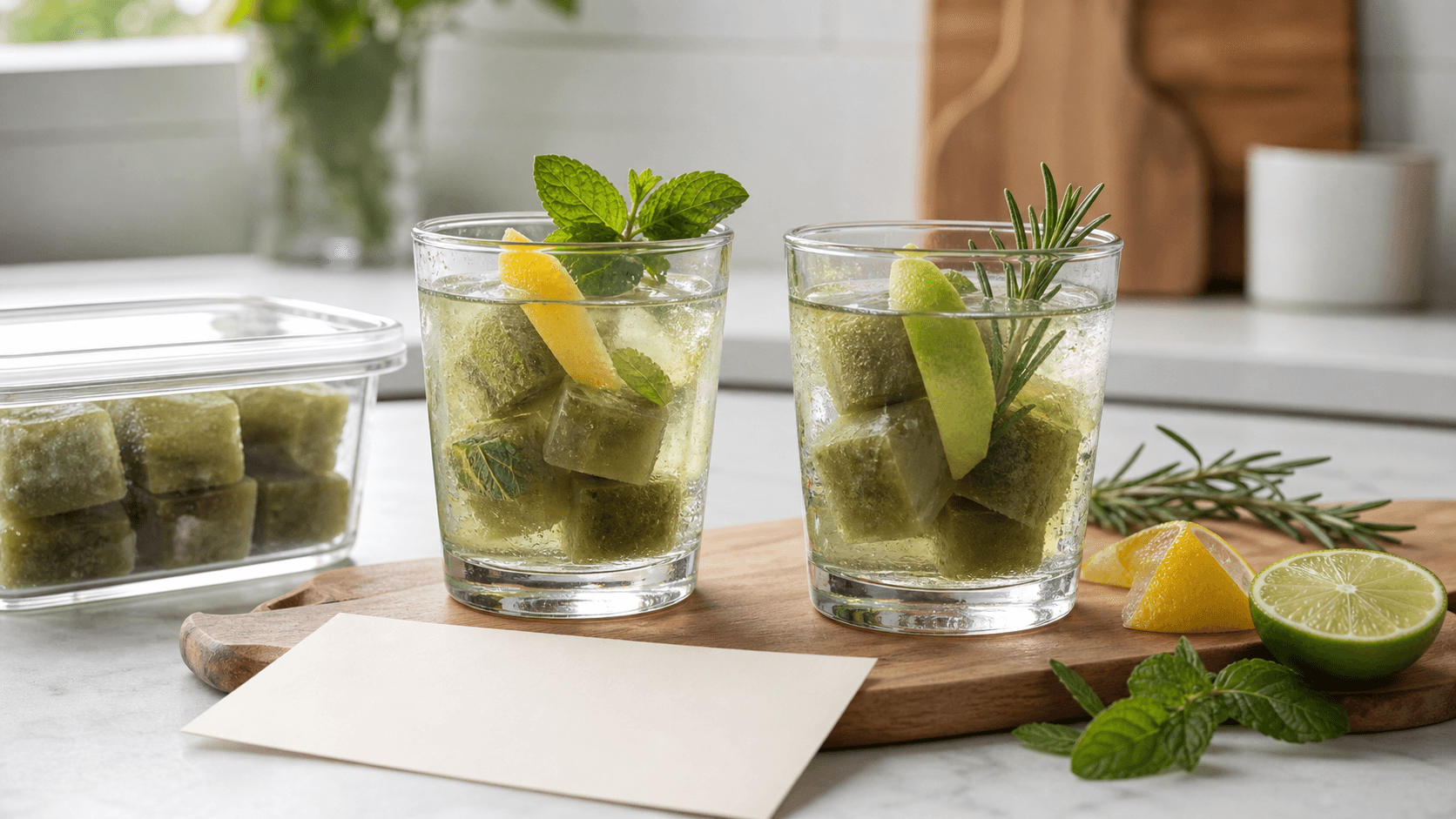
A citrus peel and herb mate cube flavor test is a small way to learn what one addition changes without flavoring the whole batch. Start with frozen cubes from one brew and prepare two matching drinks: a plain control glass and a test glass with one measured citrus-peel or fresh-herb addition.
This is a blank tasting worksheet, not a tested recipe. It does not predict which addition tastes best, measure caffeine, establish a storage life, or show that an ingredient has a health or preservation effect.
The one-variable setup
Use two identical glasses. The first is the control; the second changes one flavor variable.
| Keep the same | Change in the test glass |
|---|---|
| Exact mate batch and cube size | Add one measured citrus peel or one measured fresh herb |
| Measured cube-portion mass; record count as well | Nothing else |
| Added water volume | |
| Glass size | |
| Stirring and contact time | |
| Finish temperature at tasting |
Do not compare lemon-and-mint with lime-and-rosemary in the same test. That changes too many things to identify what shaped the difference. Test lemon peel against a plain control first; mint, lime peel, rosemary, or another identified ingredient can each have a separate round.
Prepare the ingredients
FDA produce guidance says to wash the whole fruit under running water before cutting or peeling it, even when the peel will not be eaten. It does not recommend soap, detergent, or commercial produce wash. Use clean hands, tools, and work surfaces, then dry the fruit with a clean towel before removing a strip of peel.
For this immediate tasting test:
1. Wash the citrus and herbs under running water before cutting or handling them.
2. Dry the produce with a clean towel, then keep the control glass plain.
3. Prepare only the ingredient used in this round and record its identity, form, and mass when practical.
4. Keep the prepared ingredient separate until both glasses are otherwise ready.
The FDA guidance is about produce handling. It does not supply a flavor ratio or a storage schedule for homemade mate cubes. Keep the tasting within one session and follow ingredient storage instructions. FDA storage guidance warns that food can be unsafe without looking, smelling, or tasting spoiled. Flavor notes cannot establish whether a batch is safe to drink; this worksheet does not validate its earlier brewing, cooling, or storage.
Build the control and test glasses
1. Use cubes from one identified batch and tray. Tare a suitable kitchen scale with the empty glass, then weigh the cube portion in each glass. Match the recorded masses within the scale’s displayed resolution and record the cube counts too. Equal counts alone do not establish equal portions.
2. Add the same amount of water to both.
3. Leave the control plain. Add one measured peel or herb to the test glass.
4. Stir each glass in the same way.
5. Choose and record the same observation interval for both glasses; this is a comparison choice, not a validated holding time.
6. Record the finish temperature of each glass, then smell and taste them in alternating order.
If the addition seems too faint, record that before adding more. If a peel becomes too bitter for your preference, remove it and note when you noticed the change. The goal is to preserve what happened in this round, not rescue both drinks into the same flavor.
Record the setup before tasting
NIST culinary measurement guidance recommends measuring ingredients by mass with an appropriate kitchen scale when practical. For liquid volume, use the appropriate liquid measure on a level surface and read it at eye level. Record the setup before tasting so an observation stays attached to the glass that produced it.
| Field | Control glass | Test glass |
|---|---|---|
| Mate batch ID or freezer label | ||
| Cube count and tray identity | ||
| Cube-portion mass in grams before added water | ||
| Scale resolution in grams | ||
| Added water volume | ||
| Glass identity or size | ||
| Flavor ingredient identity and product label | None | |
| Ingredient form and preparation | None | |
| Ingredient mass | 0 g | |
| Stirring method | ||
| Contact time before first taste | ||
| Finish temperature |
If a scale cannot register a very small addition, describe the piece precisely instead of inventing a mass: for example, record its dimensions, whether pith was present, or the number and size of leaves. Do not silently convert a strip of peel into a juice amount or consider one herb interchangeable with another.
Use a blank observation card
| Observation | Control glass | Test glass |
|---|---|---|
| Aroma before stirring | ||
| Aroma after stirring | ||
| Citrus character | ||
| Herbal character | ||
| Bitterness | ||
| Overall balance | ||
| What you would change next time |
Use ordinary words that match what you notice: bright, grassy, piney, minty, sharp, soft, bitter, or barely present. These notes describe two prepared glasses only. They do not reveal caffeine content or make the tested addition universally better.
Give orange and cinnamon separate rounds
Orange peel and cinnamon can be tested with the same controlled method, but there is no source-backed universal ratio for a frozen mate cube drink. Ingredient form matters: a strip of fresh peel is not interchangeable with orange juice or dried peel, and a cinnamon stick is not interchangeable with ground cinnamon.
Use the same setup table above for two separate rounds:
1. Compare plain mate with one measured orange-peel addition. Leave cinnamon out of both glasses.
2. In a new pair, compare plain mate with one measured cinnamon addition. Leave orange out of both glasses.
3. If you later explore a combination, hold the orange form and amount fixed in both glasses and add cinnamon to only one. Record that the control now contains orange.
Keep the measured mate portion, added water, vessels, stirring and observation interval consistent within each pair. A change in measured portion or finish temperature belongs in the notes; it limits what you can attribute to the flavor ingredient.
University of Nevada, Reno Extension’s recipe-development guidance emphasizes exact ingredients, measurements and documented repeat testing. That supports keeping a useful record here; it does not validate these mate combinations. No kitchen trial or preferred proportion is reported in this guide.
Run the next test one change at a time
If you want to repeat the tasting, change one variable:
- keep the batch and setup fixed, then use less of the same peel
- finish the peel rounds before starting a separate herb round
- keep the ingredient fixed and run a separate water-volume test
- repeat the same addition with a different documented mate batch, labeling it as a new comparison
Changing several things at once makes it harder to tell what shaped the result. A small batch card can help you keep the cube recipe, tray, and freeze date attached to the tasting. Matching portion masses is a practical comparison control, not evidence of equal caffeine content.
For help recording the base, use the cube size and dilution worksheet or the plain-water tasting flight. For other flavor-first ideas, try the lemon ginger mate cooler or sparkling mint lime mate cubes. The less-bitter mate guide offers another controlled way to adjust a glass.
If a citrus-and-herb cube sounds useful, join the waitlist and tell us which pairing you would want to test first.
Sources
- https://www.nist.gov/pml/owm/metric-si/metric-kitchen/metric-kitchen-culinary-measurement-tips
- https://extension.unr.edu/publication.aspx?PubID=4643
- https://www.fda.gov/food/buy-store-serve-safe-food/selecting-and-serving-produce-safely
- https://www.fda.gov/consumers/consumer-updates/are-you-storing-food-safely