A measured berry-and-citrus mate cube finishing flight
A blank three-glass worksheet for comparing a plain mate cube drink with one measured berry finish and one measured citrus finish.
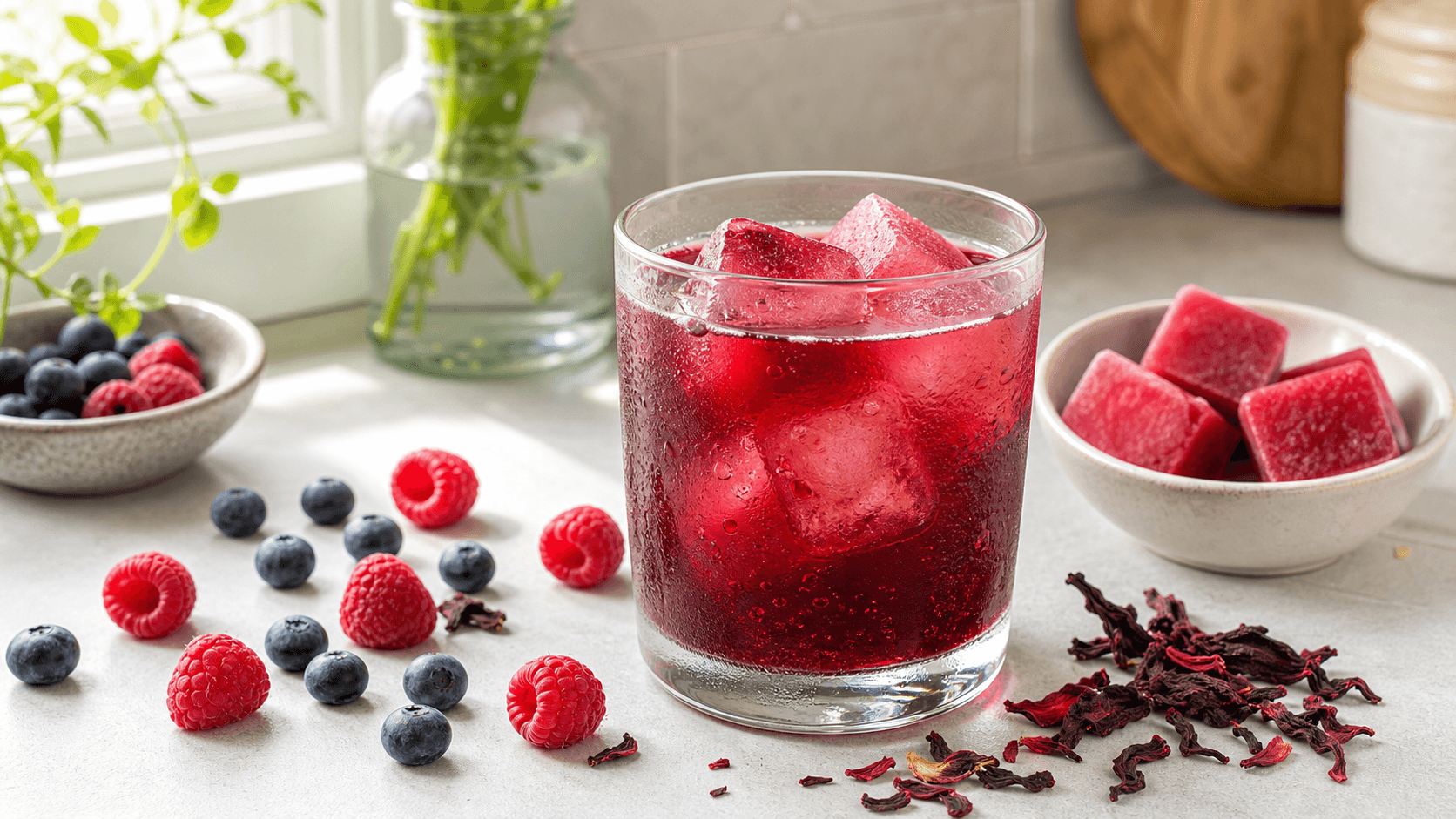
A berry-and-citrus mate cube finishing flight starts with one prepared mate batch and three equal glasses. Leave one glass plain, add one measured berry finish to the second, and add one measured citrus finish to the third.
This is a blank kitchen worksheet, not a tested recipe. It does not provide a preferred ratio, declare a flavor winner, establish a shelf life, measure caffeine, or show that berry, hibiscus, or citrus has a health or preservation effect.
Set up one shared base
The comparison is easier to interpret when the mate portion stays fixed. Use cubes from the same labeled batch and identical glasses, then measure the same cube count and water volume into all three.
| Keep the same in every glass | Change once |
|---|---|
| Mate batch and cube size | Glass A stays plain |
| Cube count | Glass B gets one measured berry finish |
| Starting water volume and source | Glass C gets one measured citrus finish |
| Glass size | Nothing else |
| Stirring method | |
| Contact time before observation |
Do not add berry and citrus to the same test glass. If hibiscus, sweetener, sparkling water, herbs, or another ingredient is part of the question, give it a separate round so the change remains visible.
Prepare fresh ingredients carefully
FDA produce guidance says to begin with clean hands, wash fresh produce thoroughly under running water, and dry it with a clean towel. It advises against washing fruits and vegetables with soap, detergent, or commercial produce wash.
For this immediate-use flight:
1. Check the exact labels on any packaged, frozen, dried, or pre-washed ingredients.
2. Wash fresh berries and the whole citrus fruit under running water before cutting or peeling.
3. Dry the produce, then use clean tools and work surfaces.
4. Prepare only the amount needed for the current glasses.
5. Keep each finishing ingredient separate until the three mate bases are ready.
Those steps are produce-handling guidance. They do not give the finished drink a tested storage period.
Measure before tasting
NIST recommends a digital kitchen scale for measuring recipe ingredients in grams and notes that a small-capacity scale can be useful for herbs and spices. Its kitchen guidance also recommends setting a timer before beginning a timed task.
Record what the tools can actually support. If a scale does not register a small peel or berry portion reliably, describe the count, dimensions, and form instead of inventing a mass.
| Setup field | Plain glass | Berry glass | Citrus glass |
|---|---|---|---|
| Mate batch or freezer label | |||
| Cube count and cube size | |||
| Starting water volume and unit | |||
| Water source and temperature | |||
| Glass identifier | |||
| Ingredient identity and exact label | None | ||
| Ingredient form | None | Fresh, frozen, dried, or prepared: | Peel, juice, segment, or other: |
| Ingredient mass, count, or dimensions | 0 | ||
| Stirring method | |||
| Contact time before first observation | |||
| Finished volume |
If the berry glass also contains hibiscus, record the hibiscus product, form, and amount as another variable. For the cleanest first pass, test one identified berry against plain mate, then run hibiscus as its own round.
Use direct observation words
Look at and smell all three glasses before tasting. Then use the same prompts for each glass.
| Observation | Plain glass | Berry glass | Citrus glass |
|---|---|---|---|
| Appearance and color | |||
| Aroma before stirring | |||
| Aroma after stirring | |||
| Tartness | |||
| Bitterness | |||
| Perceived mate strength | |||
| Finish or aftertaste | |||
| Would you repeat this exact glass? | |||
| One change for the next round |
These notes describe three prepared glasses in one session. They do not establish what other people prefer or what a future Yerba Melt recipe should contain.
Keep caffeine outside the flavor ranking
Yerba mate contains caffeine, but color, bitterness, tartness, and perceived strength do not reveal a caffeine amount. Using equal portions from one batch helps keep this flavor comparison narrow; it does not turn the flight into a laboratory test.
Do not use the card to:
- assign caffeine milligrams to a cube or glass
- rank the three finishes by caffeine
- infer a health or energy outcome from an ingredient
- claim that a finish preserves the drink
- publish a universal cube, berry, hibiscus, or citrus ratio
A future packaged cube should carry tested caffeine information for its defined portion. A homemade flight should simply keep the batch and portion visible.
Repeat one change, not the conclusion
After the first flight, choose one adjustment for a second round. You might use less of the same berry, change only the citrus-peel dimensions, or repeat the plain control beside a separately measured hibiscus finish. Keep the mate base and the rest of the setup fixed.
The citrus peel and herb flavor test offers a two-glass version for isolating one addition. The plain-water tasting flight is the better starting point when dilution is still unknown. For the freezer workflow behind both tests, see what frozen yerba mate means.
The useful result is a complete card attached to an exact batch, not a broad claim. If a measured berry or citrus finish is the direction you would test first, join the waitlist and tell us what belongs in the glass.