Sparkling mint lime yerba mate cubes
A mint-lime serving idea for frozen yerba mate, with ingredient choices and clear limits on untested ratios and sweetness comparisons.
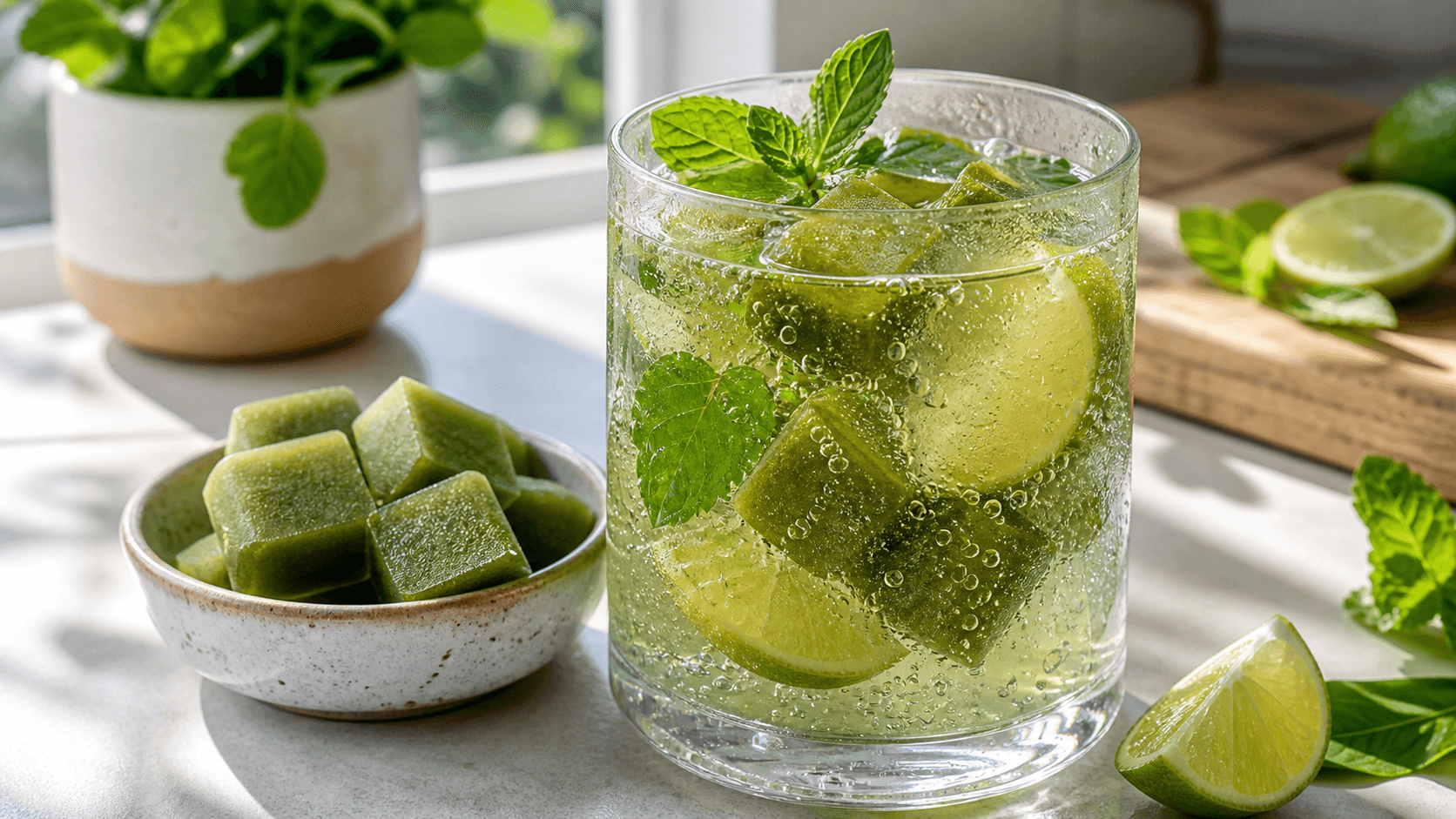
Sparkling water, lime, mint, and frozen yerba mate make a serving idea you can adapt to your own glass. Start by deciding which ingredients you mean: plain sparkling water and fresh lime juice are a different combination from a sweetened lime drink or mint syrup.
This combination has not been kitchen-tested here. There is no established cube count, preferred ratio, or measured sweetness comparison with lemonade. Use the ingredient choices below to plan a glass and keep notes if you want to repeat it.
Choose the ingredients before the amounts
For this version, the proposed ingredients are plain mate cubes, plain sparkling water, fresh lime juice, and fresh mint. Keep lime and mint as additions at serving time so their amounts can be recorded separately from the frozen batch.
| Ingredient | What to identify | What remains to be tested |
|---|---|---|
| Mate cubes | Batch ingredients, tray cavity volume, and actual cube count | How much of that batch you prefer in your glass |
| Sparkling water | Exact bottle or can; check ingredients rather than relying on a lime or mint name | The amount you prefer with this batch |
| Lime | Freshly squeezed juice measured separately; record any garnish | Your preferred juice amount |
| Mint | Fresh leaves; record amount and whether whole, torn, or pressed | Your preferred preparation and amount |
| Optional additions | Record still water, ordinary ice, syrup, or other ingredients separately | How each change affects your own tasting notes |
A lime wedge is not a measured juice portion. Likewise, a cube count without the tray size leaves a recipe incomplete. The cube size and dilution guide explains how to record the tray you use.
Make your notes repeatable
Use a liquid measure for water and juice, with explicit units such as milliliters. NIST's culinary measurement tips explain choosing suitable tools and reading liquid volume at eye level on a level surface. That supports measurement technique; it does not establish a mate recipe.
If you try the combination, record the cube batch and count, sparkling-water amount, lime-juice amount, and mint preparation before tasting. Note later additions separately. Write down when you tasted and whether cubes remained: a glass measured with solid cubes in it is not a measurement of fully melted liquid.
For the next attempt, choose one adjustment from your own notes, such as the lime amount, while keeping the other recorded choices the same. This is a suggested home comparison, with no promised flavor result or fizz-retention time.
The University of Nevada, Reno's recipe-development guide calls for documented ingredient measurements and repeated testing. Those steps would be needed before presenting this idea as a reliable recipe with a yield and serving size.
Is it less sweet than lemonade?
That comparison has not been measured. It depends on the exact lemonade, ingredients in both drinks, amounts, and portions being compared. Even a version made without syrup does not establish how every person will describe its sweetness.
If you want to compare the two, use the lemonade ingredient guide to identify the other drink first. Keep label information and your own taste notes separate. Avoid converting a personal preference into a claim that mint-lime is universally lighter, brighter, or better.
Prepare and store ingredients carefully
FDA's produce-cleaning guidance advises washing produce under running water before preparing it, including produce whose peel will not be eaten. Do not use soap or detergent on produce. Wash your hands and use clean utensils for the lime and mint.
Follow storage instructions on packaged ingredients. FDA's food-storage guidance recommends a freezer at 0°F (-18°C) and checking appliance temperatures. It also explains that food can be unsafe without looking, smelling, or tasting spoiled. A tasting note cannot establish that a cube batch is safe, and this serving idea does not set a storage duration.
Keep caffeine separate from flavor
This is a caffeinated drink idea. FDA's caffeine guidance notes variation in caffeine amounts and individual sensitivity. A homemade cube count does not supply a tested milligram amount. Lime, mint, and bubbles do not provide that missing measurement either.
Yerba Melt's final formula and serving still need testing before a per-cube caffeine statement can be offered.
For the format behind the idea, read what frozen yerba mate is and the DIY cube guide. To explore other finishes, see the one-batch finish comparison.
Would you choose plain cubes to finish with your own lime and mint, or a flavored cube? Join the waitlist and tell us which you would keep in your freezer.
Sources
- https://www.nist.gov/pml/owm/metric-si/metric-kitchen/metric-kitchen-culinary-measurement-tips
- https://extension.unr.edu/publication.aspx?PubID=4643
- https://www.fda.gov/consumers/consumer-updates/7-tips-cleaning-fruits-vegetables
- https://www.fda.gov/consumers/consumer-updates/are-you-storing-food-safely
- https://www.fda.gov/consumers/consumer-updates/spilling-beans-how-much-caffeine-too-much