One mate cube batch, three finishes: hot, cold, and sparkling
A controlled three-glass worksheet for finishing one batch of frozen yerba mate cubes with cold, warm, or sparkling water and recording what changes.
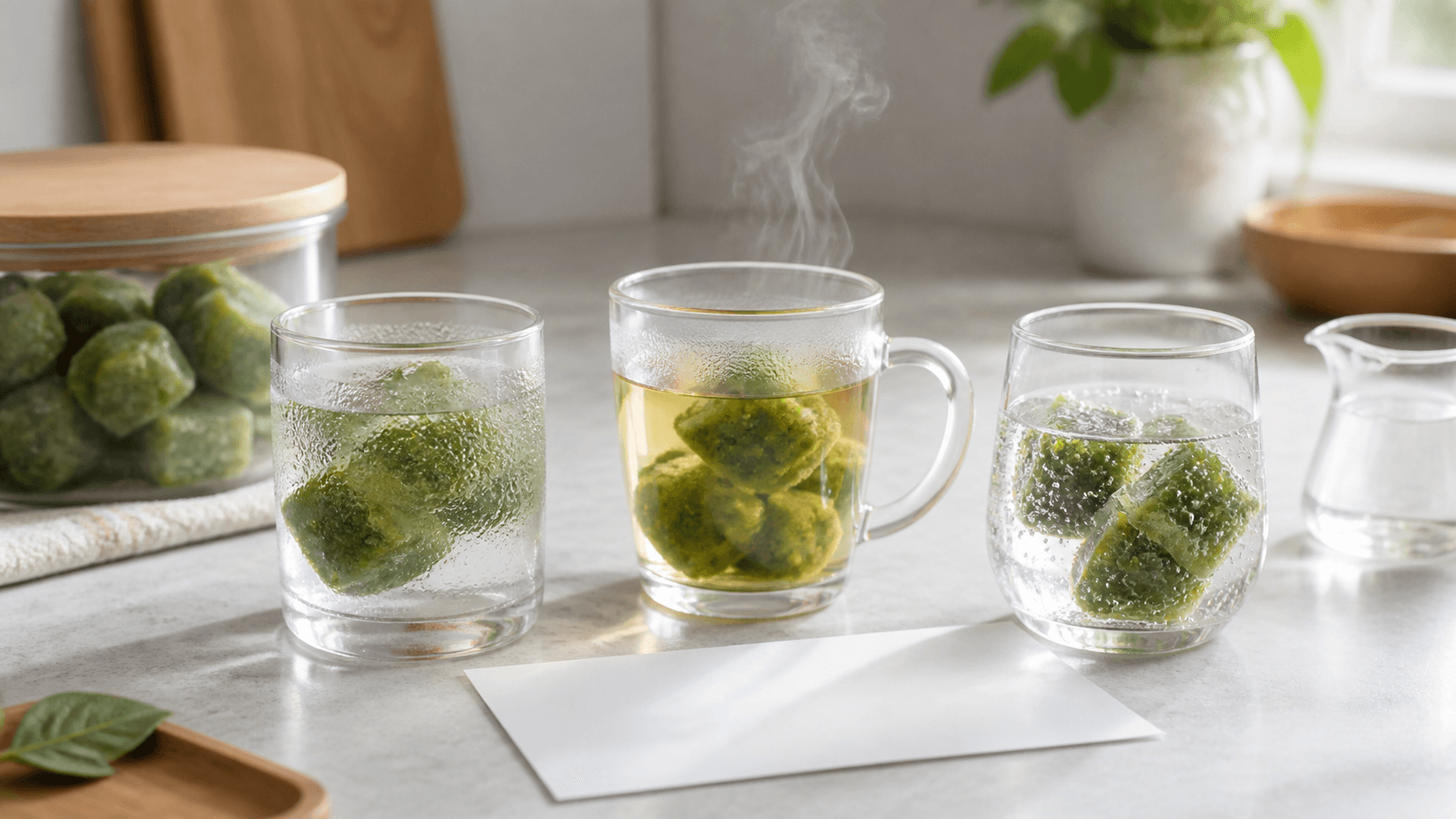
A frozen yerba mate cube does not have to lead to the same drink every time. The same batch can be finished with cold still water, comfortably warm water, or plain sparkling water.
That sounds like three recipes, but the more useful first test is simpler: keep the cube batch, cube count, and liquid volume consistent. Change only the finish, then record what you notice.
This is a sensory worksheet, not a search for the universally best method. Temperature and carbonation can change how one glass tastes to you. They do not reveal its caffeine amount.
Set up one controlled batch
Use cubes from one labeled batch. Before you start, record the brew method, tray, batch date, and anything added before freezing. If your cubes contain citrus, herbs, fruit, milk, or sweetener, note that too.
Choose measurements that fit your actual tray and glassware. NIST defines the milliliter as a unit of volume and notes that 1,000 milliliters equal 1 liter. Metric units are useful here because they make a small household test easier to repeat, but the important part is measuring consistently rather than choosing a perfect number.
| Keep constant | What to record |
|---|---|
| Cube batch | Batch label or brew notes |
| Cube count | The same count in all three vessels |
| Starting liquid | The same measured amount in all three |
| Finish volume | The same measured amount added to each |
| Rest time | The same pause before tasting |
| Stirring | The same number of gentle stirs |
Use three vessels suited to their contents: a cold-drink glass, a heat-safe mug, and a glass with enough room for sparkling water to foam.
Build the three finishes
Start each vessel with the same cube count and the same small amount of still water. Let the cubes begin to soften, then add one finish.
| Finish | Add | Practical note |
|---|---|---|
| Cold still | Measured cold water | Stir after the cubes soften, then taste at the same point as the other versions. |
| Warm | Measured comfortably warm water | Use heat-safe drinkware and water at a temperature you would normally sip. |
| Sparkling | Measured plain sparkling water | Pour slowly after partial melting and leave room for foam; follow the package directions. |
Do not freeze a sealed container of sparkling water. The carbonation belongs in the finished glass, not in the freezer batch.
For a broader hot-and-cold workflow, see how to make yerba mate cold or hot. If you want a finished sparkling recipe rather than a neutral test, try the sparkling mint lime mate cube guide.
Use a sensory worksheet
Taste each version after the same rest and stirring routine. Plain words are enough; the goal is to capture what happened in these three vessels.
| Observation | Cold still | Warm | Sparkling |
|---|---|---|---|
| Finished volume | |||
| Temperature at tasting | |||
| Cubes fully melted? | |||
| Aroma | |||
| Bitterness | |||
| Body | |||
| Carbonation | None | None | |
| What you would change | |||
| Would you make it again? |
Keep the language personal: “more bitter in this glass,” “aroma was easier for me to notice,” or “I preferred the cold version.” Avoid turning one kitchen result into a rule about yerba mate as a whole.
Keep caffeine separate from taste
Yerba mate contains caffeine, but this test does not measure it. The FDA notes that caffeine amounts can vary among products and container sizes. A homemade cube adds more unknowns: the leaf product, dry amount, brew method, batch volume, cube size, and cube count.
Warmth, bitterness, color, bubbles, and melt speed cannot fill in a missing caffeine number. Because all three vessels come from the same batch and use the same cube count, this worksheet can compare your sensory experience. It still cannot say how many milligrams are in any glass.
A future Yerba Melt label should state a tested caffeine amount per cube and prepared serving after the formula and serving directions are final. Until then, the honest worksheet leaves that field unknown.
Decide what belongs in your routine
At the end, choose the finish you would actually repeat. That might be the cold glass because it is familiar, the warm mug because it suits the day, or the sparkling glass because you like the texture. It may also be none of them, which is useful product feedback.
If you want to isolate dilution before changing temperature or carbonation, use the plain-water mate cube tasting flight. For the full homemade freezer workflow, start with how to make yerba mate ice cubes.
Yerba Melt is testing whether one measured frozen format can make different kinds of mate drinks easier to prepare. Join the waitlist and tell us whether your default finish would be hot, cold, or sparkling.