How to pack frozen yerba mate cubes for a day out
A conservative pack-and-check workflow for carrying frozen yerba mate cubes in an insulated cooler with cold sources, a sealed container, and a thermometer.
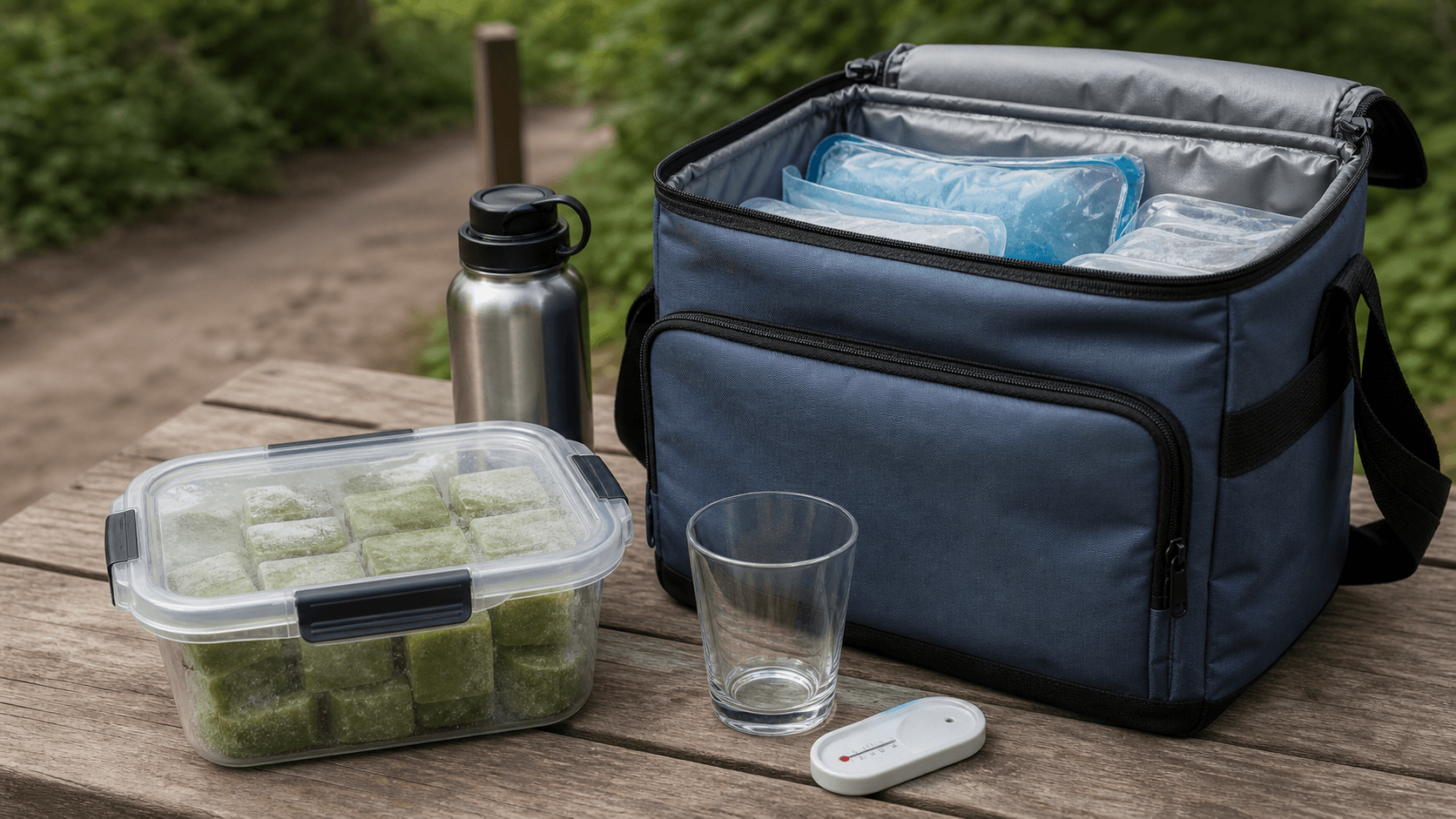
Frozen yerba mate cubes can make a cold drink easier to assemble away from home, but the freezer format does not make temperature control automatic. For a picnic, road stop, park afternoon, or other day out, handle the cubes as a prepared beverage that needs a deliberate cold-packing routine.
This guide is a pack-and-check worksheet. It does not assign a safe number of travel hours to a homemade batch, promise that the cubes will stay frozen, or turn a cold drink into a workout, hydration, or energy claim.
Pack the small system, not just the cubes
| Pack | Why it is there | What to check |
|---|---|---|
| Frozen mate cubes | The prepared drink base | Start with a batch that has stayed properly frozen. |
| Clean, watertight food-safe container | Keeps the cubes covered and away from melting cooler water | Lid closes fully; container has no cracks or leaks. |
| Insulated cooler or cold bag | Holds the container and cold sources together | Sized closely enough that it can be packed full. |
| Ice or frozen gel packs | Provides the cold source | Use enough to surround the packed items rather than one token pack. |
| Cooler thermometer | Checks the cooler instead of relying on touch | Place it where you can read it without leaving the cooler open. |
| Water and a clean cup | Finishes the drink when you are ready | Keep drinking surfaces clean and separate from raw foods. |
FoodSafety.gov advises packing coolers with ice, gel packs, or frozen water bottles and using an appliance thermometer to verify that the cooler stays at 40 F (4 C) or below. It also notes that a full cooler stays cold longer than a partly filled one and recommends limiting how often the lid is opened.
University of Minnesota Extension gives the same practical direction: start with cold food, use plenty of ice or frozen cold sources, limit opening, keep the cooler out of heat, and secure food in watertight containers so it does not contact melting ice water.
Those are general cooler-packing principles. They do not establish a mate-cube shelf life or guarantee how long a particular bag, container, weather condition, or homemade batch will hold temperature.
Use a before, during, and return checklist
| Stage | Check |
|---|---|
| Before leaving | Cubes are frozen; container is clean and sealed; cooler is packed with adequate cold sources; thermometer is in place. |
| While out | Cooler stays shaded or otherwise out of heat; lid is opened only when needed; thermometer remains at 40 F (4 C) or below. |
| When making a glass | Use a clean cup and water; remove only the cubes you plan to use; close the cooler promptly. |
| Before taking leftovers home | Check the recorded temperature and whether the container stayed sealed and properly cold; do not rely on appearance or a cool feeling alone. |
If the cooler has not held 40 F (4 C) or below, or you cannot verify how the cubes were handled, do not guess that refreezing will reset the batch. Discarding an uncertain homemade batch is more conservative than inventing a recovery rule.
Keep the cooler easy to keep closed
A little organization reduces lid-open time:
1. Put the sealed cube container next to the cold sources rather than under loose picnic supplies.
2. Keep the thermometer visible near the top or side of the packed area.
3. Carry water and cups outside the cooler when they do not need refrigeration.
4. If raw meat or poultry is also traveling, keep it separate from ready-to-use drink items and protect against leaks.
5. Return the lid to a fully closed position after every check.
FoodSafety.gov suggests using a separate beverage cooler when frequent drink access would repeatedly open the food cooler. For a small mate-cube setup, the same idea can be simplified: arrange the bag so you can remove the sealed cube container without searching through everything else.
Finish one glass at a time
Once you are ready to make the drink, put a small number of cubes in a clean glass, add water, stir as the cubes soften, and adjust by taste. Homemade cube size and brew strength vary, so cube count is a flavor note, not a caffeine measurement.
For a repeatable serving test, use the plain-water mate cube tasting flight. If the cubes will live in a shared freezer rather than a day bag, the office freezer mate routine has a handoff checklist. The freezer label guide helps connect the packed container to the correct batch.
What this use case can teach Yerba Melt
A packaged frozen cube meant to leave home would need more than a convenient shape. It would need clear storage and handling instructions, packaging that stays sealed in a real cooler, a defined serving, and caffeine disclosure based on the finished formula.
The current homemade test can answer a narrower product question: would you make room in a cooler for mate cubes if the pack-and-check routine were clear? Join the waitlist and tell us whether your first use would be a picnic, commute, park afternoon, or something else.