Cold brew yerba mate: a refrigerator-first test guide
A measured refrigerator-first cold brew yerba mate method with a batch worksheet for leaf, water, steep time, straining, dilution, and taste.
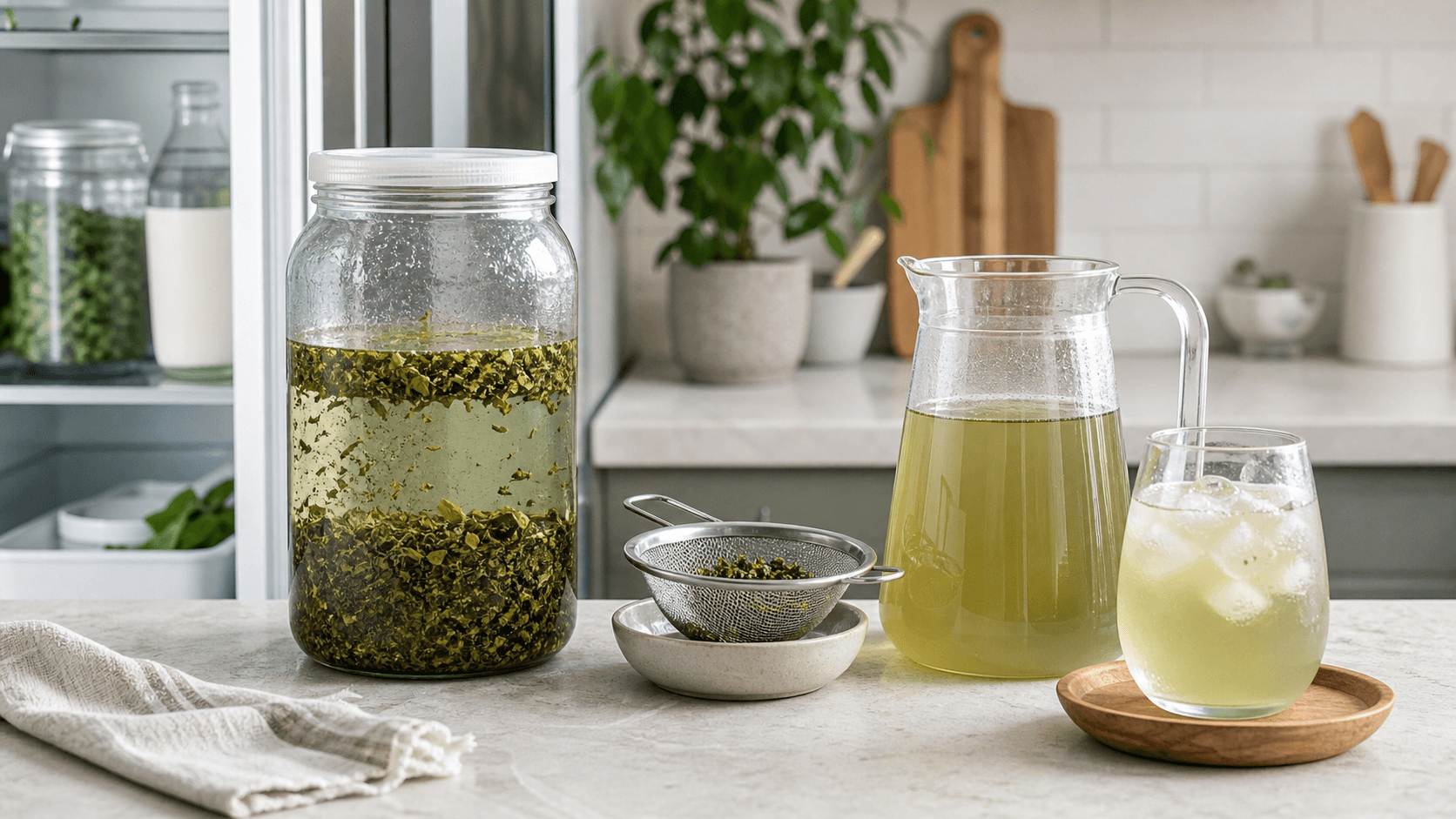
Cold brew yerba mate is a batch method: combine mate and cold water in a covered container, steep it in the refrigerator, strain it, and adjust the finished glass. The useful goal is not to find one universal “best” steep. It is to make a batch you can describe and repeat.
This guide uses a test worksheet because loose-leaf products, cuts, ratios, and tastes differ. It does not promise that cold brewing produces more or less caffeine, extracts more of any compound, or creates a particular health effect.
Start with one measured test batch
Use a clean jar or pitcher with a cover, cold water, loose yerba mate, and a fine strainer. Write down the product and measurements before the leaves go into the water.
| Batch field | Practical starting point | What to record |
|---|---|---|
| Yerba mate | 2 tablespoons | Product name and measured amount |
| Cold water | 2 cups | Total water added |
| Container | Clean, covered jar or pitcher | Container size |
| Steep | In the refrigerator | Start and strain times |
| Finish | Strain, then taste over ice or with cold water | Dilution and tasting notes |
The measurements above are a starting point for a home taste test, not a standardized serving formula. If your mate is finely cut, it may need a finer filter. If it is very smoky or bitter, the first adjustment can be more water rather than a longer list of ingredients.
Refrigerator-first method
1. Add 2 tablespoons of loose yerba mate to a clean jar.
2. Add 2 cups of cold water and stir so the leaves are evenly wet.
3. Cover the jar and place it in the refrigerator while it steeps.
4. Strain the batch through a fine-mesh strainer or filter into a clean pitcher.
5. Pour a small taste over ice. Add cold water if it is more concentrated than you want.
6. Record the result before changing the next batch.
Iowa State University Extension describes cold tea as tea and water steeped in the refrigerator and gives a six-hours-to-overnight window based on desired strength. That supports the refrigerator workflow, but it does not establish a universal yerba mate recipe or a tested storage life for every homemade batch.
Oregon State University Extension's herbal-tea method also uses a simple steep-and-strain pattern and recommends changing ingredient amounts and steeping time for stronger or lighter flavor. Its recipe is not yerba-mate-specific evidence, so the useful transfer is the workflow: measure, steep, strain, taste, and adjust.
Change one variable at a time
A first batch is only useful if the second batch teaches you something. Keep most of the setup fixed and change one field.
| If the first batch tastes… | Try next | Keep fixed |
|---|---|---|
| Too light | A little more leaf or a longer refrigerated steep | Water, product, container, and finish |
| Too strong | More water in the finished glass | Original batch notes |
| Too bitter | Less leaf, a shorter steep, or more finishing water | Product and container |
| Cloudy or gritty | A finer filter or a second strain | Leaf, water, and steep |
| Good but hard to repeat | Measure the leaf and water more precisely | The successful method |
Do not use color, bitterness, or steep time as a caffeine meter. Those observations can describe taste and appearance, but they do not reveal milligrams in the glass.
Keep the caffeine statement honest
Yerba mate naturally contains caffeine. The amount in this homemade batch is unknown unless the exact product and preparation have been measured. Leaf amount, product, water, time, filtration, dilution, and finished serving all matter.
FDA consumer guidance notes that caffeine amounts vary among products and container sizes and that individual sensitivity varies. This article therefore does not assign a category average to the pitcher or turn a spoon count into a caffeine number.
If Yerba Melt becomes a finished product, the useful label should state caffeine for a defined cube and prepared serving. Until then, a cold-brew worksheet is for taste and repeatability, not caffeine calculation.
Cold brew, iced mate, and frozen cubes are different workflows
| Method | When the mate meets cold water | Daily job |
|---|---|---|
| Refrigerator cold brew | During the refrigerated steep | Strain and finish the batch |
| Iced mate | After a hot-brewed batch is cooled or poured over ice | Brew, cool, and serve |
| Frozen mate cubes | After prepared mate has already been portioned and frozen | Add cubes to a glass and finish with liquid |
The broader cold yerba mate guide separates iced mate, cold brew, terere, and frozen cubes. The terere, iced mate, and cold brew comparison adds cultural and method context. If you want to turn a successful batch into freezer portions, use the DIY mate cube guide.
The best result from this test is not a universal recipe. It is a short note you can follow again: exact mate, exact water, refrigerated steep, filter, dilution, and how the finished glass tasted.