Cold-brew cubes vs hot-brew yerba mate cubes
What brewing and refrigerated-storage studies can tell you about yerba mate, and what remains untested for frozen cubes.
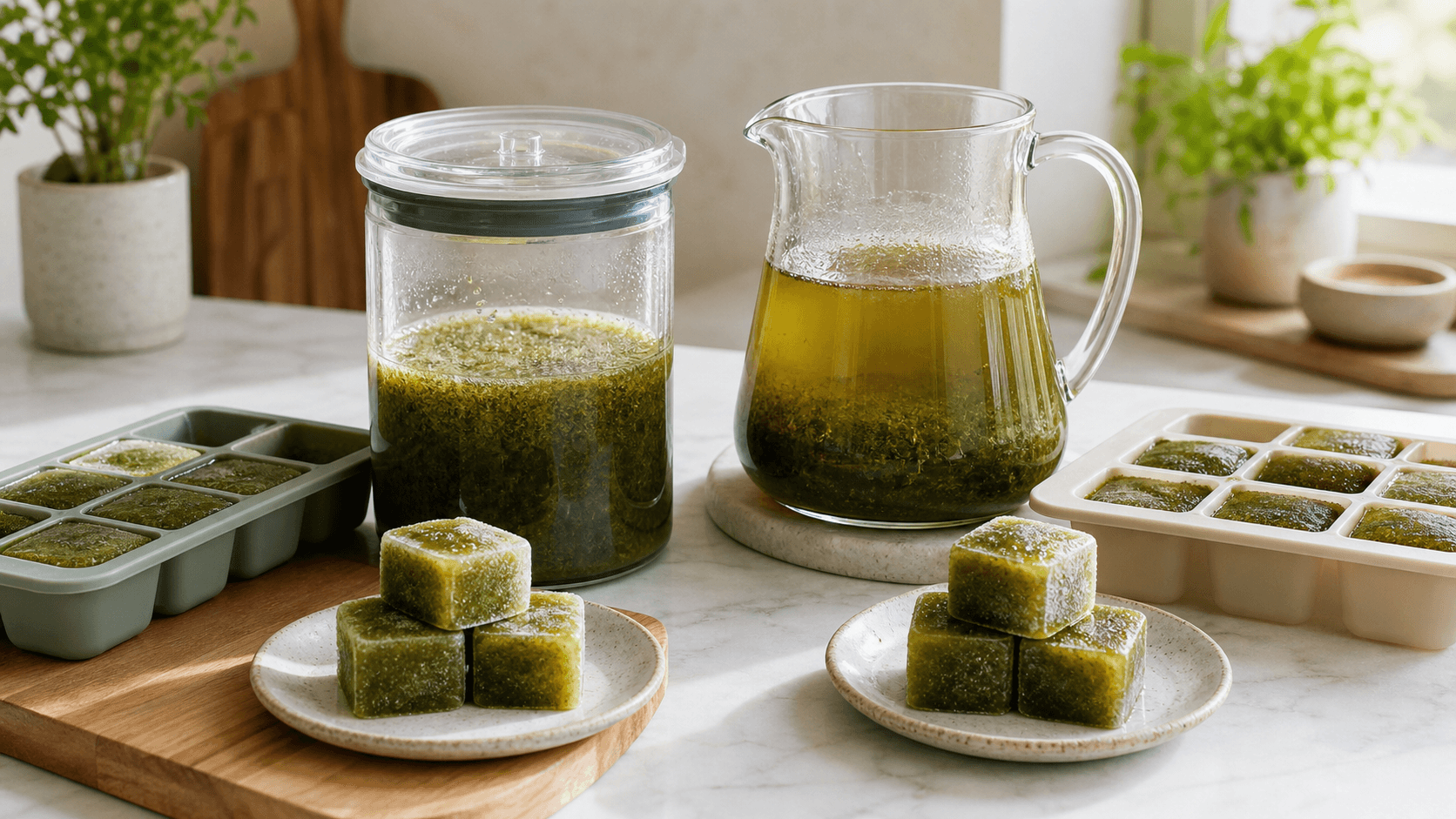
Cold-brew and hot-brew yerba mate cubes differ in how the infusion is prepared before freezing. The method name alone does not tell you which finished cube tastes better, how much caffeine it contains, or how long it can be stored.
For a useful comparison, keep three questions separate: what the brewing experiment measured, what happened during storage, and what you actually noticed in a prepared drink.
Brewing temperature comes before the freezer
Cold extraction uses cold water during brewing. Hot-brewed mate served cold starts with a hot infusion. Either description concerns the brewing stage; neither is a complete frozen-cube recipe. See the cold-brew guide for that distinction and the frozen mate explainer for the portioned format.
A 2024 extraction study compared specified laboratory preparations. Its optimization used one pure-mate sample; the wider sample set included mate with added ingredients.
| Study detail | What the researchers used |
|---|---|
| Material and water | 1.0 g sample with 25 mL distilled water. |
| Hot optimization | 60–100 °C and 2–10 minutes. |
| Cold optimization | 3 °C and 5–60 minutes. |
| Later comparison | 80 °C and 3 °C, both for 10 minutes. |
| Measurements | Chemical assays of antioxidant activity and total phenolics, plus chromatographic analysis of selected compounds. |
These are experimental conditions, not household brewing directions. The study did not test frozen cubes. Our interpretation: it cannot establish a universal preparation-speed advantage, an overnight cold-brew schedule, or the best-tasting cube. An antioxidant assay also does not demonstrate a health outcome from drinking the product.
Refrigerated storage is a different experiment
A separate 2024 storage paper selected an infusion prepared with 6 g of mate in 150 mL hot water for 10 minutes, then examined refrigerated storage.
| Question | What the paper examined | What remains untested for cubes |
|---|---|---|
| Storage setup | Filtered infusion in airtight brown or transparent glass at 4 °C for 10 days. | Freezing, thawing and repeated freezer handling. |
| Chemistry | Caffeoylquinic acids, abbreviated CQAs, total phenolics and antioxidant activity assays. | Caffeine retention through freezing and a tested caffeine value per cube. |
| Other observations | Total microbial counts and color, including aerobic bacteria and yeast/mold counts. | A validated shelf life for a different homemade recipe or packaged Yerba Melt cube. |
The microbial measurements matter: this was not exclusively a chemistry experiment. But results from its samples and refrigerated conditions do not supply a storage limit for frozen cubes. The study duration is not a household use-by recommendation.
Methods and scope checked in both original full texts on September 21, 2026.
Taste notes cannot establish safety
FDA storage guidance recommends a freezer temperature of 0 °F (-18 °C) and warns that food can be unsafe without looking, smelling or tasting spoiled. Normal appearance or aroma therefore cannot clear a batch for drinking.
Follow applicable product handling directions. This comparison supplies no validated cooling schedule, cold-steeping duration or mate-cube expiry date. Do not use a tasting exercise to decide whether uncertain storage was acceptable.
Record the drinks you actually compare
Once preparation and handling are established, a paired record can help describe taste and routine. No kitchen trial is reported here; leave unmeasured fields blank.
| Field | Cold-brew batch | Hot-brew batch |
|---|---|---|
| Exact mate and added ingredients | ||
| Dry amount and brewing water | ||
| Brewing time, temperature and straining | ||
| Handling method and batch date | ||
| Tray identity and measured portion | ||
| Cube count and added liquid | ||
| Finished drink volume and serving temperature | ||
| Aroma, bitterness and other personal notes | ||
| Preparation time actually observed |
If several preparation details differ, describe two recipes rather than attributing every taste difference to temperature. A preferred flavor is a personal observation, not evidence of a different caffeine amount.
FDA caffeine guidance emphasizes variation among products and serving sizes. For a homemade cube, keep the amount unknown unless a measurement describes that preparation and portion. The cold mate caffeine guide explains the measurement limits in more detail.
For Yerba Melt, the next useful evidence is a defined recipe, repeatable portion and product-specific testing. If you would compare cold-brew and hot-brew cubes, join the waitlist and tell us which preparation details you would want on the package.
Sources
- https://www.fda.gov/consumers/consumer-updates/are-you-storing-food-safely
- https://www.fda.gov/consumers/consumer-updates/spilling-beans-how-much-caffeine-too-much
- https://www.ebi.ac.uk/europepmc/webservices/rest/PMC11673172/fullTextXML
- https://www.ebi.ac.uk/europepmc/webservices/rest/PMC11080990/fullTextXML