Yerba mate vs energy drinks: compare the label first
A measurement-first guide to comparing yerba mate with an energy drink by container size, serving size, caffeine disclosure, ingredients, and preparation.
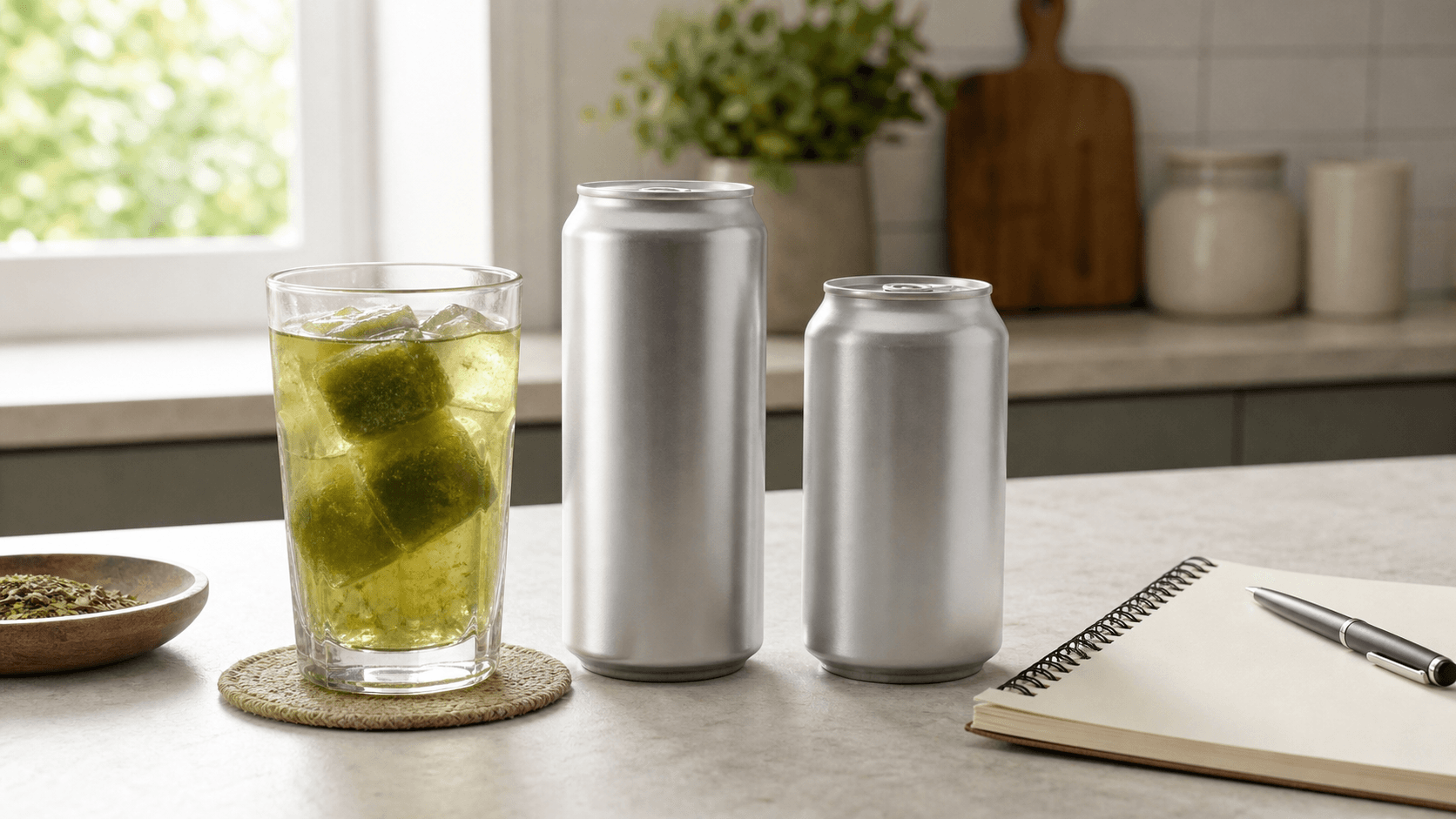
Yerba mate and energy drinks can both contain caffeine, but that does not make them interchangeable categories. Yerba mate might be brewed from loose leaves, sold in a bottle, or prepared from frozen cubes. An energy drink might come in an 8.4-ounce can, a 16-ounce can, or another size with its own formula and disclosure.
So the useful question is not whether yerba mate is universally better than energy drinks. It is whether two specific servings can be compared on the same basis.
That takes a label, a container, and a little arithmetic.
Start with the denominator
A caffeine number is incomplete until you know what amount of drink it describes. Before comparing two products, record these fields:
| Field | What to write down | Why it matters |
|---|---|---|
| Exact product | Full product and flavor name | Different versions from one brand can use different formulas. |
| Container volume | The can, bottle, mug, or finished glass size | A larger container is not the same serving as a smaller one. |
| Labeled serving | Serving size and servings per container | The panel may describe one serving or the whole package. |
| Caffeine disclosure | Amount, unit, and the volume it covers | Milligrams need a stated portion. |
| Preparation | Ready to drink, brewed, diluted, or made from cubes | Water, ice, milk, and cube count change the finished volume. |
| Source and date | Package, current manufacturer page, or other primary source | Product pages and formulas can change. |
FDA serving-size guidance explains that a Nutrition Facts serving reflects how much people customarily consume; it is not a recommendation for how much any one person should drink. Some packages also show both per-serving and per-container information. Read the serving line before carrying any number into a comparison.
Two current energy-drink examples
The examples below were checked on July 19, 2026. They are here to show why the denominator must stay attached to the number, not to recommend either product.
| Exact manufacturer page | Caffeine statement | Denominator | What not to infer |
|---|---|---|---|
| Red Bull Energy Drink ingredients and nutrition facts | 80 mg | One 8.4 fl oz can | Do not assign that number to every Red Bull size or variety. |
| Monster Energy Original Green | 160 mg | 16 fl oz | The page lists other can sizes, but explicitly ties this caffeine statement to 16 fl oz. |
Those two examples happen to work out to similar amounts per fluid ounce, but that is not a category rule. FDA consumer guidance reports a broad range across energy drinks and says amounts and container sizes vary. An exact product disclosure is more useful than applying a category average to the can in front of you.
Manufacturer pages are primary sources for their own current product facts. Their promotional performance language is not evidence for a Yerba Melt claim, so this comparison does not reuse it.
Yerba mate needs the same measurement discipline
“Yerba mate” can describe several different formats:
| Format | What determines the finished serving |
|---|---|
| Loose-leaf infusion | Leaf amount, water, temperature, time, repeated pours, and finished volume |
| Ready-to-drink bottle or can | The exact product label, serving size, and container |
| Concentrate | Concentrate amount plus the dilution directions |
| Homemade frozen cubes | Brew strength, cube volume, cube count, and added liquid |
| Future Yerba Melt product | The final tested formula, defined cube size, cube count, and preparation directions |
A caffeine value from one canned mate does not describe every loose-leaf brew. A research value per gram of dry leaf does not automatically describe a finished glass. And a homemade cube count cannot reveal milligrams unless the batch was measured.
Yerba Melt does not yet have a final tested per-cube caffeine value. Until the formula and serving are fixed, comparing an estimated cube with a labeled energy drink would create false precision.
Use a blank comparison worksheet
For a comparison you can repeat, fill in the blanks for the two drinks actually in front of you.
| Check | Drink A | Drink B |
|---|---|---|
| Exact product or recipe | ||
| Container or finished volume | ||
| Serving size | ||
| Servings per container | ||
| Caffeine stated for that portion | ||
| Caffeine source and date checked | ||
| Ingredients | ||
| Preparation and dilution | ||
| Amount you plan to drink |
If one drink does not state a product-specific caffeine amount, leave that cell unknown. Do not fill it with a generic tea range, a competitor's number, or an estimate from a different brewing method.
Compare ingredients without turning them into a verdict
The ingredient list can tell you what is in a packaged drink and the order in which ingredients appear. It cannot, by itself, prove that one broad drink category produces a particular outcome.
Use the list for concrete questions:
- Is caffeine added directly, or does the drink contain a caffeine-bearing ingredient?
- Does the product contain sweeteners, flavors, colors, vitamins, or other ingredients you want to note?
- Does the exact variety match the manufacturer page you checked?
- Is the package one serving or more than one?
FDA says caffeine added as a stand-alone ingredient must appear in the ingredient list. When caffeine occurs within another ingredient, that ingredient may appear without a separate caffeine entry. Many packaged products voluntarily state a quantitative caffeine amount, but not all do.
That makes careful reading more useful than assumptions based on the front of the package.
Keep personal response separate from label facts
FDA notes that caffeine sensitivity varies. A label comparison can organize product facts, but it cannot predict how every person will respond.
This article therefore does not rank yerba mate and energy drinks as safer, smoother, cleaner, or better for concentration. It also does not promise a particular feeling after drinking either one. Those are different questions from the measurable ones on the worksheet.
If caffeine affects a medical condition, medication, pregnancy, or another individual concern, FDA guidance recommends discussing limits with a health care professional.
What a clear frozen-cube label should show
A future Yerba Melt package should make the denominator easy to find:
- a defined serving in cubes
- the cube size or another useful portion measure
- servings per package
- ingredients
- a tested caffeine amount per cube and prepared serving
- straightforward hot and iced directions
- the liquid amount used for the prepared serving
- freezer storage instructions
That is the comparison Yerba Melt should earn: not a category-wide promise, but a product-specific label that lets someone place one prepared serving beside another drink without guessing.
For more label context, read how to read a yerba mate label. The yerba mate vs coffee guide uses the same measurement-first approach, and does cold yerba mate have caffeine? explains why preparation variables matter.
If clear cube counts, preparation, and caffeine disclosure matter to you, join the waitlist and tell us what you would look for first on the package.
Sources
- https://www.fda.gov/consumers/consumer-updates/spilling-beans-how-much-caffeine-too-much
- https://www.fda.gov/consumers/consumer-updates/food-serving-sizes-have-reality-check
- https://www.redbull.com/us-en/energydrink/products/red-bull-energy-drink-ingredients-list
- https://www.monsterenergy.com/en-us/energy-drinks/monster-energy/original-green/