How to read a yerba mate label
A practical checklist for reading serving size, caffeine wording, ingredients, and per-container details on a packaged yerba mate drink.
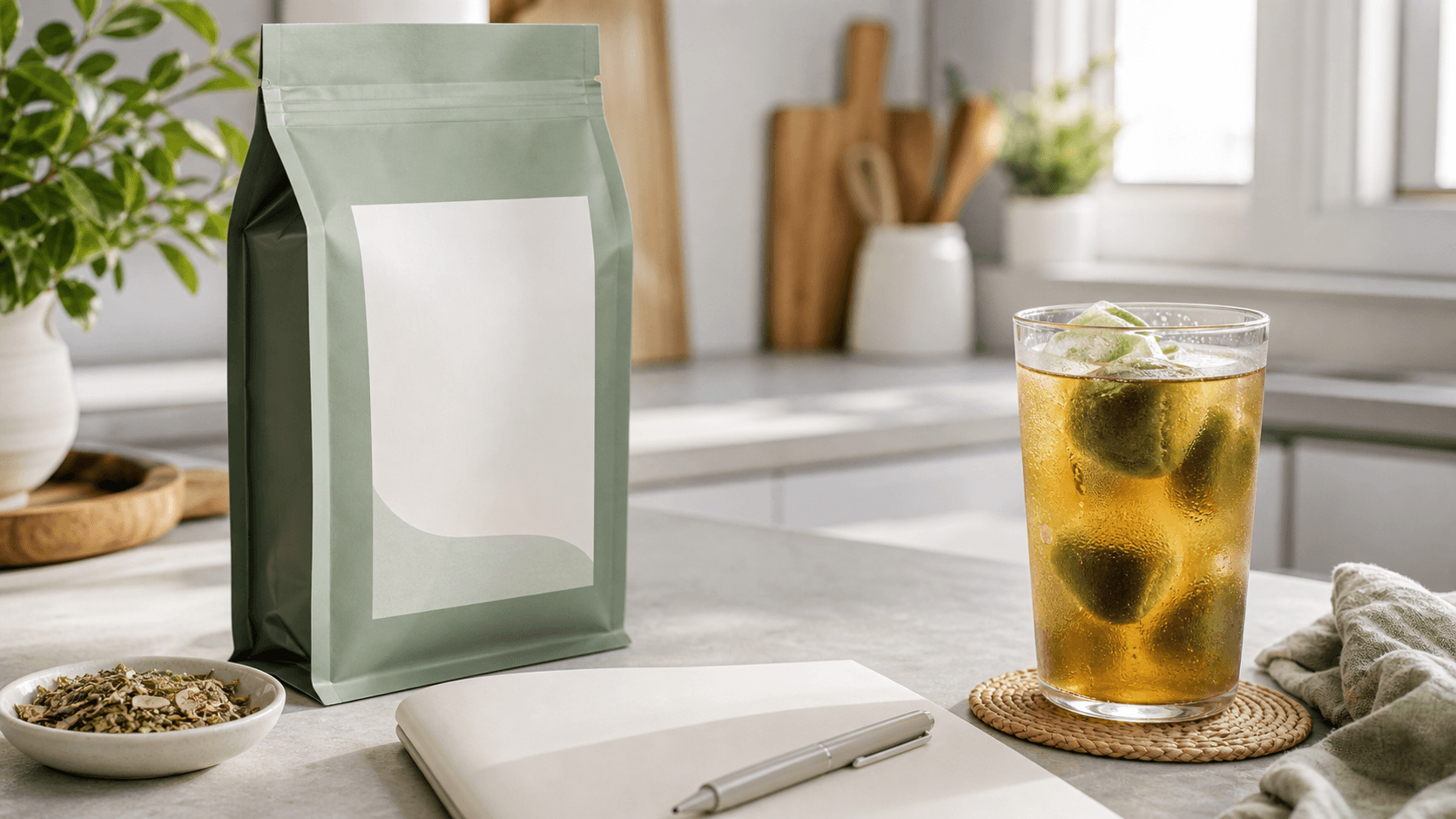
A yerba mate label should help you answer a few ordinary questions: How much is one serving? How many servings are in the container? Which ingredients provide the mate flavor? Does the package state a caffeine amount? And does that amount match the portion you plan to drink?
Those questions matter more than a broad promise on the front of the package. Yerba mate naturally contains caffeine, but a generic category estimate cannot tell you the tested amount in a specific pouch, bottle, can, or frozen cube.
This guide is a practical reading checklist, not legal advice and not a substitute for a finished Yerba Melt label review.
Start with serving size
Read the serving size and servings per container together. The FDA explains that a Nutrition Facts serving size reflects how much people customarily consume; it is not a recommendation for how much someone should eat or drink.
| Label field | What it tells you | What it does not tell you |
|---|---|---|
| Serving size | The quantity used for the nutrition information on the label. | The amount that is right for every person. |
| Servings per container | How many labeled servings the package contains. | That everyone will divide the package that way. |
| Per-serving values | The listed values for one labeled serving. | The total for the package when it contains more than one serving. |
| Per-container values | The listed values for the whole package when that column appears. | A universal portion recommendation. |
If a bottle contains two servings and you drink the entire bottle, a per-serving number does not describe the whole bottle. Some packages use a second column to make the full-container comparison easier, but the first step is still to check how the package defines one serving.
Find where caffeine is described
The ingredient list and a caffeine-amount statement answer different questions.
FDA consumer guidance says caffeine added to a packaged food as a stand-alone ingredient must appear in the ingredient list. When caffeine occurs within an ingredient that naturally contains it, the caffeine-containing ingredient is listed instead. For yerba mate, that means you may see yerba mate in the ingredient list without seeing caffeine as its own separate ingredient.
FDA also notes that many packaged foods and beverages voluntarily state how much caffeine they contain. A voluntary amount can be useful, but it still needs a clear unit and portion.
| What the package says | How to read it |
|---|---|
| `Yerba mate` in the ingredients | The product contains a naturally caffeinated plant ingredient; this alone does not state a milligram amount. |
| `Caffeine` as a separate ingredient | Caffeine was added as a stand-alone ingredient; look for any amount statement elsewhere on the package. |
| `Contains caffeine` | Useful presence language, but not a quantity. |
| `__ mg caffeine per serving` | Pair the number with the stated serving size and servings per container. |
| No caffeine amount shown | Do not fill the gap with a generic tea or coffee range; ask the manufacturer if a product-specific value matters to you. |
Match the number to the portion
A caffeine number without a portion is incomplete. Before comparing two drinks, line up all four pieces:
1. the caffeine amount
2. the unit, usually milligrams
3. the serving size
4. the number of servings you will actually use
That keeps a small prepared serving from being compared with a full bottle, a concentrate, or a multi-serving package as if they were the same thing.
FDA's caffeine guidance also stresses that amounts can vary by product and container size. For a future Yerba Melt cube, the useful number will be a tested value tied to a defined cube and preparation—not an estimate borrowed from another yerba mate product.
Separate current facts from future guidance
In June 2026, FDA listed draft guidance on labeling caffeine content in foods and beverages on its Human Foods Program guidance agenda. That is a topic the agency plans to develop, not a new caffeine-labeling rule and not final guidance.
The practical approach today is to read the current package carefully and avoid treating an agenda item as if it already changed the label in your hand.
| Current label check | Future-guidance watch |
|---|---|
| Serving size and servings per container | Whether FDA publishes draft caffeine-labeling guidance |
| Ingredient list | The scope and wording of any future draft |
| Any voluntary caffeine amount | Whether a draft later becomes final guidance |
| Per-serving versus per-container use | Product-specific label review before launch |
What a clear frozen-cube label should answer
A frozen format adds one more measurement question: is the serving defined by one cube, several cubes, or a prepared drink?
Before Yerba Melt launches, a clear label should make these details easy to find:
- the serving size in cubes and another useful measure where appropriate
- servings per package
- ingredients in plain order
- that the product contains caffeine
- a product-specific caffeine amount only after the formula and serving have been tested
- simple hot and iced preparation directions
- freezer storage instructions
The waitlist is helping us learn which of those details people look for first. The goal is not a louder label. It is a label that makes the portion, caffeine context, and preparation easy to understand.
For more measurement context, read does cold yerba mate have caffeine? and the yerba mate vs coffee morning routine. If the freezer format itself is new to you, start with what is frozen yerba mate?.
Sources
- https://www.fda.gov/consumers/consumer-updates/spilling-beans-how-much-caffeine-too-much
- https://www.fda.gov/consumers/consumer-updates/food-serving-sizes-have-reality-check
- https://www.fda.gov/food/nutrition-facts-label/whats-nutrition-facts-label
- https://www.fda.gov/food/hfp-constituent-updates/fda-releases-2026-human-foods-program-guidance-agenda