Yerba mate latte and smoothie ideas: choose the ingredients first
Three untested mate cube drink ideas, with ingredient choices, measurement notes, and a clear distinction between mixing order and total added liquid.
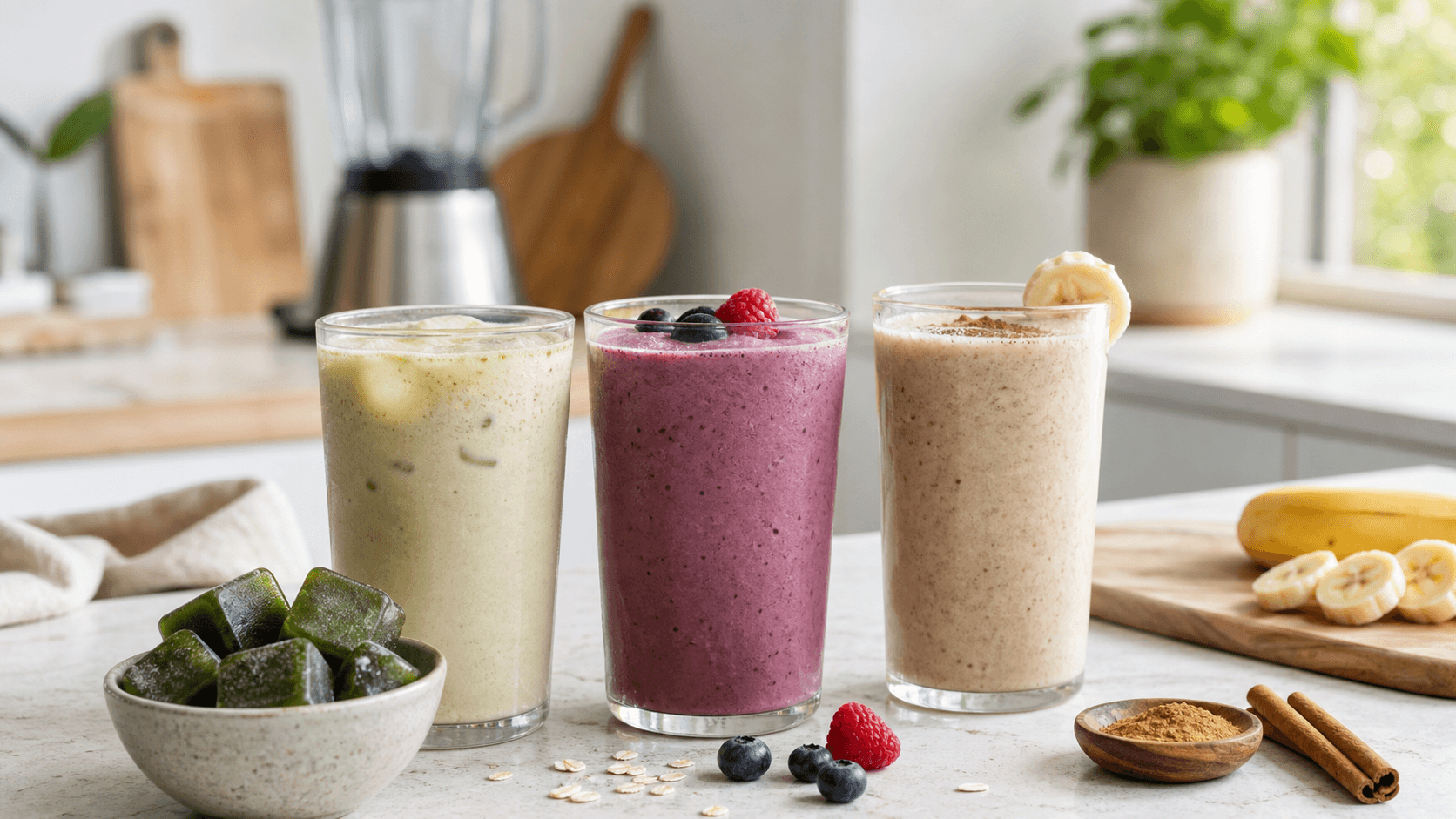
Frozen mate with milk, berries and yogurt, or banana and cinnamon: these are three combinations to consider if you want to explore a latte-style drink or smoothie. They are untested serving ideas. We do not yet have measured quantities, a repeatable blending method, or tasting results for them.
An ingredient list can be a starting point without being a finished recipe. University of Nevada, Reno Extension's recipe-development guide calls for specific ingredients, measured yield, clear equipment and directions, and repeated testing. That is the work still needed before these ideas can carry reliable ratios.
Choose one combination
| Drink idea | Proposed ingredients | Choices to settle before testing | Tested quantity or result |
|---|---|---|---|
| Iced latte-style mate | Brewed mate cubes and milk or a named alternative | Exact beverage, mate batch, cube volume and total added liquid | Not established |
| Berry mate smoothie | Brewed mate cubes, berries, yogurt and a named liquid | Berry variety and fresh or frozen form; exact yogurt and liquid; compatible blender instructions | Not established |
| Banana-cinnamon mate blend | Brewed mate cubes, banana, milk or a named alternative, and cinnamon | Banana preparation, exact beverage, measured cinnamon and compatible blender instructions | Not established |
The table proposes ingredients, not portions. A fixed three-cube instruction would leave the cube volume and the amount of brewed mate undefined. For the format itself, see what frozen yerba mate means and the mate cube preparation guide.
Iced latte-style mate
Choose the exact milk or alternative you want to explore. Write its full product name in your notes and check that package's ingredients, allergen information and storage directions. Do not use a broad name such as oat beverage or yogurt as a complete ingredient specification.
For this idea, the unanswered question is whether you like that particular base with your particular mate batch. We have not established that it softens bitterness, mixes evenly, or reaches a preferred texture.
Berry mate smoothie
Specify the berry and whether it is fresh or frozen, then identify the yogurt and additional liquid separately. Those choices need to be fixed before an ingredient amount can be repeated meaningfully.
Check your blender manufacturer's directions for frozen ingredients, liquid requirements, loading order and capacity before attempting an adaptation. This page does not establish a suitable setting, minimum liquid quantity or blending time for your machine. A published fruit smoothie recipe also would not establish the results of adding mate cubes to it.
Banana-cinnamon mate blend
Record the prepared banana amount and the cinnamon amount with explicit units. Keep the exact beverage in the record too. Leave the flavor and texture notes blank until you have made an actual observation; we have not tested how much banana or cinnamon works with the mate.
Mixing order is separate from total added liquid
Adding a splash first and the rest later should not be presented as a way to reduce dilution. If the same mate and the same total liquid reach the glass, changing the order alone does not reduce the quantity of liquid added. This is ingredient accounting, not a tested statement about texture or melting speed.
For a comparison, record both the total amounts and the sequence. Record any extra ice separately and note whether it has melted when you measure the drink. We have not tested whether a particular order changes mixing, foam, texture or preparation time.
The cube-size and dilution worksheet helps keep the mate portion and added liquid visible without using cube count as a complete measurement.
What to record before calling it a recipe
NIST's culinary measurement guidance recommends appropriate measuring tools and reading a liquid measure on a level surface at eye level. Use explicit units throughout your notes.
| Field | Record from the actual test |
|---|---|
| Mate portion | Batch identity, cube count and measured liquid volume represented by those cubes |
| Milk, yogurt or alternative | Exact product and amount, with units |
| Fruit and cinnamon | Identity, preparation or frozen state, and measured amount |
| Other liquid and ice | Each amount separately, including later additions |
| Equipment and sequence | Machine or vessel, applicable manufacturer directions and actual order used |
| Finished yield | Measured amount and observation point, including remaining ice or foam |
| Results and repeat | Your own taste and texture notes, then whether the same method reproduced them |
These observations do not establish a caffeine amount. Yerba Melt has no final tested per-cube caffeine value to supply here, and this article provides no caffeine or nutrition calculation for the proposed drinks.
Keep storage guidance attached to the food
Follow each ingredient's storage directions. FDA food-storage guidance recommends prompt refrigeration of perishables, a refrigerator at or below 40 F (4 C), a freezer at 0 F (-18 C), and appliance temperature checks. It also cautions that appearance, smell and taste cannot establish food safety.
That general guidance does not give these untested mate, dairy and fruit combinations a storage life. This article offers no make-ahead holding period, refreezing method or shelf-life promise for a finished smoothie.
If you prefer a drink idea without milk or yogurt, see sparkling mint-lime mate. To help shape the future cube product, join the Yerba Melt waitlist and tell us which combination you would want tested first.