Terere equipment vocabulary: a beginner's guide
A respectful beginner's guide to guampa, bombilla, thermos, and hielera in traditional Paraguayan terere, with a clear boundary around frozen mate cubes.
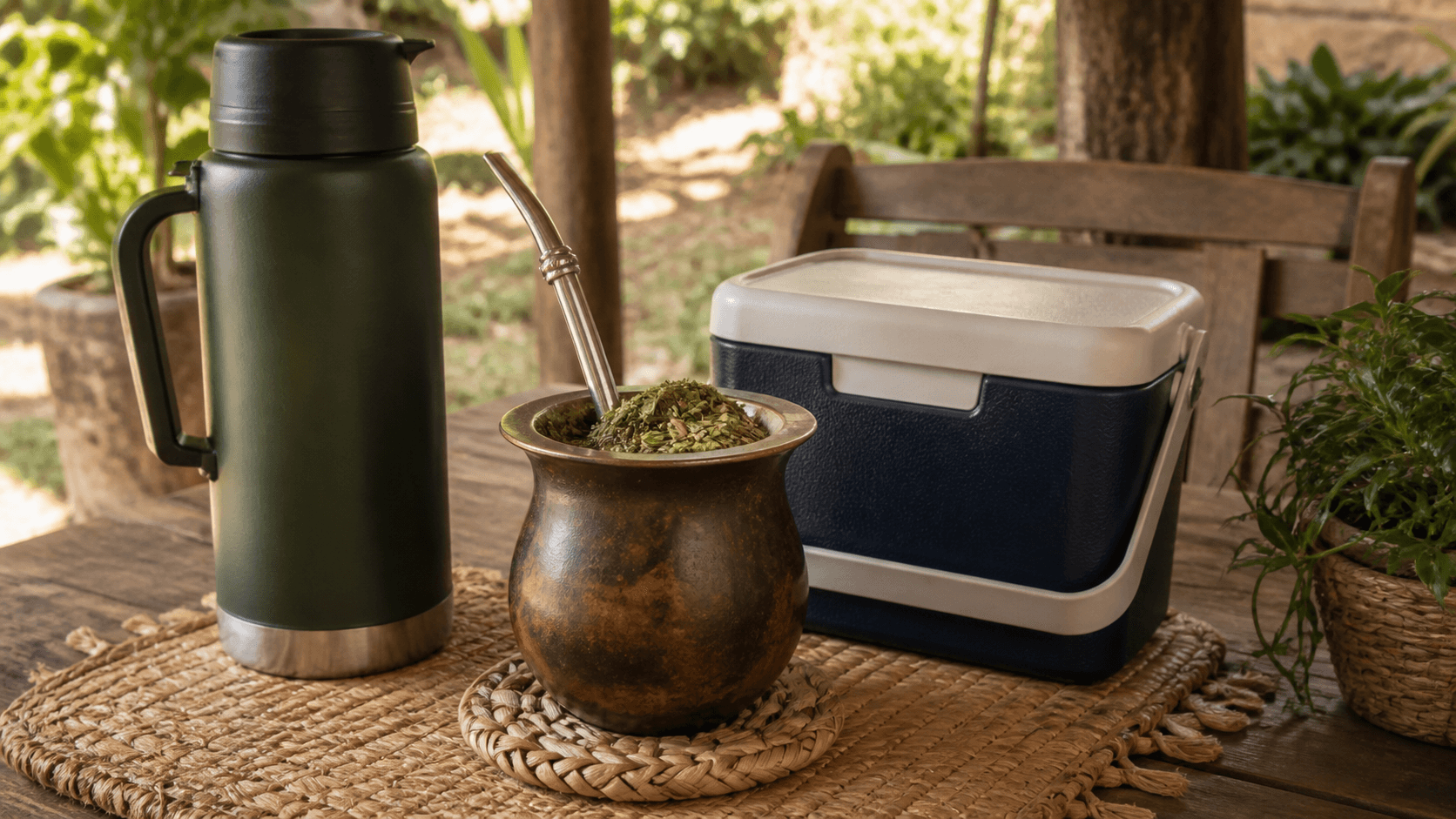
If you are new to terere, the equipment words can look like a shopping list: guampa, bombilla, thermos, and hielera. They make more sense when you understand the preparation they belong to.
Terere is not simply a generic name for cold yerba mate. UNESCO's 2020 decision inscribed the practices and traditional knowledge of terere in the culture of pohã ñana in Paraguay on the Representative List of the Intangible Cultural Heritage of Humanity. Paraguay's Law 4261/2011 also declares terere the country's cultural heritage and national drink.
This guide defines a few equipment terms from those official sources. It does not turn the terms into an authenticity checklist, recommend medicinal herbs, or suggest that a frozen mate cube is traditional terere.
The four terms at a glance
| Term | Practical meaning in this guide | Source-supported context | What not to assume |
|---|---|---|---|
| Guampa | The vessel that holds the yerba mate for drinking | The cited official description says recipiente (vessel); this guide uses guampa as beginner vocabulary for that role. | The sources used here do not declare one vessel shape, material, or English translation universally required. |
| Bombilla | A metal or cane straw used to sip while holding back much of the leaf material | UNESCO explicitly describes the bombilla as a metal or cane straw. | Owning one does not by itself recreate the broader practice. |
| Thermos or jug | The container used for the cold water | UNESCO describes terere as prepared with cold water in a jug or thermos. | The container does not determine caffeine or serving size. |
| Hielera | A cooler or ice container that may be part of a cold setup | The Spanish term describes cold-holding equipment, but the UNESCO decision does not make a hielera part of the inscribed preparation sequence. | The word does not establish one required design, holding time, or temperature. |
The first three rows come directly from the preparation described in the UNESCO decision and Paraguay's cultural record. Hielera is useful practical Spanish vocabulary, but it should not be presented as though the heritage decision created a four-item equipment standard.
The service sequence matters more than a gear list
Paraguay's National Secretariat of Culture describes a traditional sequence in which cold water is prepared in a jug or thermos, yerba mate is placed in the drinking vessel, and the drink is taken through a cane or metal bombilla. The same record places that sequence inside family and community transmission rather than treating it as a set of objects to buy.
| Moment in the cited sequence | What the source supports | Boundary for this guide |
|---|---|---|
| Prepare the water | Cold water is held in a jug or thermos; the UNESCO-recognized practice also describes pohã ñana in the water. | This article does not recommend herbs or repeat traditional therapeutic statements as product evidence. |
| Prepare the vessel | Yerba mate is placed in the drinking vessel. | The official description says vessel; this guide uses guampa as common Paraguayan vocabulary, not as a universal English translation or one required material. |
| Serve and drink | Water is served into the yerba-filled vessel and taken through a cane or metal bombilla. | This is not the same workflow as straining a pitcher, pouring mate over ice, or melting a frozen cube. |
| Pass on the practice | The cultural record describes knowledge transmitted within families and communities. | Reading an equipment guide does not confer ownership of that knowledge or turn a product format into the recognized practice. |
This is why a respectful beginner's description should keep the people, sequence, and Paraguayan context visible. The objects help explain the preparation, but the heritage recognition is not a certification for a vessel, accessory bundle, or cold-mate product.
Guampa: the drinking vessel
In the UNESCO description, terere is served in a vessel already filled with yerba mate. Paraguayan sources commonly use guampa for that vessel.
For a beginner, the important point is function: the guampa holds the yerba and receives cold water during the drinking sequence. It is not equivalent to an ordinary glass of strained iced tea, because the leaf remains in the vessel and the drink is taken through the bombilla.
Guampas can appear in different materials and forms. This article does not declare one material more authentic, safer, or better. If you are choosing an item to use, rely on the maker or artisan for material, care, and cleaning instructions rather than inferring them from the word alone.
Bombilla: the filter straw
A bombilla is the straw placed into the yerba-filled vessel. UNESCO's description identifies metal and cane versions. Its job in the setup is both straw and filter: the person drinks the infused water while most of the loose material stays in the guampa.
That makes bombilla use different from brewing a pitcher and pouring the drink through a separate kitchen strainer. Both can produce a cold mate drink, but they belong to different workflows.
For practical equipment selection, check the item's material, length, filter form, and care directions. Those are product-specific details, not cultural facts that can be assigned to every bombilla.
Thermos or jug: the cold-water container
UNESCO describes the cold water as prepared in a jug or thermos before it is served into the yerba-filled vessel. The water container and guampa therefore have separate roles:
| Part | Holds | Role in the sequence |
|---|---|---|
| Thermos or jug | Cold water, and in the UNESCO-recognized pohã ñana practice, water mixed with prepared herbs | Supplies the cold water for pours |
| Guampa | Yerba mate and the bombilla | Receives the water and is used for drinking |
This article does not recommend pohã ñana or repeat therapeutic descriptions associated with traditional plant knowledge. Those descriptions belong to the cultural sources and are not evidence for a Yerba Melt ingredient or health claim.
Hielera: cold-holding context
Hielera can refer to a cooler or ice container. It is useful for understanding a cold setup, but it is not one of the objects named in the preparation sequence used for this article's primary-source table.
The term does not establish a universal packing method, a safe holding duration, or a required temperature for every setup. If you are handling prepared drinks away from home, use applicable food-safety guidance for the actual ingredients and container rather than treating the word hielera as a safety guarantee.
How the pieces relate
The equipment is easier to remember as a sequence:
1. The thermos or jug carries the cold water.
2. The guampa holds the yerba mate.
3. The bombilla stays in the guampa for drinking.
4. A hielera may support a cold setup, but it is separate from the cited heritage sequence.
The sequence explains the objects, but it still does not capture the whole practice. UNESCO's recognition concerns knowledge and practices transmitted in Paraguay, not an equipment bundle detached from the people and context around it.
Where frozen mate cubes fit—and where they do not
Frozen mate cubes use a different workflow. Prepared mate is portioned and frozen first, then finished later with water or another drink base. The leaves are not sitting in a guampa while cold water is poured through them.
| Traditional terere context | Frozen mate cube format |
|---|---|
| Yerba mate remains in the drinking vessel | Mate is prepared before it is frozen |
| Cold water is poured from a jug or thermos | Water or another base is added to the frozen portion |
| A bombilla is used in the yerba-filled vessel | A regular glass and stirring may be enough |
| Part of a Paraguayan cultural practice | A modern freezer convenience format |
Yerba Melt should therefore say cold yerba mate or frozen yerba mate cubes, not call the cube format terere. The terere, iced mate, and cold brew comparison explains the method boundaries in more detail.
If you are choosing tools by a kitchen workflow, use the cold mate equipment guide. For a broader map of cold preparations, start with the cold yerba mate guide.
The useful product question is narrower than the tradition: would a clearly labeled frozen portion help with your own cold-mate routine? Join the waitlist and tell us what part of preparation you would want handled ahead of time.
Sources
- https://ich.unesco.org/en/Decisions/15.COM/8.b.41
- https://cultura.gov.py/2025/09/practicas-y-saberes-tradicionales-del-terere-en-la-cultura-del-poha-nana-bebida-ancestral-guarani-en-paraguay-2/
- https://cultura.gov.py/marcolegal/ley-42612011-que-declara-patrimonio-cultural-y-bebida-nacional-del-paraguay-al-terere/
- https://cultura.gov.py/2020/12/declaran-al-terere-como-patrimonio-cultural-inmaterial-de-la-humanidad/