Make-ahead yerba mate cubes for iced tea
A measured freezer-to-glass workflow for making yerba mate cubes ahead, then using them in cold water or iced tea without calling them instant.
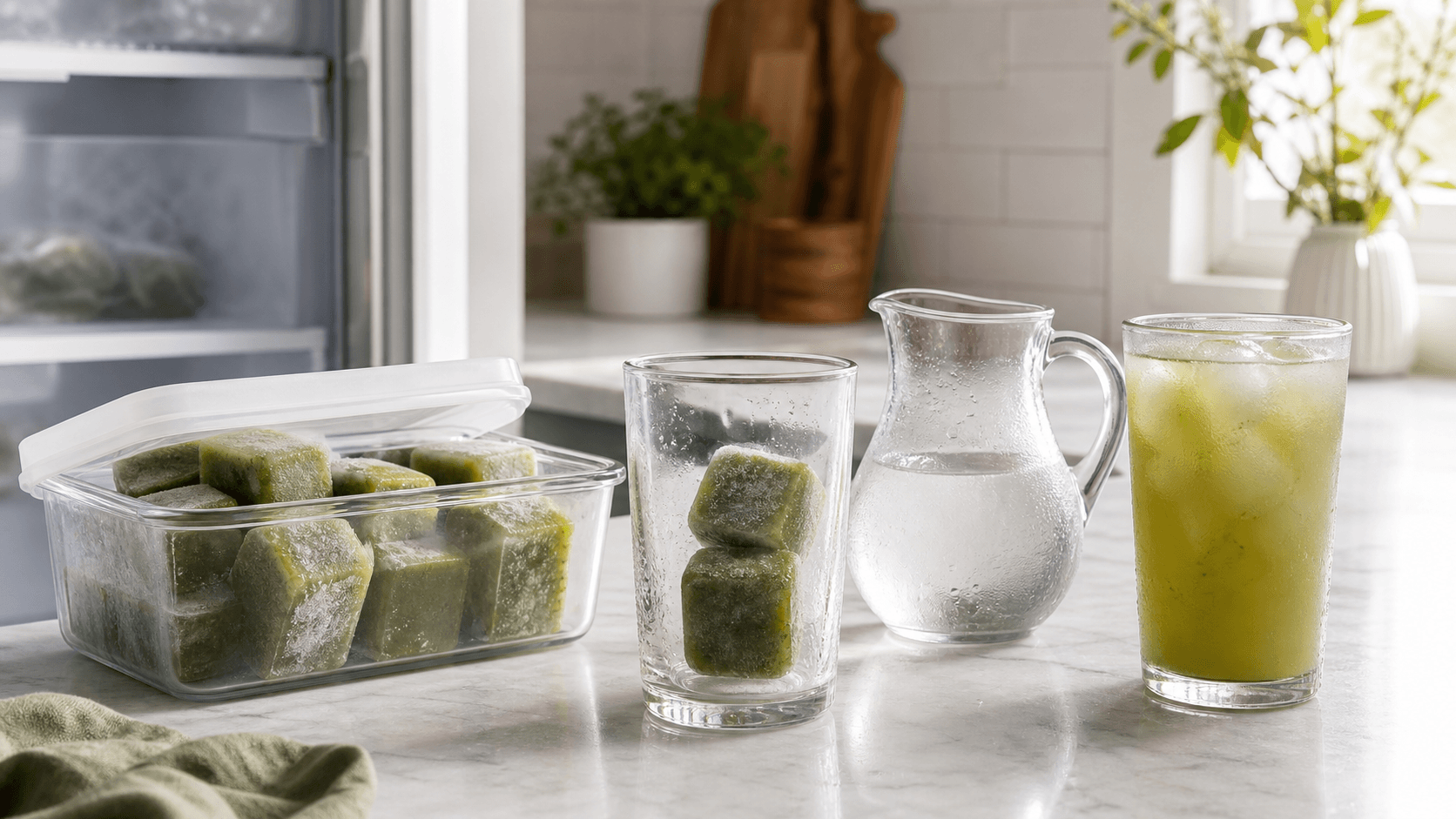
Make-ahead yerba mate cubes turn one brewed batch into several cold-drink starting points. Brew the mate, cool it, portion it in a tray, and move the solid cubes into a covered freezer container. Later, put a measured number in a glass and add cold water or prepared iced tea.
That is convenient, but it is not instant in the way a powder is instant. A frozen cube has to soften and melt. The honest advantage is that the brewing, cooling, and portioning happened earlier.
Start with a batch you already like
Use a plain yerba mate brew that tastes good after it cools. A very concentrated batch may make useful cubes, but it also makes cube count and dilution more important.
Before filling the tray, write down:
| Batch detail | What to record |
|---|---|
| Mate | Brand or loose-leaf blend |
| Leaf amount | The amount used for the whole batch |
| Water | The measured batch volume |
| Brew method | Your usual hot brew or a covered refrigerator method |
| Tray | Small, standard, or large compartments |
This is a household repeatability note, not a formula for caffeine. The finished drink depends on the mate, method, cube size, cube count, and dilution.
If you need a basic cube method first, use the DIY yerba mate ice cube guide.
Freeze the portions
University of Minnesota Extension describes tray freezing, moving frozen portions into a container, leaving room for expansion, and limiting air exposure with appropriate freezer packaging. Its page is general freezing guidance rather than a tested storage study for brewed mate, so use it for the workflow—not for a mate-specific shelf-life promise.
1. Let the brewed mate cool.
2. Fill a clean tray without filling each compartment to the rim.
3. Set the tray flat in the freezer.
4. Once the cubes are solid, move them into a clean, covered freezer container.
5. Label the container with the date, brew method, and cube size.
Minnesota Extension recommends storing frozen foods at 0 F (-18 C) or lower. A small freezer thermometer can help confirm the appliance temperature.
The freezer label guide has a simple batch card if you plan to compare more than one brew.
Build one freezer-to-glass serving
The first glass should be a test, not a claim about the perfect cube count.
| Step | Starting point | What to notice |
|---|---|---|
| Add cubes | 2 to 3 standard cubes | Record the tray size so the count means something next time. |
| Add liquid | 6 to 8 ounces cold water | Use less at first if the frozen batch is mild. |
| Wait and stir | Let the cubes soften, then stir | The drink changes as more of each cube melts. |
| Taste | Try it before adding flavors | Add water for a lighter glass or another cube for more mate flavor. |
If you pour the water and drink immediately, much of the mate may still be frozen. Give the glass time, stir it, and taste again. That small pause is why “make-ahead” is more accurate than “instant.”
Use cold water or prepared iced tea
Plain cold water gives you the clearest test of the cube batch. Prepared iced tea adds another brewed flavor, so begin with fewer mate cubes and adjust after tasting.
Iowa State University Extension describes iced tea as tea plus water and emphasizes clean containers and cold handling. It also distinguishes hot, refrigerator-cold, and sun methods. For this freezer workflow, make the original brew with a controlled hot or covered refrigerated method rather than leaving tea in the sun.
Try one of these simple paths:
- Plain iced mate: cubes plus cold water.
- Lighter tea blend: one or two mate cubes in a glass of prepared iced tea.
- Citrus glass: cubes, cold water, and a small squeeze of lemon after tasting.
- Sparkling finish: let the cubes soften in a little still water, then add sparkling water slowly.
For more serving directions, see 15 ways to use frozen yerba mate cubes.
Keep caffeine wording simple
Yerba mate contains caffeine. FDA consumer guidance notes that caffeine amount can vary among products and that individual sensitivity varies.
A homemade cube count does not provide a caffeine amount. Do not borrow a number from a canned drink, a different loose-leaf preparation, or another person’s recipe. Keep the brew and serving notes together until a finished product can be tested and labeled per cube and per prepared serving.
What the frozen format changes
The frozen yerba mate explainer separates the format idea from the claims it still needs to prove. At home, the format moves work to batch day:
| Batch day | Drink time |
|---|---|
| Brew and cool the mate | Choose a cube count |
| Fill and freeze the tray | Add cold water or prepared iced tea |
| Move cubes to a covered container | Let the cubes soften and stir |
| Label the batch | Taste and adjust |
A ready-made Yerba Melt cube could remove the home brewing, cooling, tray filling, and cleanup. The useful product question is whether that saved work is worth the freezer space—not whether a cube creates an unsupported effect.
If this is a routine you would use, join the waitlist and tell us whether you would start with a plain cube, a citrus version, or another flavor.