How to melt frozen yerba mate cubes in hot water
A measured mug method for melting frozen yerba mate cubes in hot water while keeping cube count, dilution, taste, and ordinary hot-drink handling visible.
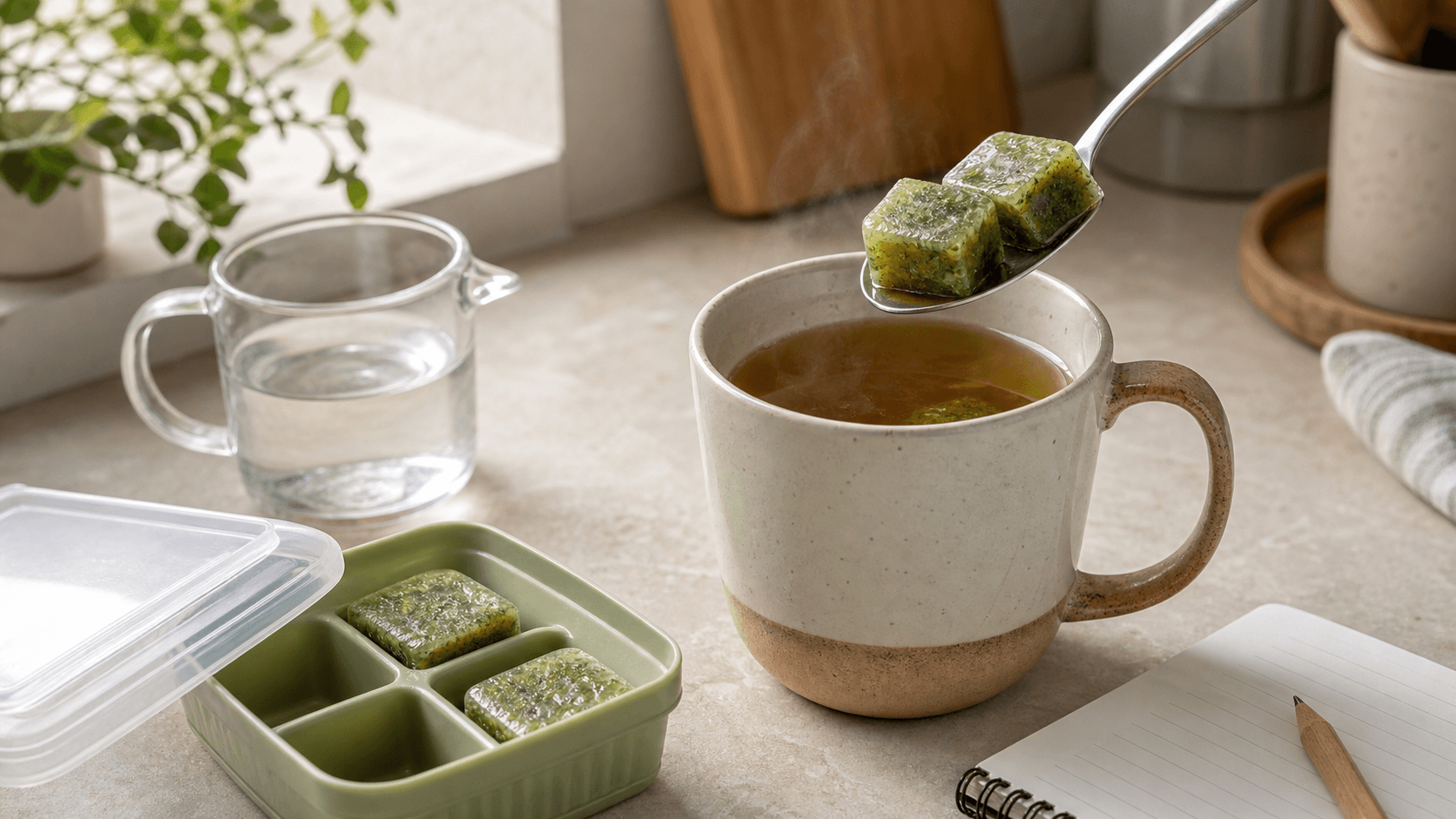
Frozen yerba mate cubes can work in a warm mug as well as an iced glass. The basic move is simple: put a measured number of cubes in a sturdy mug, add hot water, stir, and taste after the cubes melt.
The useful part is what you measure. Cube trays vary, homemade brews vary, and every addition of water changes the finished drink. A repeatable hot cup starts with cube count and mug volume, not a universal recipe or an untested caffeine number.
Start with a measured mug
Use a mug with room to stir without splashing. If this is your first test, begin with fewer cubes and less water than the mug can hold; you can add more water after tasting.
1. Place the mug on a clear, stable counter away from the edge.
2. Add two or three cubes from one labeled batch.
3. Pour in a measured amount of hot water without filling the mug to the rim.
4. Stir gently until the cubes melt.
5. Taste only when the drink is comfortable for you to sip.
6. Add water a little at a time if the mate tastes too concentrated.
The two-or-three-cube starting point is a kitchen test, not a serving direction. Tray compartments and brew strength are not standardized. A future packaged Yerba Melt product should give directions for its own tested cube size and formula.
Record the variables that change the cup
| Record this | Why it matters | What to change next time |
|---|---|---|
| Cube count | More cubes add more brewed mate and more frozen volume. | Change by one cube. |
| Approximate cube size | Two trays can produce very different portions. | Use the same tray for the next test. |
| Added water | Water changes both concentration and finished volume. | Adjust in small measured additions. |
| Starting water temperature | It affects how quickly the cubes melt and how hot the final mug feels. | Record the setting or method; do not chase a universal number. |
| Stir and wait time | A partly melted cube makes an uneven first sip. | Stir again and wait before judging flavor. |
| Finished taste | Bitterness, aroma, and strength are practical home observations. | Change one variable, then repeat. |
This worksheet does not calculate caffeine. The cube's brew recipe, leaf, water, steep, cube volume, and finished dilution would all need to be defined before a number could be attached to a serving. Keep homemade caffeine described as unknown rather than estimating from taste or color.
Why the cube changes the mug
A frozen cube does two jobs at once: it adds prepared yerba mate and cools the water around it while melting. The final temperature depends on the cube mass, water amount, starting temperature, mug, room conditions, and time. That is why a cube cannot guarantee that a very hot drink becomes a particular temperature.
The same logic applies to flavor. Adding another cube adds more brewed mate, but it also adds frozen water from that batch. The result may taste stronger, lighter, or simply different depending on how concentrated the original brew was.
If you want a fair comparison, make two mugs with the same water and change only the cube count. For a broader method test, see our cold-brew versus hot-brew cube guide.
Use ordinary care with a hot drink
Washington State DSHS identifies hot beverage spills as a common source of scald injuries. Its practical prevention steps include keeping hot drinks away from counter and table edges, not overfilling, using a spill-resistant lid when carrying a drink, and stirring and testing before serving.
A frozen cube does not remove the need for those habits. Use a stable mug, pour with space left at the top, keep the work area clear, and let the drink cool before sipping if it still feels too hot. This article does not set a universal serving temperature.
Freeze portions with room to expand
University of Minnesota Extension explains that liquid can expand during freezing and recommends leaving headspace in containers. It also describes tray freezing as a way to make individual portions before moving them into covered storage.
For mate cubes, fill each tray compartment consistently without overfilling. Once the cubes are solid, move them to a covered, labeled container. Record the brew date, brew method, and tray so the next mug starts with useful context.
That extension guidance is general freezing guidance; it does not establish a tested shelf life for homemade yerba mate cubes. Make manageable batches and use the freezer label guide to keep them distinct.
Adjust one thing at a time
If the first mug is too concentrated, add a measured splash of water. If it is too light, try one more cube in the next mug. If the cube melts slowly, stir and wait rather than changing the water, cube count, and mug all at once.
The best hot-cup recipe is the one you can repeat and enjoy. Our hot-or-cold preparation guide shows the broader workflow, and the frozen yerba mate explainer covers why the format is useful in the first place.
If a ready-made cube would make your warm-mug routine easier, join the Yerba Melt waitlist and tell us how you would prepare it.