A freezer-quality observation card for yerba mate cubes
A blank, repeatable card for recording container seal, frost, color, odor, melt appearance, and taste notes for one batch of frozen yerba mate cubes.
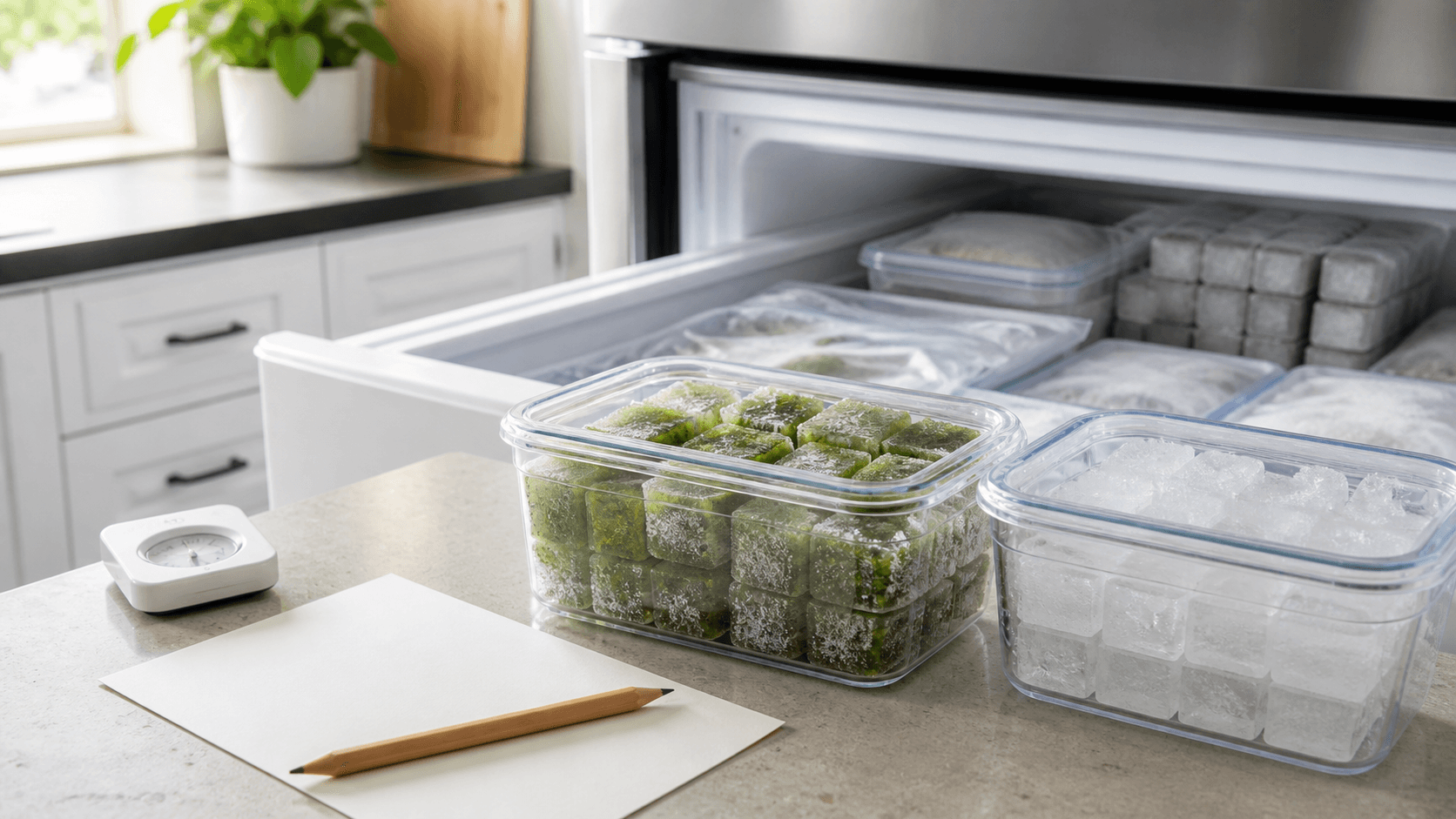
A few ice crystals on a container can tell you to look more closely. They cannot, by themselves, tell you how old a batch is, whether it stayed at one temperature, or whether it is safe to drink.
That is why a freezer-quality check works better as an observation card than a pass-or-fail score. Record what you know about one batch of frozen yerba mate cubes, note what you can actually see and smell, then describe the finished drink in neutral language.
This card does not establish a mate-cube shelf life. It also is not a microbial test. It is a way to make a home freezer trial easier to inspect and repeat.
Start with the batch facts
Fill in the first section when the cubes go into the freezer. Details recorded later are easier to trust when they are attached to a specific batch.
| Batch field | What to record |
|---|---|
| Batch date | The date the mate was brewed and frozen. |
| Brew description | The exact product and the hot- or cold-brew method used. |
| Tray or cube size | The tray used, or a measured cube volume if you have one. |
| Container | Rigid container, covered tray, freezer bag, or another setup. |
| Seal | How the lid, zipper, or cover closed when stored. |
| Freezer location | Drawer, shelf, door, or another specific place. |
| Temperature interruption | Any known outage, move, partial thaw, or door-left-open event. Leave unknown when you do not know. |
For liquid packs, the National Center for Home Food Preservation recommends freezer-suitable containers and tight-fitting covers. It also notes that liquid expands during freezing, so containers need appropriate headspace. Those are general packaging principles, not a tested recipe for yerba mate cubes.
Use a blank observation card
Check the batch before moving or rinsing the cubes. Write what is present rather than what you think it proves.
| Check | Observation | Neutral note examples |
|---|---|---|
| Container and seal | Lid fully seated; zipper closed; seal uncertain. | |
| Frost on container | None visible; light surface frost; heavier frost near one edge. | |
| Ice crystals on cubes | None visible; small crystals; larger crystals; uneven across container. | |
| Cubes stuck together | Separate; a few joined; one solid group. | |
| Surface appearance | Smooth; rough; dry-looking patches; uneven edges. | |
| Color | Similar to batch note; lighter; darker; uneven; not recorded originally. | |
| Odor after opening | Expected mate aroma; faint freezer odor; another neutral description. | |
| Melt appearance | Clearer; cloudy; sediment visible; uneven melt; another observation. | |
| Taste in a measured glass | More bitter; flatter; similar; freezer odor noticeable; another sensory note. | |
| Next action | Repeat; change the container; make a smaller batch; stop and review handling history. |
Use the same cube count and added liquid when comparing two checks from the same batch. Otherwise, a stronger or weaker glass may reflect dilution rather than freezer quality.
What frost and crystals can—and cannot—show
University of Minnesota Extension explains that air exposure can contribute to off flavors and surface moisture loss in frozen foods. It also says fluctuating freezer temperatures can allow slight thawing and refreezing, which can produce ice crystals.
That supports a careful observation: crystals, exposed surfaces, and a loose seal are worth recording. It does not support these shortcuts:
- assigning an age to a batch from frost alone
- declaring a fixed best-by date for homemade mate cubes
- treating clear-looking cubes as proof of safety
- treating a sensory check as a microbial test
- assuming freezing preserves caffeine, flavor, or plant compounds for a set duration
If the handling history is unknown, write “unknown.” That is more useful than filling the gap with a guess.
Keep packaging notes specific
The National Center for Home Food Preservation lists several useful properties for freezer packaging: resistance to moisture vapor, durability, leak resistance, protection from off odors, and an effective seal. It describes rigid freezer containers as especially useful for liquid packs and advises removing as much air as practical from freezer bags before closing.
Turn those principles into concrete notes:
| Instead of writing | Record this |
|---|---|
| “Stored correctly” | Container type, lid or closure, headspace, and freezer location. |
| “Freezer burned” | Dry-looking patch, surface frost, exposed edge, or unpleasant flavor. |
| “Still fresh” | Date, known temperature history, odor, appearance, and taste in this glass. |
| “Good for months” | No duration unless a source specifically covers the exact product and conditions. |
General freezing guidance can help you choose a container and notice quality changes. It cannot replace product-specific shelf-life work for a future commercial cube.
Make the next batch easier to compare
After the check, change one storage variable at a time. You might use the same tray but move solid cubes into a tighter container, compare two freezer locations, or make a smaller batch that leaves less time for mystery containers to accumulate.
Keep the drink test equally plain:
1. Choose one batch.
2. Record the cube count.
3. Add a measured amount of water.
4. Let the cubes melt using the same routine.
5. Note aroma, bitterness, freezer odor, and overall preference in your own words.
6. Record whether you would repeat the container setup.
The goal is not to award the batch a safety badge. It is to learn which packaging and freezer routine produces a glass you can identify and repeat.
For the broader freezing workflow, read can you freeze brewed yerba mate?. The tray and container guide helps with equipment choices, and the freezer label guide gives each batch a durable identity.
A future Yerba Melt product should do more than a home observation card: define the package, storage instructions, serving, and tested product specifications. If those details matter to you, join the waitlist and tell us what you would want printed most clearly.