Best trays and containers for yerba mate cubes
Check covered tray dimensions, freezer drawer clearance, container closure, and batch labels with a practical mate-cube freezer-fit card.
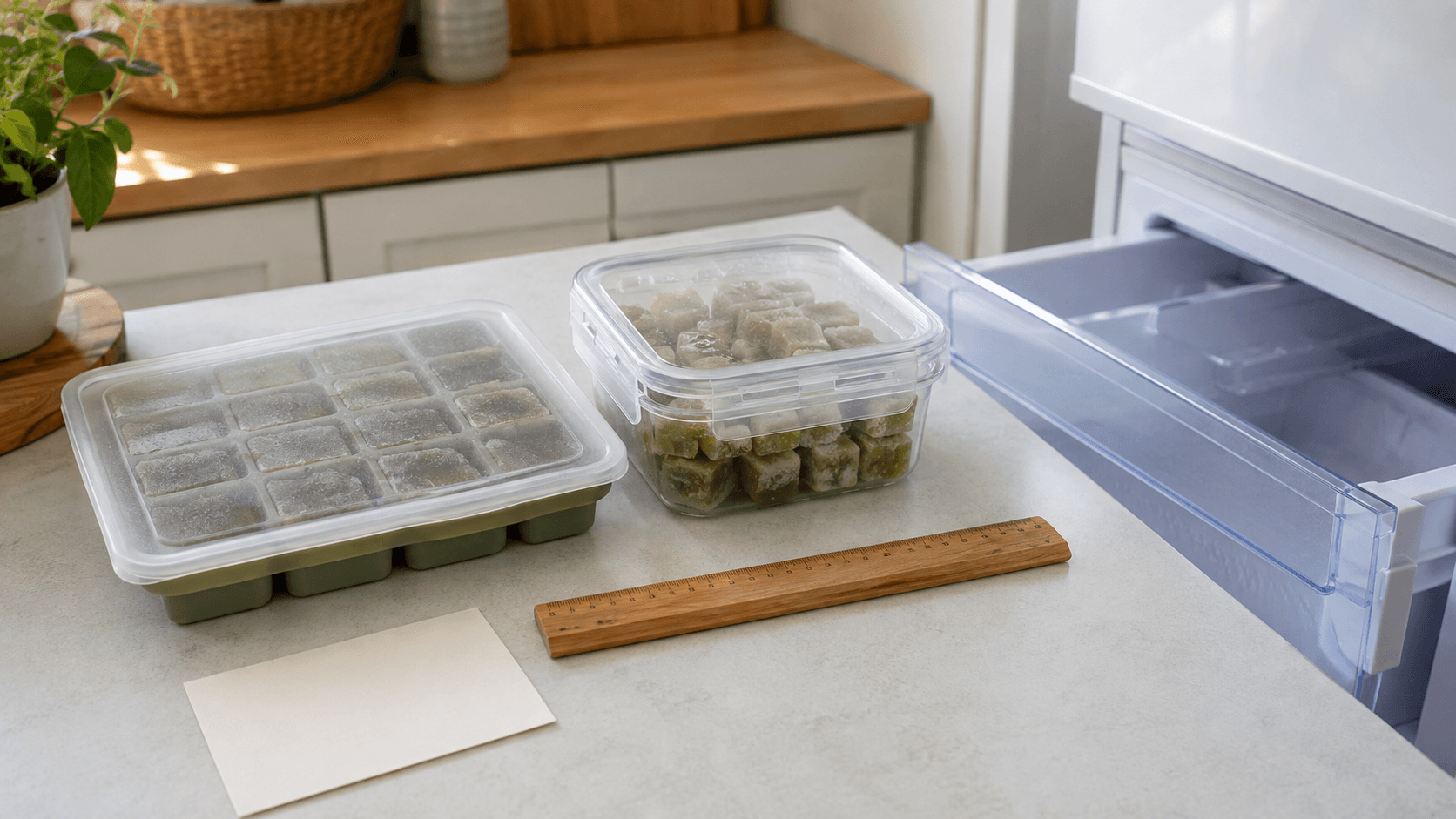
Choose a mate-cube tray around the space you actually have: a level place to freeze it, room for the lid, and enough clearance to slide it in and out. Then check the separate container you plan to use for the finished cubes.
A useful first step is to try the empty tray with its lid attached. A tray can sit inside a drawer yet catch on the opening when you pull it out. Recording both checks makes the next equipment decision easier.
Start with the exact tray
Write down the model or SKU before comparing sizes. Similar-looking trays can have different footprints, lids, and cavity shapes. Copy the manufacturer's dimensions in the order shown, with the unit, and leave uncertain details open until you can measure the item.
These two manufacturer listings illustrate the fields to collect. Specifications were checked September 5, 2026; neither tray has been physically tested here.
| Exact listing | Listed dimensions, in source order | Listed cavity information | Still to check at home |
|---|---|---|---|
| Souper Cubes Freezer Tray - 2 Tablespoon | 11.75 x 5.75 x 1.25 inches | Ten portions; markings include 15 mL and 30 mL | Outer dimensions with lid fully seated, carrying clearance, and actual filled volume |
| OXO Covered Silicone Ice Cube Tray-Large Cube, SKU 11154200 | 5.125 x 7.25 x 2.5 inches | Six large cubes | Outer dimensions with lid fully seated, drawer clearance, and actual filled volume |
Use the figures to begin a space check, then confirm which edge each number describes. Neither listing's dimension field explicitly settles every lid or clearance question. These are specification examples, with no ranking or fit guarantee.
Make a freezer-fit card
Use one unit throughout your measurements. Include projecting rims, tabs, and handles when measuring the outside of the closed tray. Keep the tray empty while checking the path into the freezer.
| Field | Your record |
|---|---|
| Tray maker, model, and SKU | |
| Source URL and date checked | |
| Listed dimensions and unit | |
| Measured outer length with lid on | |
| Measured outer width with lid on | |
| Measured total height with lid on | |
| Available level shelf or drawer footprint | |
| Narrowest opening on the way in | |
| Clearance above the closed tray | |
| Can the drawer and freezer door close normally? | |
| Can you remove the tray without tilting it? | |
| Can you see and reach the batch label? | |
| Separate cube container: dimensions and location |
If you plan to stack covered trays, first check that the maker permits it, then measure the assembled stack. Do not calculate stack height from tray height alone: the lids and bases may nest or project differently.
A completed card should name the location as well as the tray. “Fits the left side of the lower drawer with the lid on” is more useful than “fits the freezer.” Leave the result blank until you have checked it.
Check closure and labeling
The National Center for Home Food Preservation describes freezer-packaging criteria that include resistance to moisture loss, durability, leak resistance, and ease of sealing and marking. Its container guidance also calls for tight-fitting covers on rigid containers.
For your setup, inspect whether the matching lid seats around the whole rim and whether the maker identifies the container for freezer use. A material name such as silicone or plastic alone does not answer those questions.
NCHFP's packaging and labeling guidance recommends keeping the sealing edge clear of food or moisture and identifying the food, added ingredients, packaging date, and amount. Apply that labeling habit to your batch:
| Label field | What to write |
|---|---|
| Contents | Prepared yerba mate and any added ingredients |
| Batch date | The date you packaged it |
| Tray identity | Model or your own tray name |
| Amount | Actual cube count or measured batch amount |
| Preparation note | Enough detail to identify the brew you used |
These are general packaging principles. They do not establish a storage duration or demonstrate how well a particular container protects mate flavor. For a fuller batch record, use the mate-cube freezer label guide.
Keep cube volume separate from tray dimensions
Outside dimensions help answer where a tray fits. They do not tell you how much brewed mate you will recover from each cavity. Fill markings are another useful field, but record your own fill level and actual yield before treating a batch as repeatable.
The cube-size and dilution worksheet covers that next measurement. Keep its volume notes attached to the tray identity so a change of mold does not silently change the next glass.
Try the routine before adding more gear
Once you have checked the empty setup, the practical questions for a batch are straightforward: can you carry it steadily, close the lid, place it level, release the cubes according to the maker's instructions, and return the container to its recorded spot? Note any awkward step before choosing another tray.
Use the instructions for the exact tray and lid when cleaning them. If the maker's instructions conflict, ask the maker to clarify before trying the disputed method.
A small, documented setup is enough to explore the frozen yerba mate format. Yerba Melt is still a waitlist-stage concept for pre-portioned frozen mate cubes. Join the waitlist and tell us what would make room for them in your freezer.
Sources
- https://nchfp.uga.edu/how/freeze/freeze-general-information/containers-for-freezing/
- https://nchfp.uga.edu/how/freeze/freeze-general-information/packaging-and-labeling-foods/
- https://www.soupercubes.com/products/2-tablespoon-food-freezer-tray
- https://www.oxo.com/covered-silicone-ice-cube-tray-large-cube.html