Freezer labels for yerba mate cube batches
A practical labeling system for homemade yerba mate cubes, so each freezer batch is easier to identify, repeat, and use in hot or iced drinks.
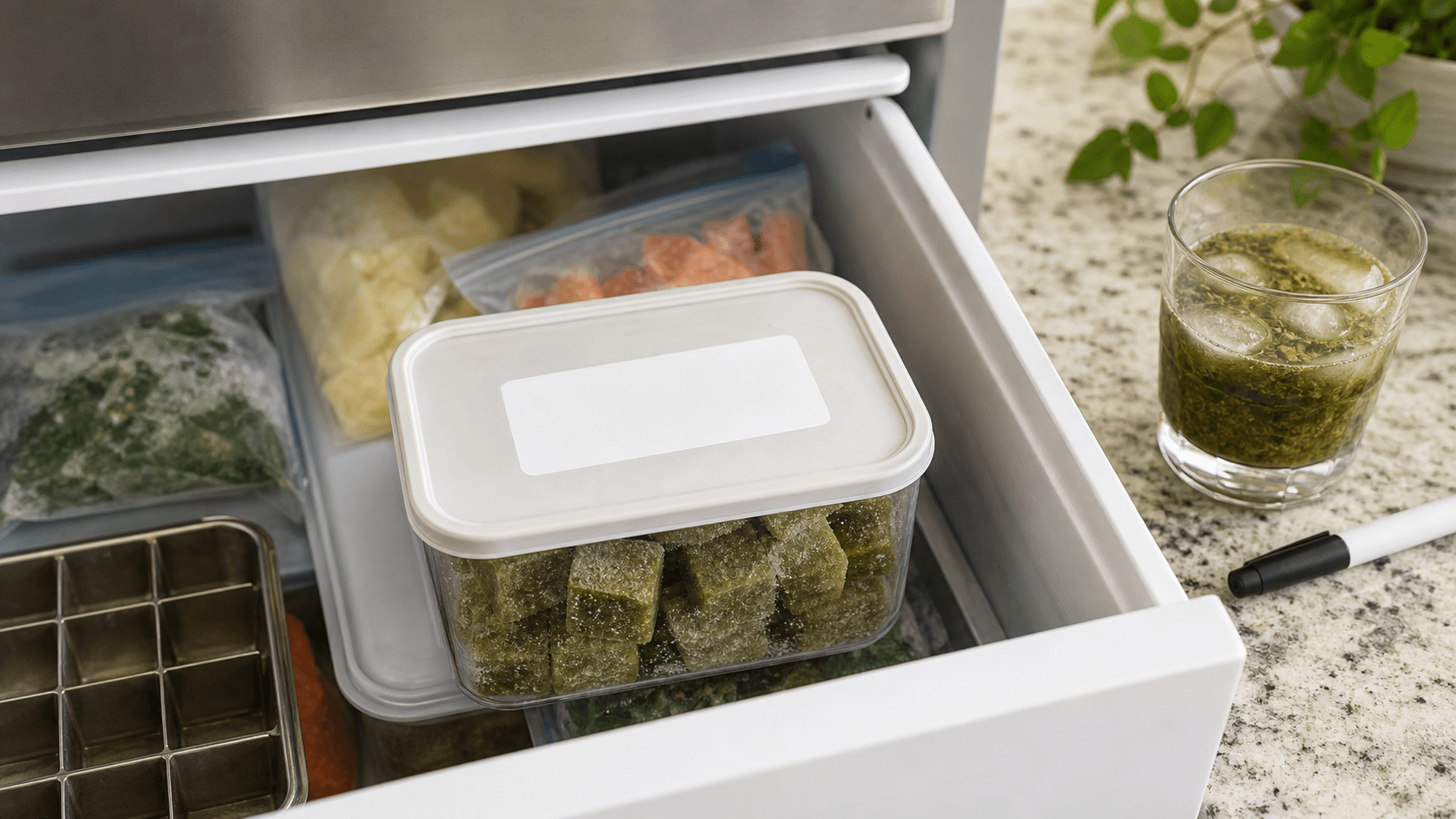
Freezer labels are not the glamorous part of yerba mate cubes. They are the part that makes a batch useful after the first day.
If you freeze brewed mate at home, the cubes can all start to look the same: plain, lemon, mint, stronger brew, lighter brew, last week's test, or the batch you actually liked. A simple label helps you know what is in the container, when it was made, and how to repeat it.
This is a workflow guide, not a claim that freezing improves yerba mate. The point is easier testing, cleaner storage habits, and more reliable drink prep.
What to put on the label
Start with five fields. You do not need a perfect system. You need enough information to avoid guessing later.
| Label field | What to write | Why it helps |
|---|---|---|
| Brew date | The day you brewed and froze the batch. | Keeps older tests from blending into fresh ones. |
| Brew style | Hot brew, cold brew, stronger concentrate, or your usual method. | Makes flavor differences easier to explain. |
| Flavor | Plain, lemon, mint, berry, unsweetened, or another test. | Keeps mystery cubes out of the freezer. |
| Cube count per glass | Your starting amount, such as 2 cubes or 4 cubes. | Helps you repeat a glass that tasted balanced. |
| Notes | Too strong, good with sparkling water, needs more lemon, or similar. | Turns a one-off drink into useful feedback. |
If you only write one thing, write the brew date. If you write two things, add the flavor.
Why the freezer details matter
FDA storage guidance says the freezer should be kept at 0 F (-18 C), and its consumer guidance separates safety from quality over time. FoodSafety.gov makes the same practical distinction for freezer storage: continuously frozen food at 0 F or below is handled as a freezer-quality question, not a reason to assume the item tastes the same forever.
For homemade beverage cubes, that means the useful questions are plain:
- Was the container covered?
- Did the cubes pick up freezer odor?
- Did the batch taste flat, bitter, or stale?
- Was the cube count easy to repeat?
- Did the flavor work better in cold water, lemonade, sparkling water, or milk?
Those are product and kitchen notes. They are not health claims.
A batch card for mate cubes
Use a container label if the cubes will stay in one place. Use a small freezer-safe bag label if you move them from a tray into portions.
| Batch card | Example |
|---|---|
| Date | 2026-07-01 |
| Brew | Cold brew, strained |
| Flavor | Lemon mint |
| Cube count | 3 cubes per tall glass |
| Finish | Cold water first, then sparkling water |
| Result | Bright, less bitter than plain |
Keep the notes short. The label is there to help the next glass, not to become a lab notebook.
What not to put on a homemade label
Skip fixed caffeine numbers unless the product or recipe has been tested. Yerba mate naturally contains caffeine, but a homemade cube can vary by leaf amount, steep time, brew strength, cube size, and how many cubes go into the glass.
A better home label says what you actually know:
- how the batch was made
- how many cubes you used
- how the finished drink tasted
- whether you would make it again
For Yerba Melt, the eventual product version should go further. A ready-made cube should have clear serving guidance and caffeine labeling based on the final formula. Until then, the honest home version is a repeatable batch note.
How this fits the freezer format
The DIY yerba mate ice cube guide covers the basic method: brew, cool, portion, freeze, and store. This label system is the next layer. It helps you compare batches without relying on memory.
The broader frozen yerba mate guide explains why the format exists at all: make the slow part earlier, then finish the drink when you want it.
That is the freezer-format promise in its most practical form. The cube should make the drink easier, and the label should make the cube easier to trust.