A freezer-door inventory for yerba mate cubes
A small freezer inventory for tracking yerba mate cube batches by name, freeze date, container, and remaining cube count without inventing a shelf life.
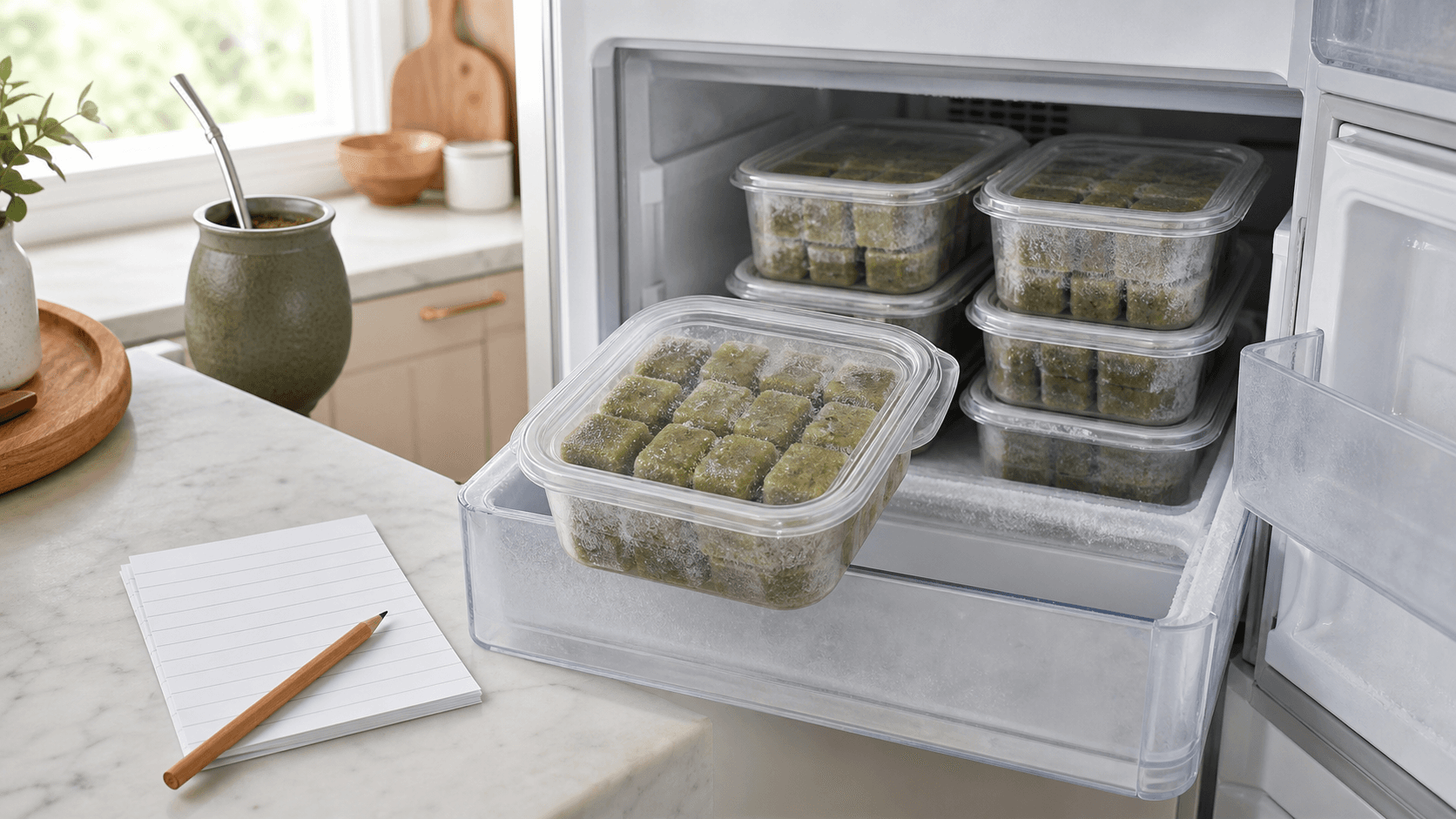
A freezer-door inventory is a short list of what is in the freezer and where to find it. For homemade yerba mate cubes, it can keep a plain batch from getting mixed up with a citrus test, show how many cubes remain, and bring an older batch forward before another one is made.
The inventory does not need to decide how long homemade mate cubes last. There is no tested Yerba Melt shelf life yet, and a general freezer article cannot supply one. The useful job is narrower: identify each batch, record the date it went into the freezer, and update the count as cubes are used.
Start with six fields
Penn State Extension recommends keeping an inventory near the freezer, listing foods and freezing dates as they go in, checking items off as they come out, grouping them for easier locating, and arranging older packages to be used first.
For mate cubes, translate that into a small batch card:
| Inventory field | What to record | Example |
|---|---|---|
| Batch name | A short name you can match to the container | Plain hot-brew test |
| Freeze date | The date the batch went into the freezer | July 28 |
| Cubes in | The number moved into the container | 18 |
| Cubes remaining | Update after making a drink | 12 |
| Location | The bin, drawer, or shelf | Top drawer, left bin |
| Container or flavor note | Tray size, brew style, or one useful taste detail | Small cubes; good with lime |
Keep the card factual. “Plain,” “mint,” and “larger cubes” help identify a batch. “Fresh for three months” would be a storage promise this home test has not established.
Use one line per container
A container-level inventory is easier to maintain than a cube-by-cube log. If one batch fills two containers, give each container its own line or label them A and B.
| Batch | Freeze date | Cubes in | Cubes left | Location | Note |
|---|---|---|---|---|---|
| Plain A | July 28 | 18 | 12 | Top drawer, left | Small tray |
| Lemon test | July 27 | 12 | 4 | Top drawer, front | Use next |
| Cold-brew test | July 26 | 16 | 16 | Top drawer, back | Larger cubes |
The numbers above demonstrate the worksheet; they are not serving directions. Tray compartments and homemade cube volumes vary, and cube count does not reveal caffeine milligrams.
Update the card at two moments
The easiest inventory is the one that asks for very little attention.
1. When a batch enters the freezer: add its name, freeze date, starting count, location, and one identifying note.
2. When cubes leave the container: subtract the number used. Cross out the line when the container is empty.
If you move a container, change its location on the card. If you combine batches, keep their identities separate unless you are certain they were made the same way on the same date. Mystery cubes defeat the point of the system.
Put the older batch where you can see it
Using older packages first is often called first in, first out. Here, it is an organization rule rather than a claim about an ideal storage duration.
Try this simple reset when adding a new container:
- check the dates already on the inventory
- place the older identified batch at the front of its group
- put the new batch behind it
- confirm that the card still matches the physical location
- avoid making another batch if enough cubes are already waiting
This can reduce forgotten tests and make the next drink easier to choose. It does not turn the oldest date into an expiration date.
Keep the package easy to identify
The National Center for Home Food Preservation says freezer packaging should be durable, leakproof, resistant to moisture vapor, able to withstand low temperatures, easy to seal, and easy to mark. It also notes that tight-fitting covers help protect the contents from odors and that frozen liquids need room to expand.
Apply those points conservatively:
- use a container its maker identifies as freezer suitable
- keep the batch covered
- match the container label to the inventory name
- leave appropriate expansion room when freezing liquid
- follow the container and tray maker's directions
The NCHFP headspace table is written for specific food packs and container shapes. It should not be converted into one exact fill line for every yerba mate tray. Leave room for expansion and use the equipment instructions that apply to the container in front of you.
For more selection criteria, see the tray and container guide. For container-level notes, use the freezer label guide.
Separate inventory notes from serving notes
The freezer card tells you what exists. A serving note tells you what happened in the glass.
| Keep on the freezer inventory | Keep in a tasting or serving note |
|---|---|
| Batch name and freeze date | Cubes used in that glass |
| Starting and remaining cube count | Added water or other liquid |
| Container and location | Taste, dilution, and whether you would repeat it |
| Plain or flavored identifier | Any adjustment for the next glass |
That separation keeps the door card readable. It also avoids treating a home inventory as a product specification.
A five-minute freezer reset
If several unlabeled containers are already in the freezer, do not guess at dates, recipes, or caffeine. Start with what you can verify.
1. Group containers you can confidently identify.
2. Write down the names, known dates, counts, and locations.
3. Mark unknown details as unknown.
4. Bring the oldest clearly dated batch forward.
5. Decide whether a new batch is actually needed.
The broader frozen yerba mate guide explains the freezer-first format. A ready-made Yerba Melt product should eventually make this work simpler with defined portions, tested caffeine disclosure, and clear storage directions. At the waitlist stage, the honest home version is a small inventory that reduces guesswork.
Would a clearly portioned mate cube earn a permanent spot in your freezer? Join the waitlist and tell us what you would want the package and serving directions to make obvious.