A citrus peel and herb mate cube flavor test
A controlled two-glass tasting worksheet for comparing citrus peel and fresh herbs with one batch of frozen yerba mate cubes.
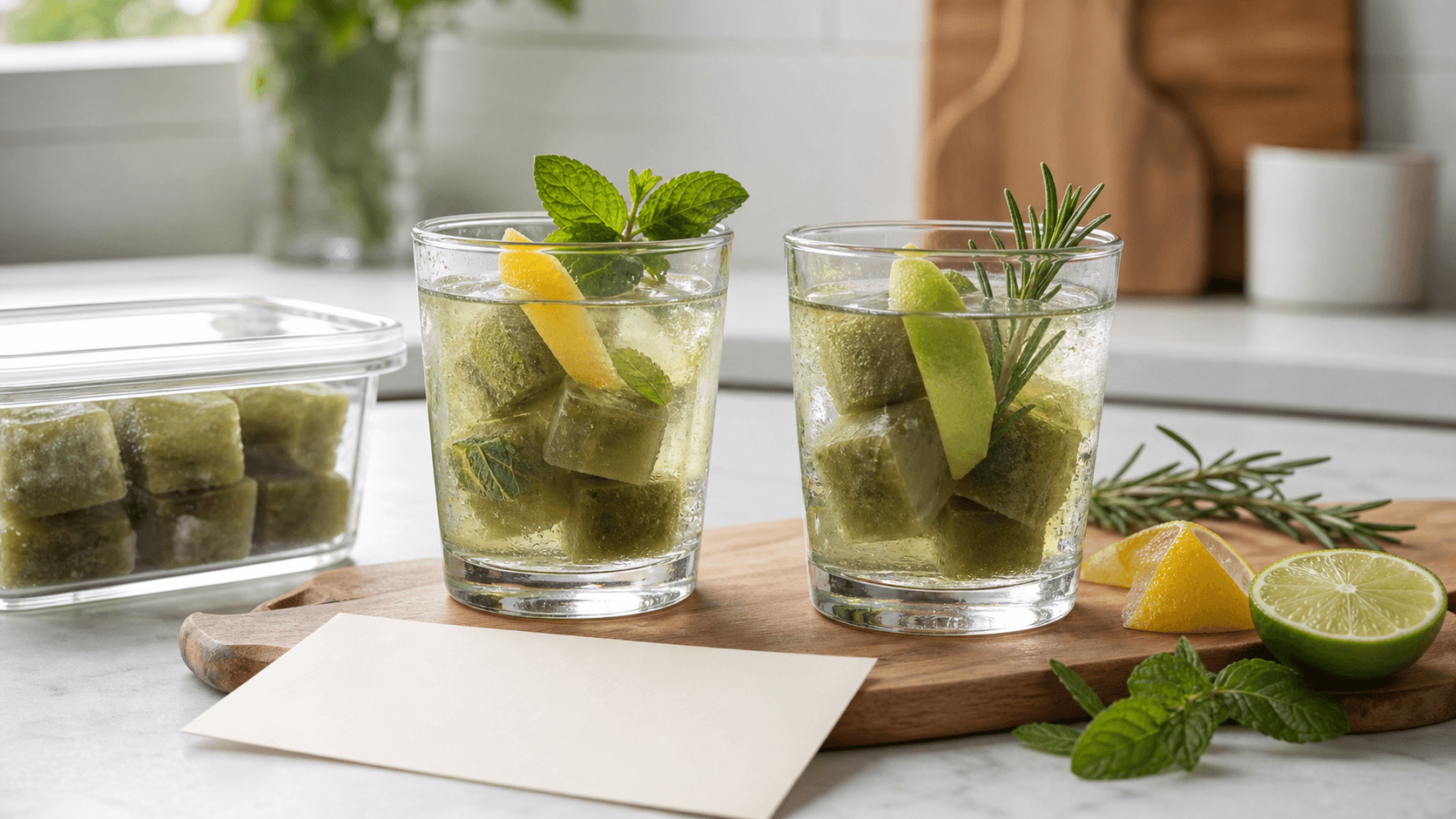
A citrus peel and herb mate cube flavor test is a small way to learn what belongs in your glass without changing the whole batch. Start with frozen cubes from one brew, prepare two matching drinks, and give each one a different citrus-and-herb pairing.
This is a taste exercise. It does not measure caffeine, establish a storage life, or show that one ingredient has a particular health effect.
The two-glass setup
Use two identical glasses so the flavor change is easier to notice.
| Keep the same | Change between glasses |
|---|---|
| Mate cube batch | Citrus peel |
| Cube count | Fresh herb |
| Water amount | Your aroma and taste notes |
| Glass size | |
| Time before tasting |
One simple pairing is lemon peel with mint in the first glass and lime peel with rosemary in the second. Those are starting points, not a fixed recipe. Use ingredients you already like and can identify clearly.
Prepare the ingredients
University of Illinois Extension advises washing produce before slicing. It also notes that citrus and mint flavor water quickly, while rosemary takes longer, and that citrus rind can make water taste bitter after extended contact.
For this immediate tasting test:
1. Wash the citrus and herbs under running water before cutting or handling them.
2. Cut one modest strip of peel for each glass, avoiding as much white pith as practical.
3. Gently tear mint leaves or lightly bruise a rosemary sprig so the aroma is easier to notice.
4. Keep the prepared ingredients separate until both glasses are ready.
The extension guidance is not a storage schedule for homemade mate cubes. This test is prepared, tasted, and evaluated as one session.
Build the two glasses
1. Put the same number of cubes from the same batch into each glass.
2. Add the same amount of water to both.
3. Add one citrus-and-herb pairing to each glass.
4. Stir each glass in the same way.
5. Let both glasses sit for the same short interval.
6. Smell and taste them in alternating order.
If one pairing seems too faint, record that before adding more. If a peel becomes too bitter for your preference, remove it and note when you noticed the change. The goal is to learn from the glass, not rescue both drinks into the same flavor.
Use a sensory card
| Observation | Glass one | Glass two |
|---|---|---|
| Citrus and herb used | ||
| Aroma before stirring | ||
| Aroma after stirring | ||
| Citrus character | ||
| Herbal character | ||
| Bitterness | ||
| Overall balance | ||
| What you would change next time |
Use ordinary words that match what you notice: bright, grassy, piney, minty, sharp, soft, bitter, or barely present. These notes describe two prepared glasses only. They do not reveal caffeine content or make either pairing universally better.
Run the next test one change at a time
If you want to repeat the tasting, change one variable:
- keep the pairings and use less peel
- keep the peel amount and change the herb
- keep the ingredients and adjust the water
- use the same pairing with a different documented mate batch
Changing several things at once makes it harder to tell what shaped the result. A small batch card can help you keep the cube recipe, tray, and freeze date attached to the tasting.
For other flavor-first ideas, try the lemon ginger mate cooler or sparkling mint lime mate cubes. The less-bitter mate guide offers another controlled way to adjust a glass.
If a citrus-and-herb cube sounds useful, join the waitlist and tell us which pairing you would want to test first.