Yerba mate vs matcha: compare the drink, not just the number
A practical yerba mate vs matcha comparison covering preparation, taste, serving size, caffeine labels, and why cup-to-cup rankings need careful math.
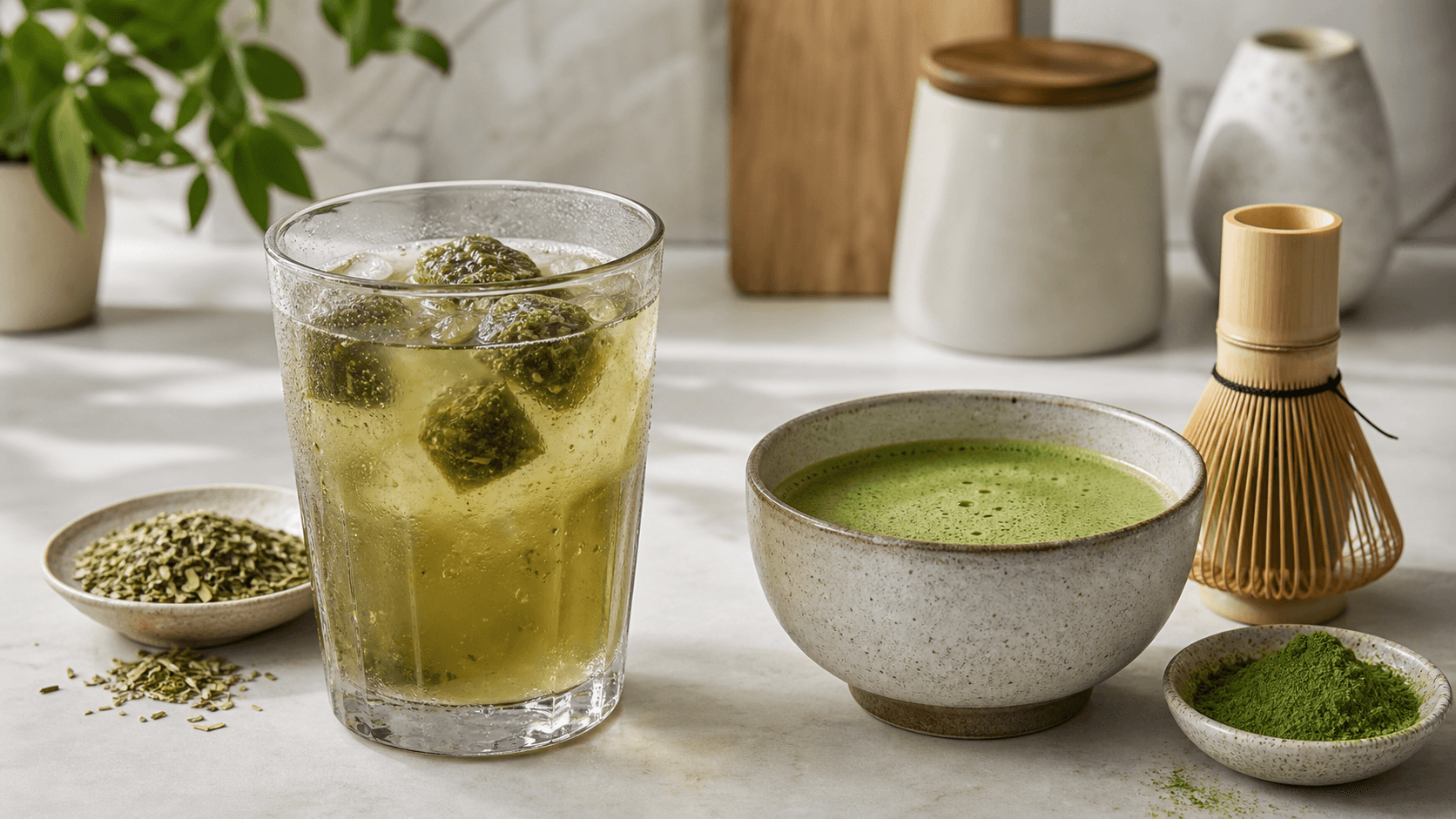
Yerba mate and matcha are both green, caffeinated drinks with long histories behind them. That is where the easy comparison ends.
Matcha is finely milled green tea that is whisked into water, so the powder stays in the bowl. Yerba mate is usually made by steeping leaves and stems in water, then drinking the infusion without the loose material. A frozen yerba mate cube adds another step: the infusion is prepared first, frozen in portions, and finished later.
Those formats make a simple “which has more caffeine?” table less useful than it looks. Before comparing numbers, you need to know what was measured and how much finished drink the number describes.
The short comparison
| Question | Yerba mate | Matcha |
|---|---|---|
| What is it? | An infusion made from yerba mate leaves and stems. | A powdered green tea whisked into water. |
| What stays in the drink? | Usually the strained or filtered infusion. | The suspended tea powder. |
| What shapes the serving? | Leaf amount, water, temperature, steeping or repeated pours, and dilution. | Powder amount, water amount, and whether milk or another base is added. |
| What does it taste like? | Often grassy, herbal, earthy, or bitter, depending on the leaf and method. | Often grassy and savory, with bitterness that changes with the powder and preparation. |
| Where do frozen cubes fit? | Prepared mate can be portioned and frozen for a repeatable hot or iced routine. | Matcha is normally measured and whisked when the drink is made. |
Neither column says which drink is better. Taste and routine are personal; caffeine needs product-specific or method-specific evidence.
Start with the format
Japan's Ministry of Agriculture, Forestry and Fisheries describes Nishio Matcha as green powdered tea and explains that its tea leaves are dried and slowly milled into fine powder. That powder format matters because a laboratory can report caffeine per gram of dry matcha, while a cafe or package may describe a spoonful or a finished bowl.
Yerba mate research may start with dry leaf, but consumers usually drink an infusion. A 2024 brewing study tested several yerba mate samples under specific single- and double-brewing conditions and found that the measured results changed with the sample and brewing setup. The useful takeaway here is variability, not a number to paste onto every cup.
A dry-powder value and an infusion value are different denominators. Converting either one into a consumer serving requires more information.
Five questions before comparing caffeine
| Check | Why it matters |
|---|---|
| What material was measured? | Dry powder, dry leaf, brewed liquid, concentrate, and a ready-to-drink bottle are not interchangeable. |
| How much material was used? | A gram-based result needs the actual grams in the serving before it describes a drink. |
| How much liquid is in the finished serving? | A small bowl and a tall iced glass can contain different amounts even when a label uses the word “serving.” |
| How was it prepared? | Temperature, time, repeated pours, straining, ice, milk, and dilution can change what ends up in the glass. |
| Is the number from this product? | A tested label is more useful for a purchase than a category average borrowed from another product or study. |
If a comparison cannot answer those questions, consider its caffeine ranking incomplete.
Labels help, but read the whole serving
The FDA notes that caffeine amounts vary by product and container size. It also explains that many packaged foods and drinks voluntarily state caffeine amounts, while naturally occurring caffeine may be represented by the caffeine-containing ingredient rather than by the word “caffeine” in the ingredient list.
Read these fields together:
- serving size
- servings per container
- preparation directions
- caffeine statement, when one is provided
- the amount you actually plan to drink
FDA serving-size guidance makes another important distinction: a Nutrition Facts serving size reflects customary consumption; it is not a recommendation for every person. A package can help with the math without deciding what is right for you.
The same standard should apply to Yerba Melt. A future label should state how many cubes make a serving and the tested caffeine per cube and prepared serving. Until the formula is final, the blog should not borrow a number from loose-leaf mate, a can, or a research sample.
Choose by routine and taste first
For an ordinary weekday decision, the practical differences may be more useful than a broad caffeine contest.
Choose matcha when you want the whisked powder format and its particular grassy, savory taste. Choose yerba mate when you want an infused drink that can be prepared traditionally, brewed in a kitchen, chilled, or portioned into frozen cubes. Choose either one because the preparation fits your day and the label gives you enough information—not because a headline promises a universal outcome.
If you are comparing two products at home, keep the test boring:
1. Write down the labeled serving for each product.
2. Prepare each one according to its directions.
3. Note the finished drink volume and anything added.
4. Compare taste, prep time, cleanup, and label clarity separately.
5. Only compare caffeine when both products state amounts on an aligned basis.
That small worksheet is more honest than forcing every matcha bowl and mate glass into one category number.
Where frozen yerba mate changes the routine
Frozen cubes do not make yerba mate chemically comparable to matcha. They change the workflow.
The mate is prepared and portioned earlier, then a cube can be finished with hot water, cold water, milk, or another drink base. The idea is closer to repeatable prep than to a health promise. For the broader format, read what frozen yerba mate means. For another measurement-first comparison, see yerba mate vs coffee for a rushed morning and the guide to reading a yerba mate label.
Yerba mate and matcha can both contain caffeine, and individual sensitivity varies. The responsible comparison is the specific drink in front of you: its ingredients, measured serving, preparation, label, and taste.
If clear cube counts and caffeine labeling matter to you, join the waitlist and tell us what you would want to see on the first Yerba Melt package.