Yerba mate lemonade with frozen cubes
Choose the right lemon ingredient for frozen yerba mate: fresh juice, bottled juice, concentrate, and prepared lemonade need separate preparation notes.
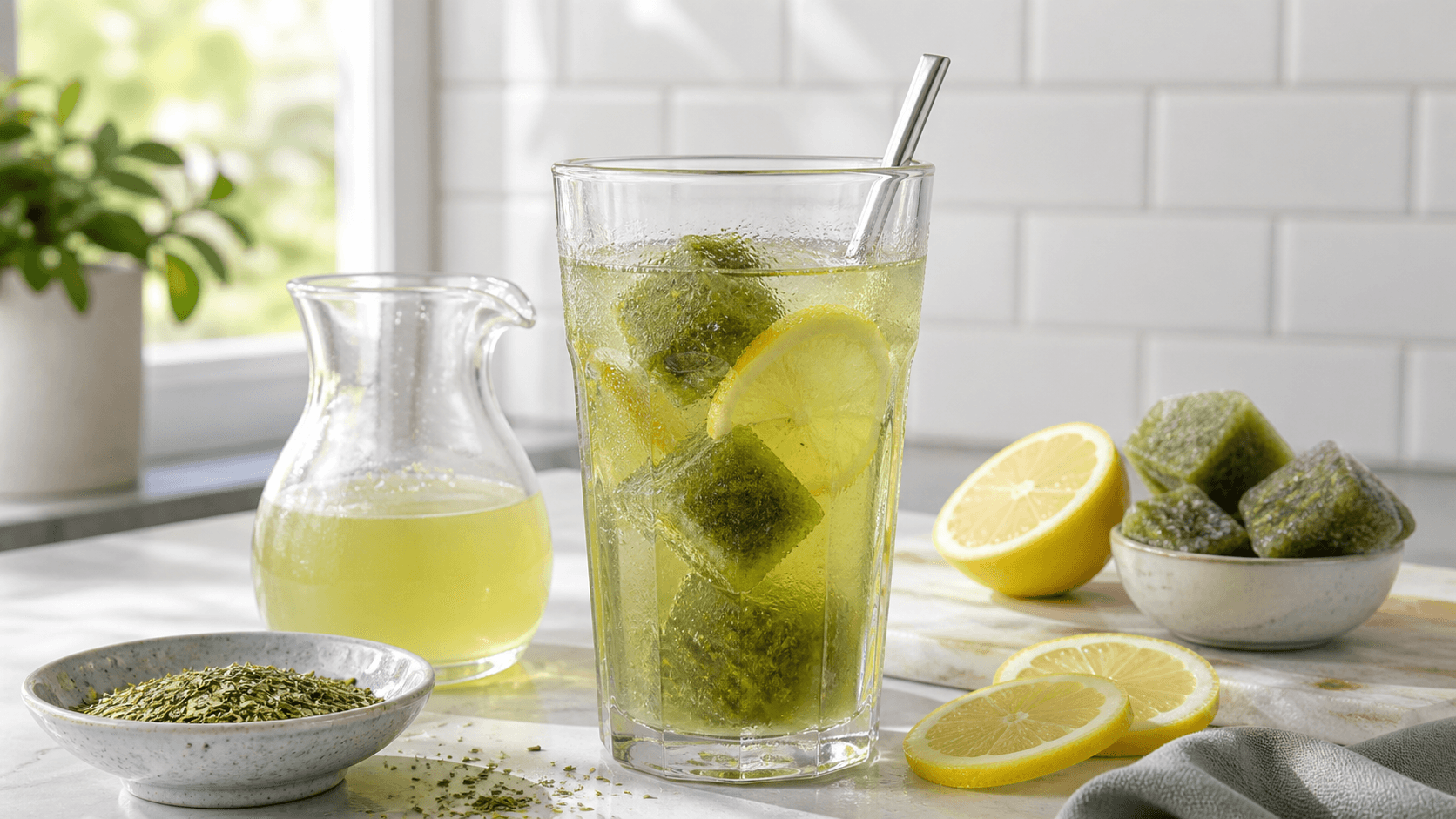
Before adding lemon to frozen yerba mate, identify what is in the bottle or measuring cup. Fresh lemon juice, bottled juice, a concentrate that needs dilution, and prepared lemonade are different starting ingredients. A single amount labeled “lemon juice or lemonade” leaves too much unexplained.
This guide helps you choose and document the ingredient. It does not supply a kitchen-tested cube count or lemon-to-mate ratio.
Identify the lemon ingredient first
| Ingredient in front of you | What to check | What to record |
|---|---|---|
| Freshly squeezed lemon juice | Whether you have strained out pulp and seeds | Juice amount and preparation; record any water or sweetener separately |
| Bottled lemon juice | Exact product, ingredient list, and whether it is already reconstituted | Product name and measured amount as poured |
| Concentrate requiring preparation | The exact package dilution directions | Concentrate amount, preparation water, and amount of prepared mixture used |
| Prepared lemonade | Exact variety, ingredients, and preparation directions | Amount of lemonade plus any additional water added to the glass |
Do not assume that “from concentrate” means a bottle still needs water. Read its directions before treating it as an undiluted concentrate.
Two manufacturer examples
These observations were checked on September 7, 2026. They identify particular products and markets; check the package you actually have.
| Original source | What it says | What that tells you for a mate drink |
|---|---|---|
| ReaLemon Canadian product page, regular ReaLemon Lemon Juice | The maker describes adding filtered water to return concentrated juice to its natural strength. Its ingredients include concentrated lemon juice, water, sulphites, and lemon oil. | This bottled juice is already reconstituted. Its origin as concentrate is not a direction to dilute it again before measuring it as juice. |
| Simply US product page, regular Simply Lemonade | The regular lemonade entry lists filtered water, lemon juice, cane sugar, and natural flavors. | This is a prepared mixture. An amount of lemonade cannot be recorded as the same amount of lemon juice. |
The ReaLemon page also instructs users to refrigerate after opening and not freeze the product. The example here concerns identifying a liquid addition to an already prepared glass; it is not a suggestion to freeze bottled juice into the mate batch. Follow the storage directions on each ingredient's package.
The practical distinction is between the amount of an ingredient and the amount of a mixture containing it. These pages do not establish how either product tastes with frozen mate or provide an interchangeable substitution ratio.
Keep a useful preparation note
The University of Nevada, Reno Extension guide to recipe development emphasizes exact ingredients, accurate measurements, clear directions, and testing for repeatable results. Apply that approach before calling a combination your usual recipe.
| Detail | Your glass |
|---|---|
| Mate batch and measured cube mass | |
| Lemon ingredient: exact product or fresh-juice preparation | |
| Amount of that ingredient and unit | |
| Water used to prepare a concentrate, if required | |
| Additional water poured into the glass | |
| Separate sweetener or garnish, if used | |
| Stirring, tasting interval, and temperature | |
| What you actually noticed |
NIST's culinary measurement guidance recommends an appropriate kitchen scale for mass measurements. For liquid volume, use a liquid measure on a level surface and read it at eye level. Keep the unit beside every amount.
If you later compare water amounts, hold the mate batch, cube mass, and lemon ingredient amount fixed. Replacing juice with lemonade is a different ingredient comparison, not just a water adjustment. The cube-size and dilution worksheet has more room for those observations.
For fresh lemons, FDA produce guidance advises rinsing before peeling and gently rubbing under plain running water, without soap or produce wash. That supports produce preparation, not a storage-life claim for the finished drink.
Keep the cube format separate from the lemon choice
Frozen yerba mate describes how the mate is portioned and stored before finishing the drink. The lemon ingredient is a separate choice. If you want to explore peel or herbs, use the citrus-and-herb flavor worksheet for a separate trial.
No tested Yerba Melt serving or caffeine amount is established by this guide. Your preparation note can help repeat a glass; it cannot measure caffeine.
Join the waitlist and tell us whether you would reach for lemon juice or prepared lemonade with your first mate cubes.
Sources
- https://www.realemon.ca/en/products
- https://www.coca-cola.com/us/en/brands/simply/products/simply-lemonade
- https://www.nist.gov/pml/owm/metric-si/metric-kitchen/metric-kitchen-culinary-measurement-tips
- https://extension.unr.edu/publication.aspx?PubID=4643
- https://www.fda.gov/consumers/consumer-updates/7-tips-cleaning-fruits-vegetables