3 creamy yerba mate cube drinks to blend or stir
Three practical ways to turn frozen yerba mate cubes into an iced milk-style drink, a berry smoothie, or a banana-cinnamon blend.
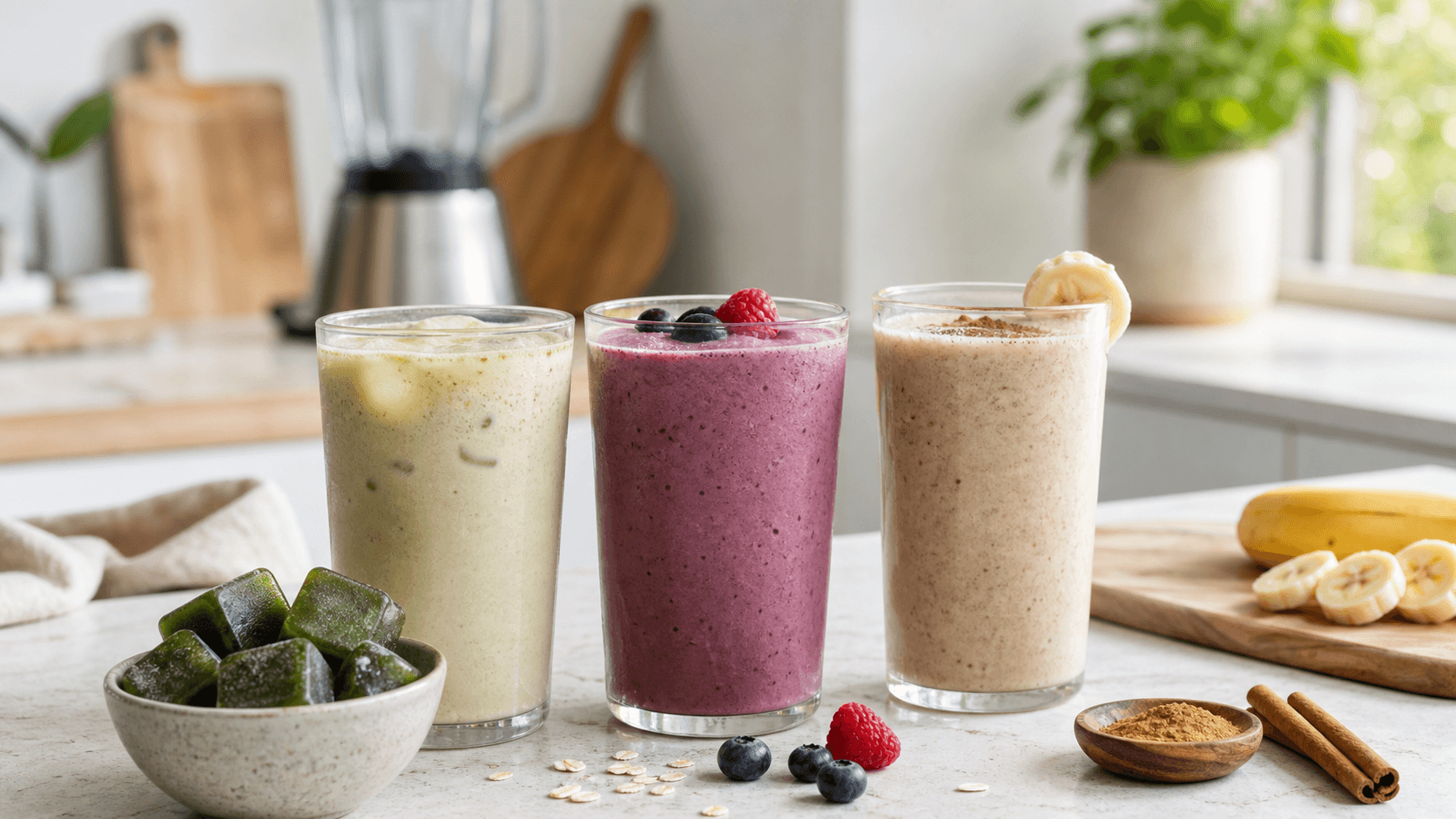
Frozen yerba mate cubes do not have to end up in plain water. A mild milk-style base can soften the herbal edge, while fruit can turn the same cubes into a thicker blended drink.
The useful way to test these combinations is simple: pick an exact cube count, measure the other ingredients, and write down the finished volume. That makes a drink easier to repeat without pretending that a homemade cube has a known caffeine amount.
Here are three starting points. They are assembly ideas, not nutrition formulas, and every packaged milk, yogurt, or alternative has its own ingredient and allergen label.
The three-drink worksheet
| Drink | Starting assembly | Method | What to adjust |
|---|---|---|---|
| Iced milk-style mate | 3 mate cubes + 3/4 cup cold milk or a clearly named alternative | Stir in a glass until the cubes melt; add ice if wanted. | More liquid for a lighter mate flavor; fewer cubes for less concentrate. |
| Berry mate smoothie | 3 mate cubes + 1/2 cup frozen berries + 1/2 cup yogurt + 1/4 cup cold liquid | Blend until smooth, adding liquid a tablespoon at a time if needed. | More liquid for a pourable texture; more fruit for a thicker blend. |
| Banana-cinnamon mate blend | 3 mate cubes + 1/2 banana + 3/4 cup cold milk or alternative + a small pinch of cinnamon | Blend until the cubes are fully broken down. | More liquid if the banana makes the drink too thick. |
Cube sizes and brew strength vary. Use three cubes as a test count, not a universal serving. If you are using a future packaged product, follow its directions instead.
1. Iced milk-style mate
This is the lowest-effort version because it needs no blender. Put three cubes in a tall glass, add the cold base, and stir as they melt. Taste before adding anything else.
“Milk-style” is intentionally broad here. Dairy milk, oat beverage, soy beverage, almond beverage, and other options differ in flavor, ingredients, sweetness, allergens, and nutrition. Name the one you use rather than treating the category as interchangeable. If you want to know whether it contains added sugar, read that exact package.
For a less diluted drink, melt the cubes into a small splash of the base first, then add the rest. For a colder, lighter glass, use more liquid and ice.
2. Berry mate smoothie
USDA MyPlate publishes a simple smoothie pattern built from yogurt, milk, and a frozen fruit ingredient. That is useful as an assembly example, but its nutrition information belongs to that exact recipe. Changing the ingredients changes the result, so this version does not copy the source recipe's nutrition panel.
Add the mate cubes, frozen berries, yogurt, and cold liquid to a blender. Start with the smaller liquid amount and add more only if the blades need help. The berries bring tartness and color; the yogurt changes body and flavor.
Minnesota Extension recommends washing fresh fruit before freezing and explains that individual pieces can be frozen on a tray before being transferred to a container. That method helps keep berries separate enough to portion. Label the container with the fruit and freezing date.
3. Banana-cinnamon mate blend
Banana makes a thicker drink without requiring frozen fruit. Blend half a banana with the mate cubes, cold base, and a small pinch of cinnamon. If it stops pouring cleanly, add more liquid a little at a time.
This is also a good place to test how much of the mate flavor you want to keep. A ripe banana can become the dominant taste. Record the cube count and liquid amount before changing both at once.
Keep the measurement honest
| Record this | Why it helps |
|---|---|
| Cube count and approximate cube size | Homemade trays do not all make the same portion. |
| Brew used for the cubes | A lightly brewed batch and a concentrated batch will not taste the same. |
| Exact mixer or yogurt | Ingredients, sweetness, and allergens vary by product. |
| Fruit amount | It changes flavor, texture, and finished volume. |
| Finished drink volume | It keeps the result attached to the glass you actually made. |
None of those fields reveals caffeine by itself. A defensible caffeine number requires a measured brew or a tested product label tied to a defined cube and serving. Until Yerba Melt has a final formula, the honest value remains unknown.
A short freezer note
USDA FSIS separates freezer safety from eating quality and recommends 0 F (-18 C) or below for long-term frozen storage. It also notes that slow freezing can form larger ice crystals that affect texture. For a home drink test, freeze cubes and fruit promptly, keep them covered, and judge each batch on its own quality rather than borrowing a shelf-life promise from a different food.
Minnesota Extension similarly recommends moisture- and vapor-resistant freezer containers and enough headspace for expansion. Once individual fruit pieces are solid, transfer them to a labeled container instead of leaving an open tray in the freezer.
Build one repeatable glass
Start with the drink that sounds easiest, not the one with the longest ingredient list. Measure it once, taste it, and change one variable on the next round.
If a ready-made frozen mate cube would make that routine easier, join the Yerba Melt waitlist and tell us whether you would stir it into a milk-style drink or blend it with fruit.