5 yerba mate cube drinks without adding sweetener
Five serving ideas for frozen yerba mate cubes, with ingredient-label checks and measured portions instead of a fixed recipe or sugar claim.
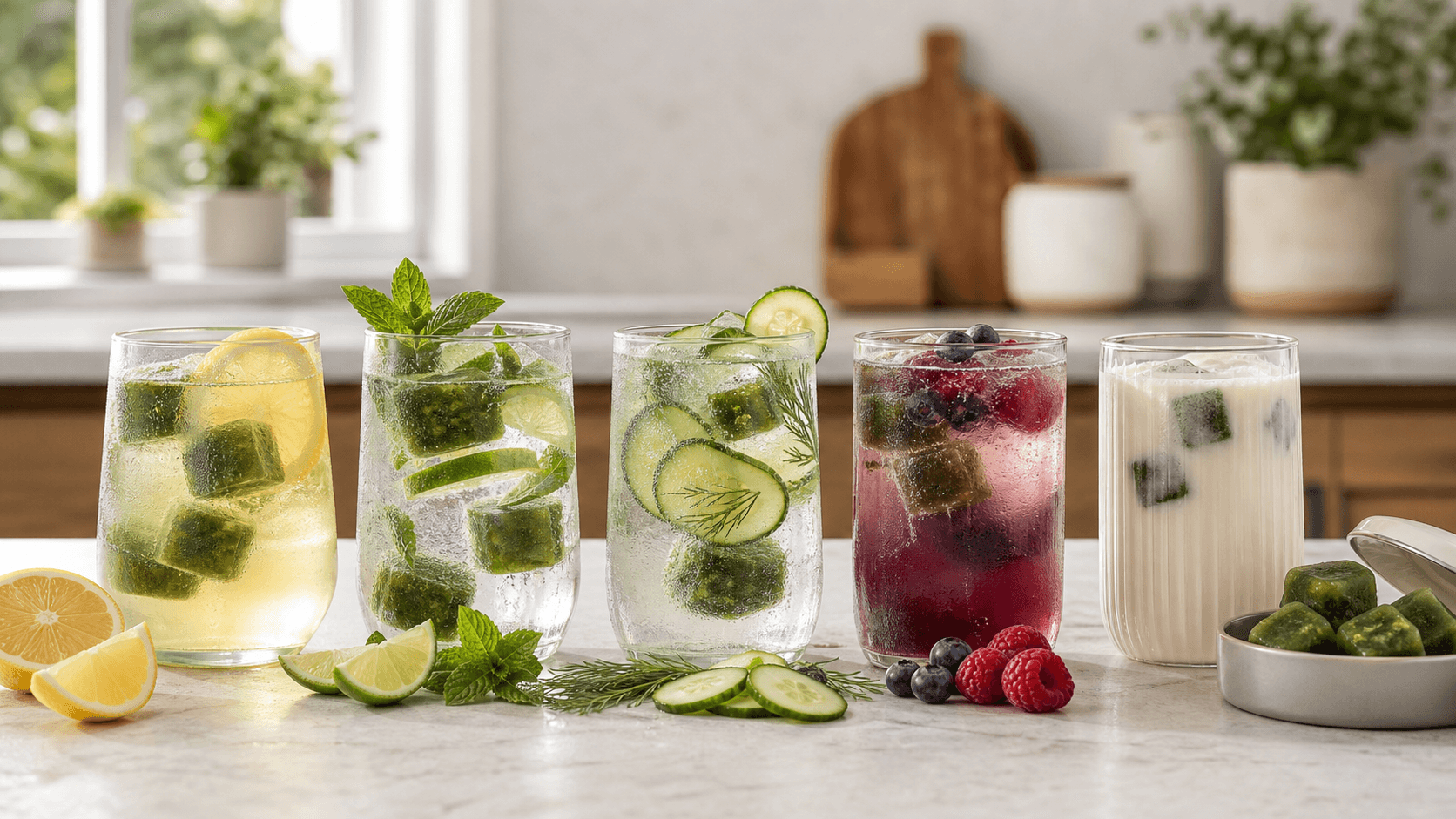
A plain batch of frozen yerba mate cubes gives you a starting point for a lemon-water glass, a mint-lime fizz, cucumber and herbs, berries, or milk. You can try any of these without adding a separate spoonful of sugar, honey, or syrup at serving.
That describes a preparation choice. It does not describe the sugar content of the cubes, mixer, or finished drink. The five combinations below are untested serving ideas: we have not established a preferred ratio or recorded kitchen results for them.
Check the ingredients before choosing a glass
FDA's explanation of total and added sugars distinguishes sugars naturally present in foods such as fruit and milk from added sugars. Added sugars are included within total sugars on the Nutrition Facts label; the two numbers should not be added together.
For a packaged ingredient, keep its exact name and labeled serving size with the sugar fields. Skipping sweetener when mixing does not establish that the finished glass is sugar-free, low in sugar, or lower in calories. An ingredient may already contain added sugar.
| Ingredient | What to check |
|---|---|
| Mate cubes | Exact batch ingredients or package; a plain-looking cube does not disclose its formula. |
| Sparkling water or another mixer | Exact product, ingredient list, labeled serving size, and total and added sugars where provided. |
| Fruit | Which fruit and form you used; distinguish fresh fruit from a packaged fruit preparation. |
| Milk or plant-based drink | Exact product and label; record the amount actually poured separately from its labeled serving. |
Five combinations to try
Choose one row and measure the ingredients you use. These are starting ideas, not portion recommendations. The photograph does not supply a cube count or a recipe.
| Serving idea | Ingredients to identify | One useful observation |
|---|---|---|
| Lemon water mate | Plain mate cubes, cold water, and fresh lemon juice | How the glass tastes with your recorded lemon amount. |
| Mint-lime fizz | Plain mate cubes, an exact sparkling water, fresh lime juice, and mint | Whether you would repeat the same lime and mint amounts. |
| Cucumber-herb mate | Plain mate cubes, cold water, cucumber, and one herb such as mint or dill | Aroma at the contact time you record. |
| Berry mate | Plain mate cubes, cold water, and one identified fresh berry | Your preference for the prepared fruit texture. |
| Milk-based mate | Plain mate cubes and an exact milk or plant-based drink | Texture and taste of that particular combination. |
For lemon and lime, record juice volume rather than only “a squeeze.” For cucumber and herbs, record the amount, form, and contact time; there is no tested steep time here. Keep the milk-based first trial to its two ingredients so your notes identify what you actually tried.
The berry idea here uses fresh fruit. This article has not evaluated a frozen berry product for use without cooking. FDA's food-storage guidance says to follow the cooking instructions on commercially frozen foods; thawing alone is not a substitute for those directions.
For more combinations, see 15 ways to use frozen mate cubes. The lemonade guide helps distinguish lemon juice from a prepared lemonade before choosing an ingredient.
Write down one measured glass
NIST's culinary measurement guidance recommends appropriate tools and measurement by mass when practical. For liquid volume, it describes reading a measuring cup on a level surface at eye level. That supports how to measure; it does not validate a mate-to-water ratio.
| Field | Your record |
|---|---|
| Mate batch and ingredients | Batch name or date, brewing notes, and any additions before freezing |
| Cube portion | Mass in grams or measured liquid equivalent in milliliters; count as an extra note |
| Added liquid | Exact product or water source and volume in milliliters |
| Fruit or herb | Identity, form, and measured amount; note any limit of your measuring tool |
| Contact time | Time between combining ingredients and making your observation |
| Finished volume | Measured volume, with the state of the cubes noted |
| Test status | Planned, prepared, or tasted |
| Personal result | What you noticed and the one change you would try next |
If you change an ingredient amount, record a new glass rather than overwriting the first. University of Nevada, Reno Extension's recipe-development guide emphasizes documenting ingredient measurements and testing recipes repeatedly. One personal trial is a useful note, not proof of a generally preferred recipe.
The cube size and dilution worksheet has more room for comparing portions.
Follow the ingredient handling directions
For fresh produce, FDA recommends clean hands, rinsing produce under running water before preparing it, and drying it with a clean towel. Do not use soap or detergent on produce. Keep it separate from raw meat and utensils used for raw meat. Follow the packaging for produce labeled pre-washed or ready-to-eat.
Follow the storage directions for your exact milk, plant-based drink, and other packaged ingredients. FDA recommends a refrigerator at or below 40°F (4°C) and warns that normal appearance, smell, or taste cannot establish food safety. These serving ideas do not establish a storage period for a prepared drink or a homemade cube batch.
Keep caffeine separate from flavor
Yerba mate contains caffeine. FDA's caffeine overview notes that amounts vary across products and container sizes. This guide supplies no caffeine measurement for a homemade cube or finished glass, and a flavor observation cannot fill that gap.
For the format behind these ideas, read what frozen yerba mate means. Yerba Melt is still a waitlist-stage concept. Join the waitlist and tell us which of the five combinations you would try first.
Sources
- https://www.nist.gov/pml/owm/metric-si/metric-kitchen/metric-kitchen-culinary-measurement-tips
- https://extension.unr.edu/publication.aspx?PubID=4643
- https://www.fda.gov/food/nutrition-facts-label/added-sugars-nutrition-facts-label
- https://www.fda.gov/food/buy-store-serve-safe-food/selecting-and-serving-produce-safely
- https://www.fda.gov/consumers/consumer-updates/are-you-storing-food-safely
- https://www.fda.gov/consumers/consumer-updates/spilling-beans-how-much-caffeine-too-much