A plain-water yerba mate cube tasting flight
A controlled three-glass tasting worksheet for learning how water changes one batch of frozen yerba mate cubes without guessing at caffeine or declaring a universal ratio.
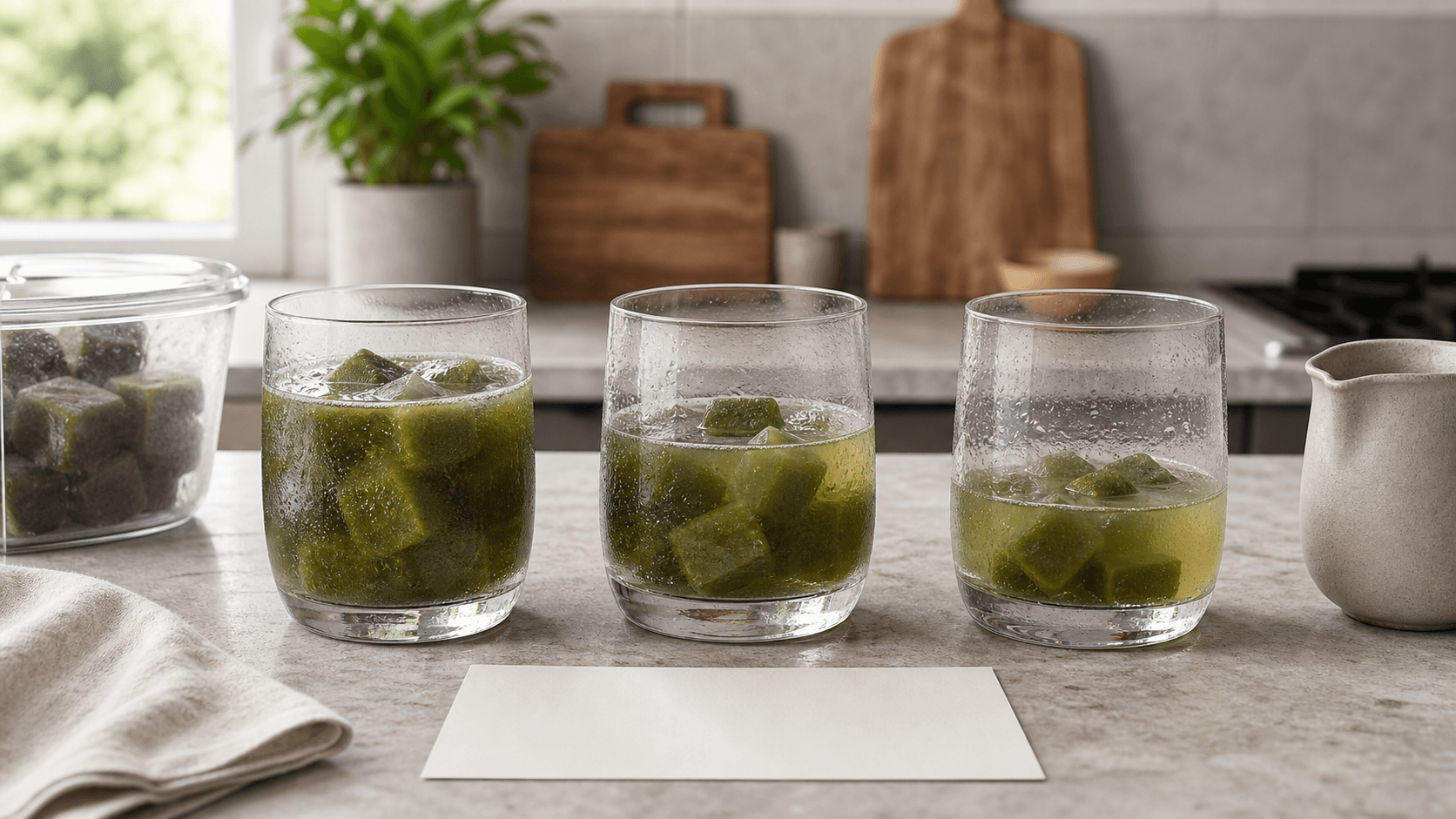
A plain-water yerba mate cube tasting flight is a simple way to learn what one freezer batch does in the glass. Use cubes from the same batch, keep the cube count consistent, and change only the amount of water.
This is a sensory exercise, not a caffeine test. Color, bitterness, aroma, and dilution can help you choose a glass you prefer, but none of them reveals caffeine milligrams.
Why taste the same batch three ways?
Changing every ingredient at once makes the result hard to read. If one glass has more cubes, another has citrus, and the third has sparkling water, you cannot tell which change mattered.
Washington State University used a consistent brewing method for eight teas in a 2025 tasting and recorded qualities including color, aroma, taste strength, bitterness, dryness, aftertaste, and overall preference. That tasting studied tea made from *Camellia sinensis*, not yerba mate, so its recipe should not be transferred to this drink. The useful method analogy is narrower: prepare samples consistently and record what people actually observe.
For frozen mate cubes, that means:
- one identified cube batch
- three identical glasses
- the same cube count in each glass
- the same water source and temperature
- one measured water difference between glasses
- the same tasting notes for every sample
Set up a three-glass flight
Choose a cube count that fits your glass and your usual home batch. The example volumes below are not an ideal serving or a product specification.
| Keep consistent | Change once |
|---|---|
| Cube batch and cube size | Finished water volume |
| Cube count per glass | Nothing else |
| Glass shape and size | |
| Water source and temperature | |
| Rest and stirring method |
A practical home setup might use two cubes in each of three glasses, then add 4 fluid ounces of water to Glass A, 6 fluid ounces to Glass B, and 8 fluid ounces to Glass C. Those amounts create a visible dilution range for a household test. Your tray volume and brew strength may call for a different starting range.
If three glasses would waste too much of a batch, use the single-glass method below.
Run the tasting
1. Label the glasses A, B, and C on a card beside them.
2. Add the same number of cubes from one batch to each glass.
3. Measure a different water volume into each glass.
4. Let the cubes soften for the same amount of time, then stir each glass in the same way.
5. Look at all three before tasting. Record color and aroma without deciding which is “best.”
6. Taste from the lowest-water glass to the highest-water glass, taking a sip of plain water between samples if useful.
7. Write down what changed and which glass you would make again.
The order is part of the note, not a scientific guarantee. If the first glass seems to influence the next one, repeat the flight another day in a different order.
Use a blank tasting card
Keep the words descriptive. “More bitter,” “lighter aroma,” and “would repeat” are more useful than borrowing a caffeine or wellness story.
| Observation | Glass A | Glass B | Glass C |
|---|---|---|---|
| Water volume | |||
| Cube count | |||
| Color | |||
| Aroma | |||
| Bitterness | |||
| Mate flavor strength | |||
| Finish or aftertaste | |||
| Would make again? | |||
| Next adjustment |
There is no need to turn every line into a number. A short phrase can be easier to use when you make the next glass.
What the flight can tell you
The flight can show how one person experiences one identified batch at three water levels. It can help answer questions such as:
- Does more water make the bitterness feel less prominent?
- At what point does the mate aroma become hard to notice?
- Which glass tastes concentrated, balanced, or too diluted to you?
- Would you repeat the same water amount with this batch?
Those are preparation and preference observations. They do not establish a universal cube-to-water ratio, product formula, shelf life, or physiological outcome.
If bitterness is the main issue, compare your notes with the guide to making yerba mate less bitter. That article offers other taste adjustments, but add citrus, mint, sweetness, or milk only after this plain-water test if you want to preserve the one-variable comparison.
What the flight cannot tell you about caffeine
Yerba mate contains caffeine, but a darker or more bitter glass is not a caffeine measurement. Adding water changes concentration in the glass; it does not tell you how much caffeine was extracted into the original brew or frozen into each cube.
The FDA notes that caffeine amounts vary among specific products and container sizes. A homemade mate batch adds more unknowns: leaf amount, brewing conditions, finished batch volume, tray size, and cube count.
Do not use this flight to:
- assign caffeine milligrams to a cube
- rank the glasses by caffeine
- infer caffeine from color, bitterness, or aroma
- copy a number from another yerba mate product
- promise a stronger or gentler effect
A finished Yerba Melt product should disclose tested caffeine per cube and per prepared serving once the formula is final. Until then, the honest home note is simply that the drink contains caffeine and the amount in a homemade cube is unknown.
A lower-waste single-glass version
If you have only a few cubes, build one glass in measured stages.
1. Add a consistent cube count and a small measured amount of water.
2. Let the cubes soften, stir, and record the first taste.
3. Add another measured amount of water.
4. Stir and record what changed.
5. Repeat once if the glass still tastes concentrated.
Write down the total water after each stage. This is not identical to tasting three glasses side by side, but it keeps the variable narrow and gives you a repeatable starting note.
Keep the result with the batch
Record the batch name or freeze date alongside the tasting card. A preferred water amount for one strong home batch may not work for a lighter batch made with different leaves or a different tray.
The freezer-door inventory can tell you which batch is available. The tasting card tells you what happened when you used it. For more serving directions beyond plain water, see 15 ways to use frozen yerba mate cubes.
The broader frozen yerba mate explainer shows the product idea behind these home tests: a defined portion that is easier to finish hot or cold. Would you want one clear default ratio, or room to adjust every glass? Join the waitlist and tell us what useful serving directions should look like.