An office freezer routine for yerba mate cubes
A practical office and workday routine for using frozen yerba mate cubes, with storage notes, labeling ideas, cube-count testing, and claim-safe caffeine context.
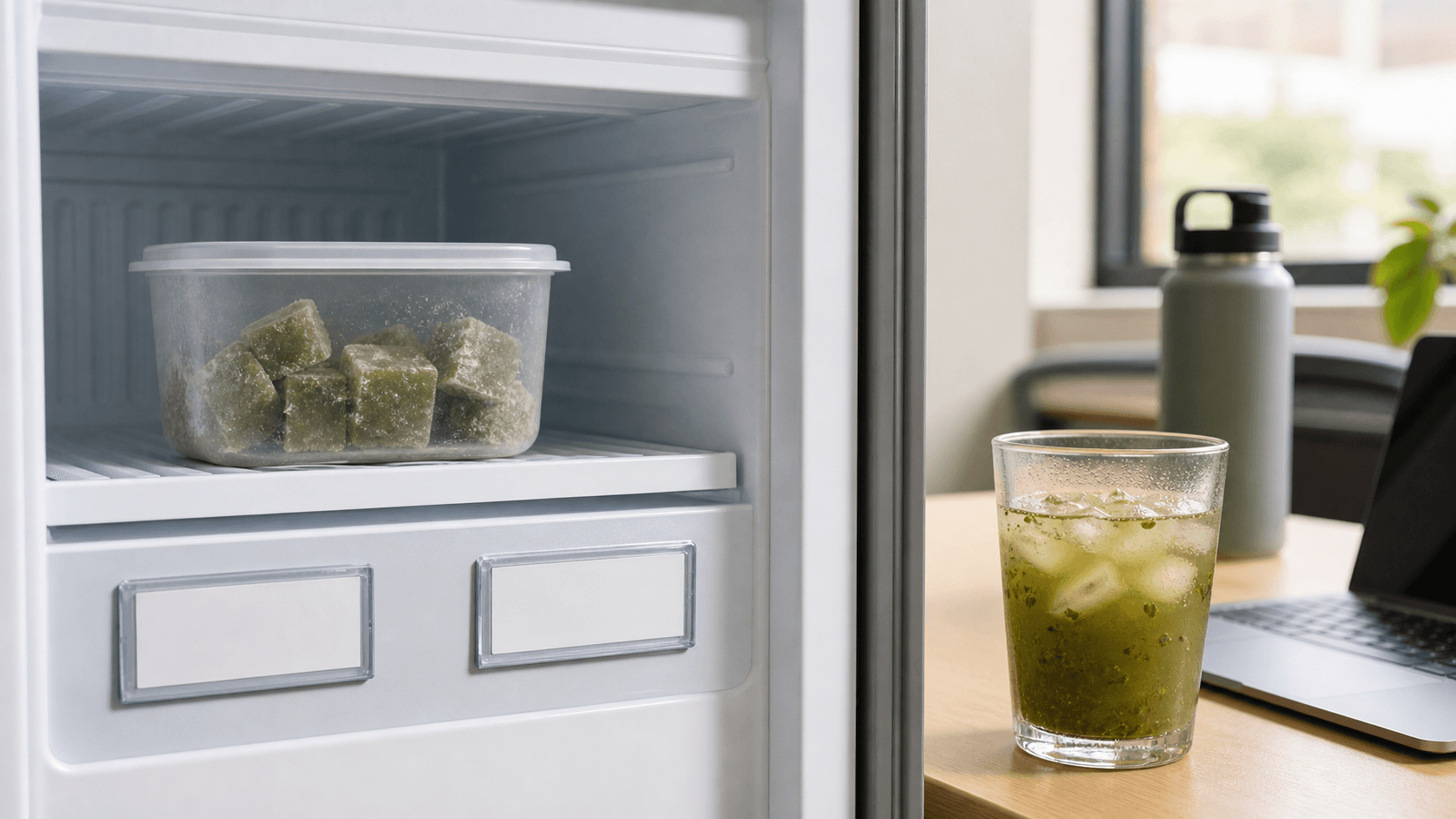
An office freezer routine is one of the clearest use cases for frozen yerba mate cubes. The point is not to turn a workday drink into a productivity claim. It is simpler than that: keep prepared mate portions frozen, add water or another drink base when you want a glass, and avoid rebuilding the whole brew setup at your desk.
That routine only works if it is easy to repeat. A covered container, a clear label, and a cube count matter more than a complicated recipe.
This guide is written for a home or office freezer test. It is not a workplace food-safety policy, and it does not replace whatever rules your office already has for shared appliances.
Start with the freezer, not the glass
FDA consumer storage guidance says a freezer should be kept at 0 F (-18 C). FoodSafety.gov's cold storage chart also separates freezer storage from quality over time. For yerba mate cubes, that means the practical questions are storage temperature, covered containers, freezer odor, and whether the finished drink still tastes clean.
Use the office freezer only if the setup is predictable enough:
| Question | Better answer | Why it matters |
|---|---|---|
| Is there freezer space? | A flat spot where a small container can sit upright. | Liquid cubes and loose lids are annoying in a crowded freezer. |
| Can the container close? | Yes, with a lid or sealed freezer-safe bag. | Covered cubes are less likely to pick up freezer odor. |
| Can you label it? | Yes, with a date, flavor, and cube count. | Shared freezers need clear ownership and freshness notes. |
| Is the freezer reliable? | It stays cold and is not repeatedly left open. | A cube routine depends on the cubes staying frozen. |
If any of those answers are shaky, use the same routine at home instead and bring the finished drink in a bottle.
Keep the label boring
The label should help you repeat a good glass. It does not need marketing copy or health language.
| Label field | Example |
|---|---|
| Name | Your name or initials |
| Date | 2026-07-11 |
| Batch | Plain mate, mint lime, lemon ginger, berry, or unsweetened |
| Cube count | Start with 2 cubes per glass, then adjust |
| Drink base | Cold water, sparkling water, lemonade, milk, or another base |
For a shared freezer, name and date are the basics. For taste testing, cube count and drink base are what make the next glass easier.
Build a repeatable workday glass
The easiest routine starts with a small glass and a conservative cube count.
| Step | What to do | Adjustment |
|---|---|---|
| Add cubes | Start with 2 or 3 frozen mate cubes. | Use the same count for the first few tests. |
| Add liquid | Pour in cold water, sparkling water, lemonade, or milk. | Start with less liquid, then dilute to taste. |
| Wait briefly | Let the cubes soften before judging the flavor. | Stir once or twice if the drink is very cold. |
| Taste | Decide whether the glass is balanced, too strong, or too light. | Change one variable next time: cube count, liquid, or flavor. |
That last point matters. If you change the cube count, liquid, flavor, and glass size all at once, you will not know what fixed the drink.
Caffeine context stays simple
Yerba mate naturally contains caffeine, but an office freezer container does not tell you how much caffeine is in a finished glass. The amount depends on the mate, brew strength, cube size, cube count, and final serving size.
For a homemade batch, avoid turning the freezer label into a caffeine claim. Use practical notes instead:
| Better home note | Avoid |
|---|---|
| "Usual brew, 3 cubes in cold water" | "Exact caffeine per glass" without testing |
| "Strong batch, dilute more" | Broad energy or outcome language |
| "Plain mate, better with lemon" | "Healthier than coffee" |
| "Use in the morning only if caffeine fits your routine" | Advice about sleep, anxiety, weight, or medical outcomes |
For Yerba Melt as a future product, the standard should be higher: tested caffeine per cube and per prepared serving, stated clearly when the formula is final.
What to do if the freezer loses power
FoodSafety.gov's power-outage chart is a useful reminder that freezer reliability matters. A frozen-cube routine should not depend on guesswork after a long outage or an obviously thawed freezer.
For a practical office test, keep the rule plain:
| Situation | Best move |
|---|---|
| Cubes are still solid and the freezer stayed cold | Keep using normal taste and quality checks. |
| Cubes partly thawed, leaked, or smell like the freezer | Throw out the batch and start over. |
| The container was left open or unlabeled | Do not try to rescue it as a workday routine. |
| The office freezer is unreliable | Store cubes at home and bring a prepared drink instead. |
The goal is a low-friction routine, not a mystery container in the back of a shared freezer.
Where frozen cubes fit at work
Frozen cubes are useful when the daily pain is setup:
- no loose leaves at the desk
- no brewing gear in the office kitchen
- no cafe run for every cold drink
- a repeatable glass with water, sparkling water, or lemonade
- a small freezer routine that can be tested before a paid product exists
They are less useful when the workplace freezer is crowded, unlabeled, or unreliable. That is still helpful product feedback. Yerba Melt only makes sense if the format fits real routines, not just a nice photo.
If an office freezer version is the use case you would actually try, the waitlist is where we are collecting that signal.