How to use frozen yerba mate cubes in a hot mug
A practical hot-mug guide that keeps the brewed batch, cube portion, added water, and hot-drink handling visible without guessing a serving size.
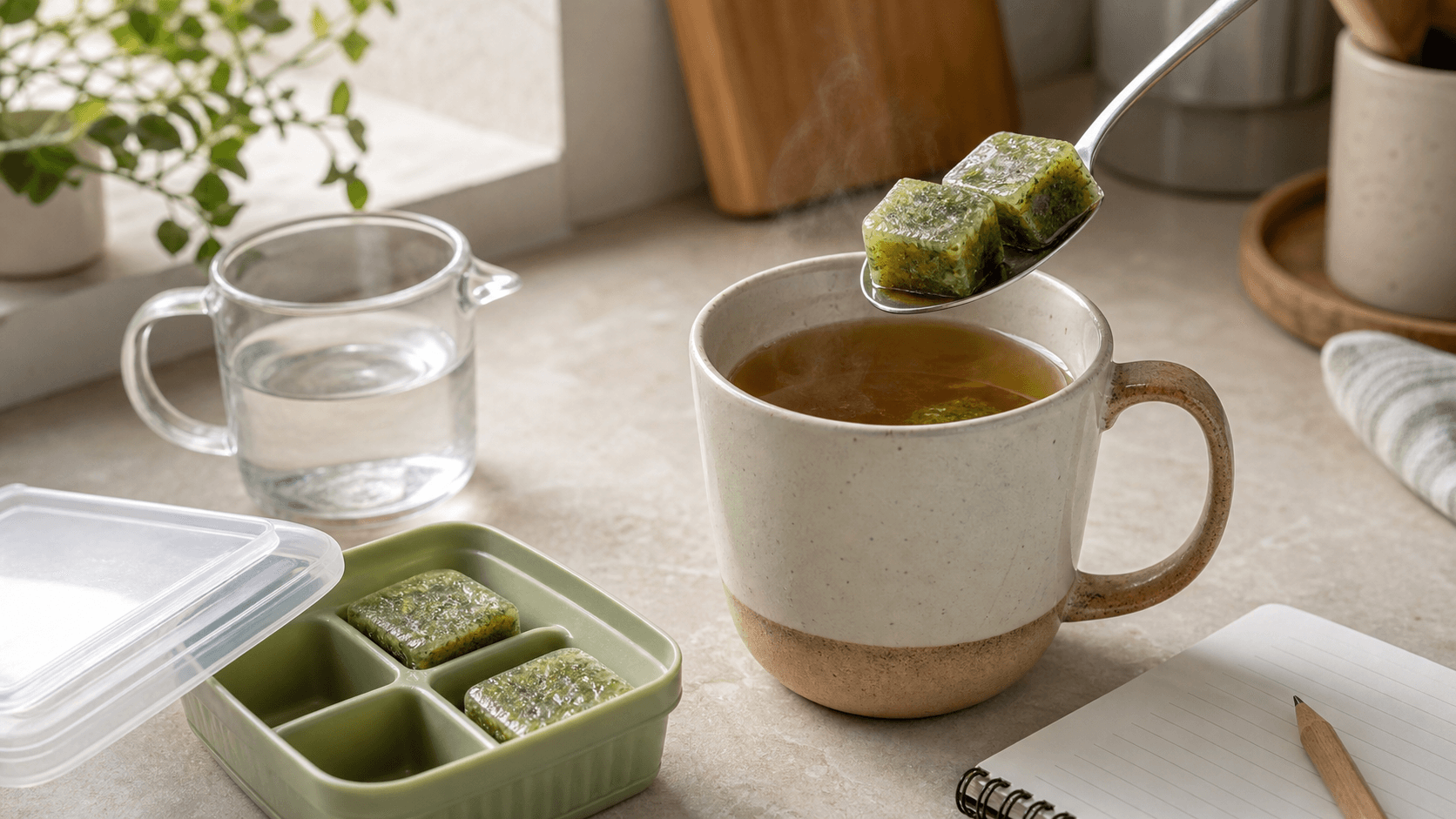
A frozen yerba mate cube can be added to a mug of hot water, but the number of cubes in a useful cup depends on the brew and the tray. There is no tested Yerba Melt serving direction here. If you make your own batch, measure what goes into it and what goes into the mug. That gives you a cup you can describe and adjust without pretending that every cube is the same size.
Begin with the batch you actually made
Record the dry yerba mate used, water added, brewing method, finished strained volume, and the tray used. If you did not record those, consider the cubes an unknown batch rather than assigning them a strength. Our cube-size and dilution worksheet shows how to measure your own tray. NIST's kitchen measurement guide explains how to read a liquid measure on a level surface at eye level; University of Nevada Extension's recipe guide explains why repeatable recipes need specified ingredients, amounts, and yield. Neither source establishes a mate-cube serving.
For a hot mug, write down the cube count or measured cube volume, then measure the hot water separately. Put the cubes in a sturdy mug on a clear counter, pour carefully without filling to the rim, and stir as they melt. Wait and check that the drink is comfortable to sip. Record any later water addition as part of the finished cup.
| Your mug record | Fill in from your own batch | What it tells you |
|---|---|---|
| Brew batch and tray | ______ | Which frozen portion you used |
| Cube count or measured cube volume | ______ | The portion added to this mug |
| Hot water added | ______ | How much you diluted the portion |
| Any extra water after tasting | ______ | The final preparation, not just the first pour |
| Finished taste and serving temperature | ______ | Your observation for the next cup |
These fields are a preparation record, not a caffeine calculation or a validated recipe. Cube color, taste, melt time, and water volume cannot establish caffeine per serving. See the hot-or-cold preparation guide for another way to compare finishes from one batch.
Handle it like any hot drink
The Washington State DSHS hot food and beverage alert identifies hot beverage spills as a scald hazard. Its caregiver guidance includes keeping hot drinks away from edges, avoiding overfilled cups, and using a spill-resistant lid when carrying one. At home, use a stable mug with stirring room and keep it away from the counter edge. A frozen cube does not make hot water safe to touch or guarantee a particular drinking temperature.
Keep storage claims separate from the mug method
For a homemade batch, use clean equipment and a covered freezer container. University of Minnesota Extension's current freezing guide discusses room for liquid expansion and covered, freezer-suitable packaging in the context of produce. It does not test brewed yerba mate cubes or give them a shelf life. The FDA's food-storage guidance also cautions that appearance, smell, and taste cannot by themselves establish food safety. A pleasant-tasting cup is therefore not a storage test.
If you want to compare a warm mug with an iced glass, keep the batch and measured portion the same and record each added liquid. The frozen yerba mate explainer covers the format; the freezer label guide helps keep batches distinct.
If a prepared cube would fit your routine, join the Yerba Melt waitlist and tell us how you would use it.
Sources
- https://www.nist.gov/pml/owm/metric-si/metric-kitchen/metric-kitchen-culinary-measurement-tips
- https://extension.unr.edu/publication.aspx?PubID=4643
- https://www.dshs.wa.gov/sites/default/files/DDA/dda/documents/Caregiver%20Alert%20Template%20-%20Hot.pdf
- https://extension.umn.edu/food/preparing/cooking-at-home/food-preservation/freezing
- https://www.fda.gov/consumers/consumer-updates/are-you-storing-food-safely