A freezer-quality observation card for yerba mate cubes
A blank freezer interruption log for recording batch identity, door history, thermometer readings, ice crystals, and the exact evidence behind the next decision.
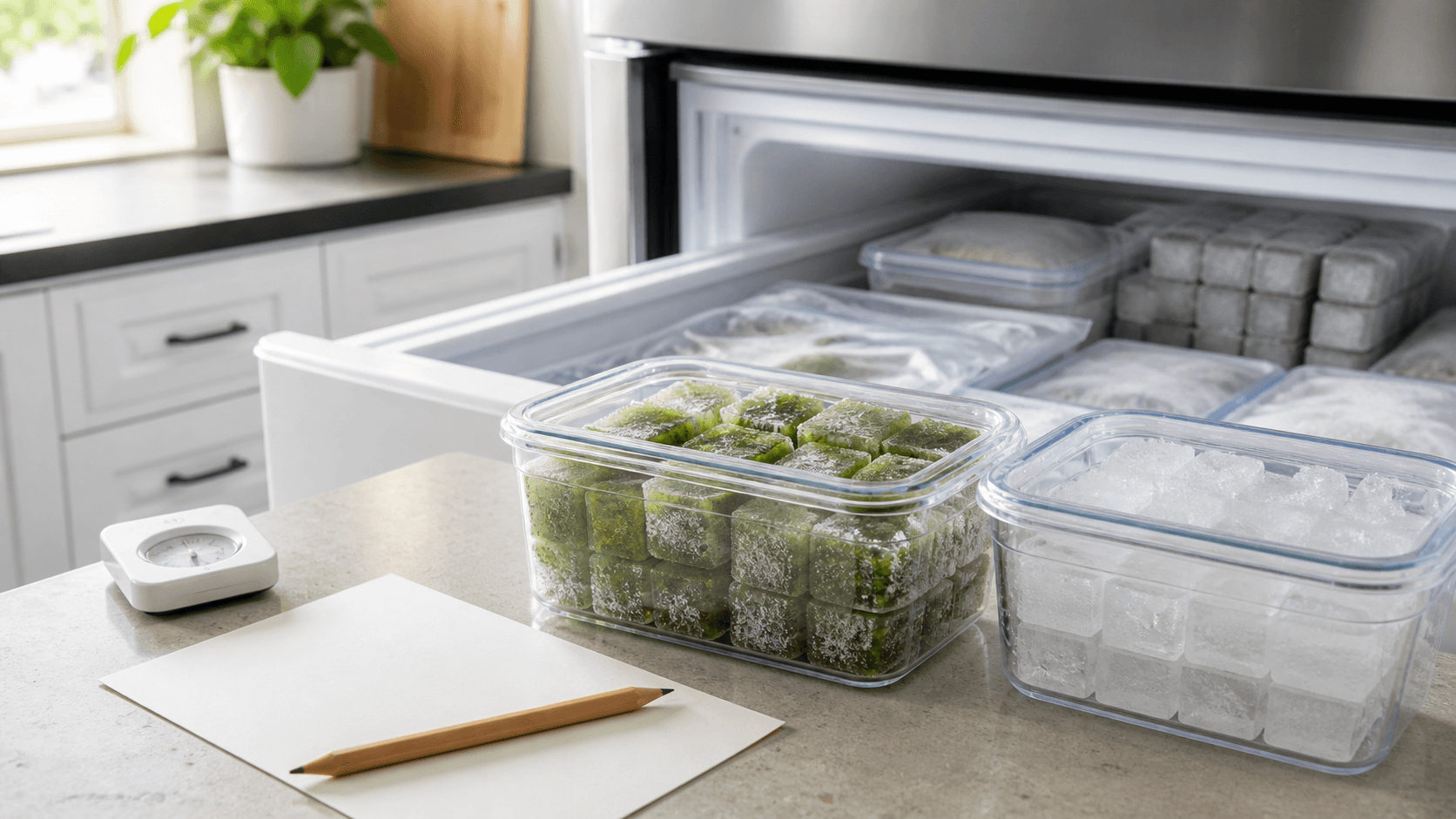
A freezer interruption creates a recordkeeping problem before it creates an answer. You may know when the power went out but not the temperature inside the freezer. You may see ice crystals but not know the recipe category that applies to the batch.
That is why this worksheet separates observations from decisions. It records what happened to one identified batch, what the appliance thermometer showed, and what remained unknown. It does not create a universal keep-or-discard rule for yerba mate cubes.
The distinction matters because a plain brewed-mate batch is not automatically interchangeable with cubes containing fruit, herbs, milk, or another addition. FoodSafety.gov's outage chart gives different instructions for some food categories, including fruit juice and vegetable juice. Use the guidance for the ingredients you actually froze, and seek local food-safety guidance when the category is uncertain.
Before an interruption: make the freezer readable
The FDA recommends keeping appliance thermometers in the refrigerator and freezer and checking that a freezer is at or below 0°F before an emergency. A thermometer reading after an interruption is more useful when it stays attached to an exact time and batch.
Record these fields when a batch goes into the freezer:
| Field | What to write down |
|---|---|
| Batch identity | Brew or product name, freeze date, and any added fruit, herbs, dairy, or other ingredients. |
| Container | Container type, closure, and where it sits in the freezer. |
| Appliance | Freezer make or model if known and where its manual can be found. |
| Thermometer | Thermometer location and the normal reading you observe. |
| Starting condition | Frozen solid, partly frozen, or another specific observation. |
During an outage or door-left-open event
Keep the freezer door closed as much as possible. FDA guidance says a full freezer can hold its temperature for approximately 48 hours, or about 24 hours when half full, if the door remains closed. Those estimates are context, not a substitute for a thermometer reading or an item-level check.
Use one row for each observation. Do not backfill a missing reading from memory.
| Time and time zone | Power or door status | Door opened? | Appliance thermometer | Batch or package temperature | Ice crystals present? | Source of the observation |
|---|---|---|---|---|---|---|
“Unknown” is a valid entry. It preserves the evidence boundary instead of turning an estimate into a measurement.
After power returns: evaluate the exact batch
FoodSafety.gov says never to taste food to determine its safety and to evaluate each item separately. Its frozen-food guidance uses ice crystals and a temperature of 40°F or below as important evidence, but its chart still applies category-specific instructions.
Complete this card before deciding what guidance matches the batch:
| Decision field | Your record |
|---|---|
| Exact batch and full ingredient list | |
| Power restored at | |
| Freezer thermometer reading and time | |
| Batch/package thermometer reading and time, if measured | |
| Ice crystals: present, absent, or unknown | |
| Door-open history | |
| Estimated freezer fullness | |
| Matching FoodSafety.gov category, if clear | |
| Exact guidance or qualified person consulted | |
| Decision and time | |
| Evidence still missing |
Do not use color, odor, taste, or a tidy-looking cube as proof of safety. Do not assume plain mate, fruit-flavored cubes, vegetable blends, or milk-based cubes share one rule. If you cannot match the full formulation to appropriate guidance, keep that uncertainty visible and ask a local health department, Extension food-safety specialist, or another qualified authority about the exact ingredients and temperature history.
Keep safety and quality notes separate
After the applicable safety decision has already been made, a separate quality note can help with future freezer tests. Record frost, stuck cubes, texture after melting, or freezer odor as quality observations only. They cannot reconstruct an unknown temperature history or establish a mate-cube shelf life.
This worksheet also says nothing about caffeine retention, serving size, or a recommended cube count. Those questions need their own measurements and evidence.
For the broader freezing workflow, read can you freeze brewed yerba mate?. The freezer inventory helps keep batch identities visible, and the freezer label guide gives each batch a durable name.
A future Yerba Melt product should do more than a home worksheet: define its full formulation, package, tested storage conditions, and interruption instructions. If those details matter to you, join the waitlist and tell us what you would want printed most clearly.