Does cold yerba mate have caffeine?
A measurement-first guide to caffeine in cold yerba mate, with the variables that matter for iced mate, cold brew, terere-style prep, and frozen cubes.
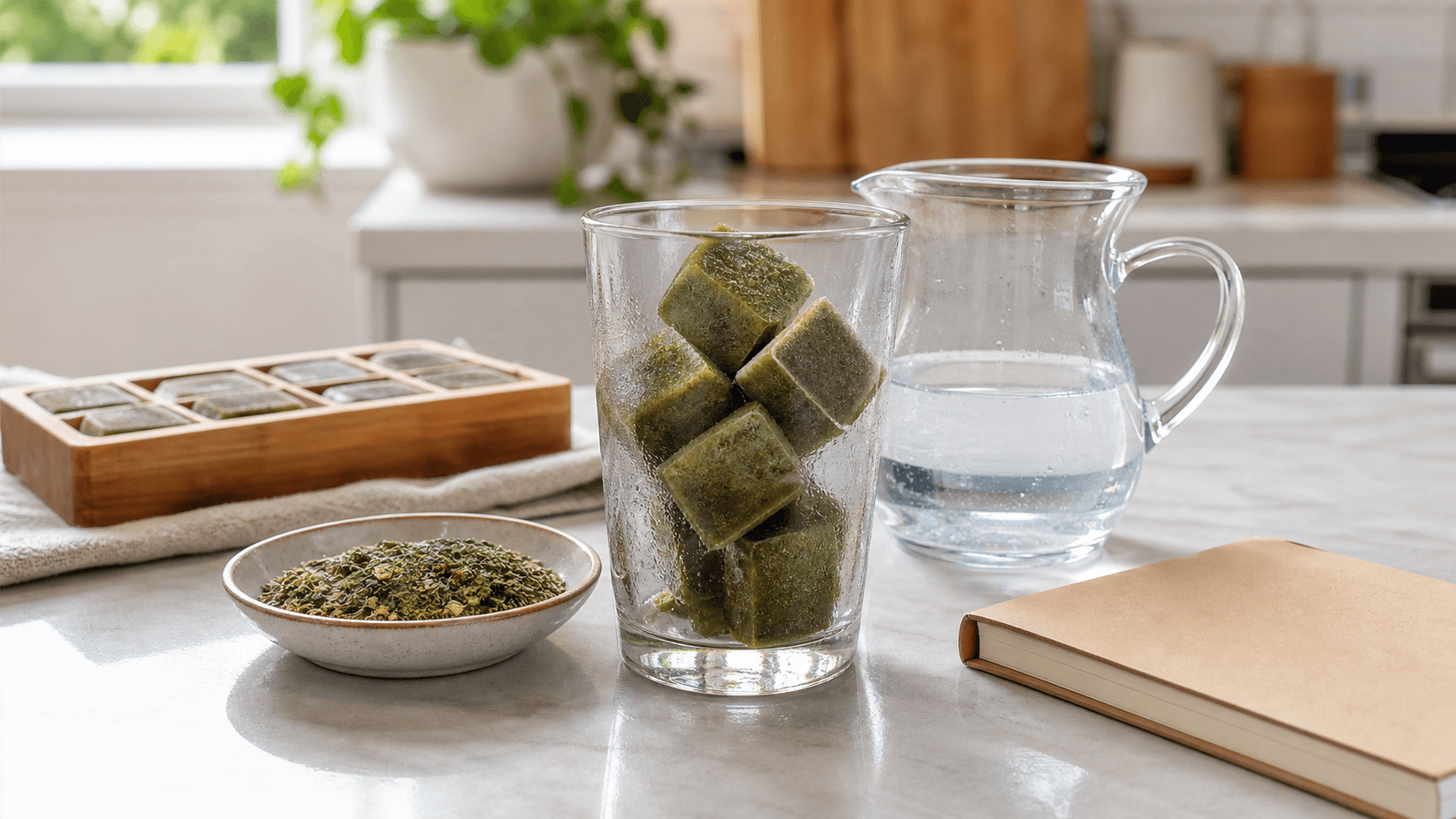
Yes. Cold yerba mate can have caffeine because yerba mate naturally contains caffeine. The part that needs care is the number.
A cold glass does not tell you how much caffeine is in the drink by itself. The answer depends on the leaves, water amount, steep time, temperature, serving size, dilution, and whether the product is homemade or clearly labeled.
That is why this guide avoids per-cube estimates. It is a practical way to think about caffeine in cold mate before Yerba Melt has a final tested formula.
The short answer
Cold preparation does not turn yerba mate into a caffeine-free drink. It changes the method.
| Cold mate format | What it means for caffeine |
|---|---|
| Iced yerba mate | Usually starts with brewed mate, then gets cooled, chilled, or poured over ice. The brew strength and final glass size matter. |
| Cold brew mate | Steeps in cold water over time. Leaf amount, water amount, and steep time are the useful variables to track. |
| Terere-style cold mate | Cold water is poured over yerba mate, often in repeated pours. The total drink pattern can vary a lot. |
| Frozen mate cubes | Prepared mate is portioned before freezing. The cube only has a useful caffeine number after the formula and serving size are tested. |
For a homemade glass, the best label is not a borrowed caffeine claim. It is a repeatable batch note.
Why the number varies
Yerba mate behaves more like tea than a sealed can. The ingredient contains caffeine, but the finished serving is shaped by preparation.
Track these variables before comparing one glass with another:
| Variable | Why it changes the final glass |
|---|---|
| Leaf amount | More dry mate in the batch can make the drink stronger. |
| Water amount | The same mate in more water will taste and measure differently than a small concentrate. |
| Steep time | A quick steep and a long steep are not the same batch. |
| Temperature | Hot, warm, and cold methods can produce different flavor and extraction patterns. |
| Straining and dilution | Ice, water, sparkling water, lemonade, or milk can change the prepared serving size. |
| Cube size | A small cube and a large cube are not interchangeable unless the recipe controls the pour. |
This is the reason Yerba Melt copy should stay conservative. A final product can publish tested caffeine per cube and per prepared serving. A home experiment should not pretend it has that precision.
What official caffeine sources are useful for
The FDA's consumer caffeine guidance is useful as broad context. It notes that caffeine amounts vary by product and container size, and that many packaged foods and beverages voluntarily provide caffeine amounts on labels.
Mayo Clinic gives the same practical reminder: caffeine content in drinks varies widely. That is enough to support a measurement-first article, but it is not enough to assign a single number to every cold mate glass.
In 2026, FDA food-program pages also list caffeine labeling as an active guidance topic. That makes clear labeling a timely consumer issue, but it does not change the basic rule for Yerba Melt: publish product-specific caffeine numbers only after the final cube is tested.
A better homemade batch note
If you make cold mate at home, write down the things you actually know.
| Batch note | Example |
|---|---|
| Method | Cold brew in a jar, strained after steeping |
| Mate amount | Your measured spoon, scoop, or gram weight |
| Water amount | The batch size before serving |
| Time | Short steep, overnight steep, or your exact time |
| Serving | 8 ounces over ice, 3 cubes in water, or another repeatable glass |
| Taste | Light, strong, bitter, balanced, needs citrus, or better diluted |
That note will not replace lab testing, but it will help you repeat the glass you liked.
What Yerba Melt should label later
A ready-made frozen cube has a higher responsibility than a home batch. The public label should make the serving clear.
| Label question | Why it matters |
|---|---|
| How many cubes make one serving? | A cube count is easier to follow than a vague scoop. |
| How much liquid should be added? | The same cube can taste different in a small mug and a tall glass. |
| How much caffeine is in a cube? | The number needs to come from the final tested formula. |
| How much caffeine is in the prepared serving? | People compare finished drinks, not only ingredients. |
| Is the drink meant for hot or cold prep? | The instructions should match the tested use case. |
This is also why the waitlist stage matters. Flavor, cube size, dilution, and label clarity should be tested together.
Where frozen cubes fit
Frozen cubes are useful because they move preparation upstream. They do not make caffeine simpler by magic.
The honest product promise is practical: keep yerba mate prepped, portioned, frozen, and easy to finish hot or iced. The responsible caffeine promise comes later, after the formula is final and the label can state the serving plainly.
If you care about that label being clear from day one, join the waitlist and tell us how you would prepare the first cube.
Sources
- https://www.fda.gov/consumers/consumer-updates/spilling-beans-how-much-caffeine-too-much
- https://www.mayoclinic.org/healthy-lifestyle/nutrition-and-healthy-eating/in-depth/caffeine/art-20045678
- https://www.fda.gov/food/guidance-documents-regulatory-information-topic-food-and-dietary-supplements/foods-program-guidance-under-development
- https://www.fda.gov/about-fda/human-foods-program/human-foods-program-2026-priority-deliverables