Best trays and containers for yerba mate cubes
A practical tray and container checklist for freezing yerba mate cubes at home, with notes on cube size, lids, freezer fit, labeling, and clean release.
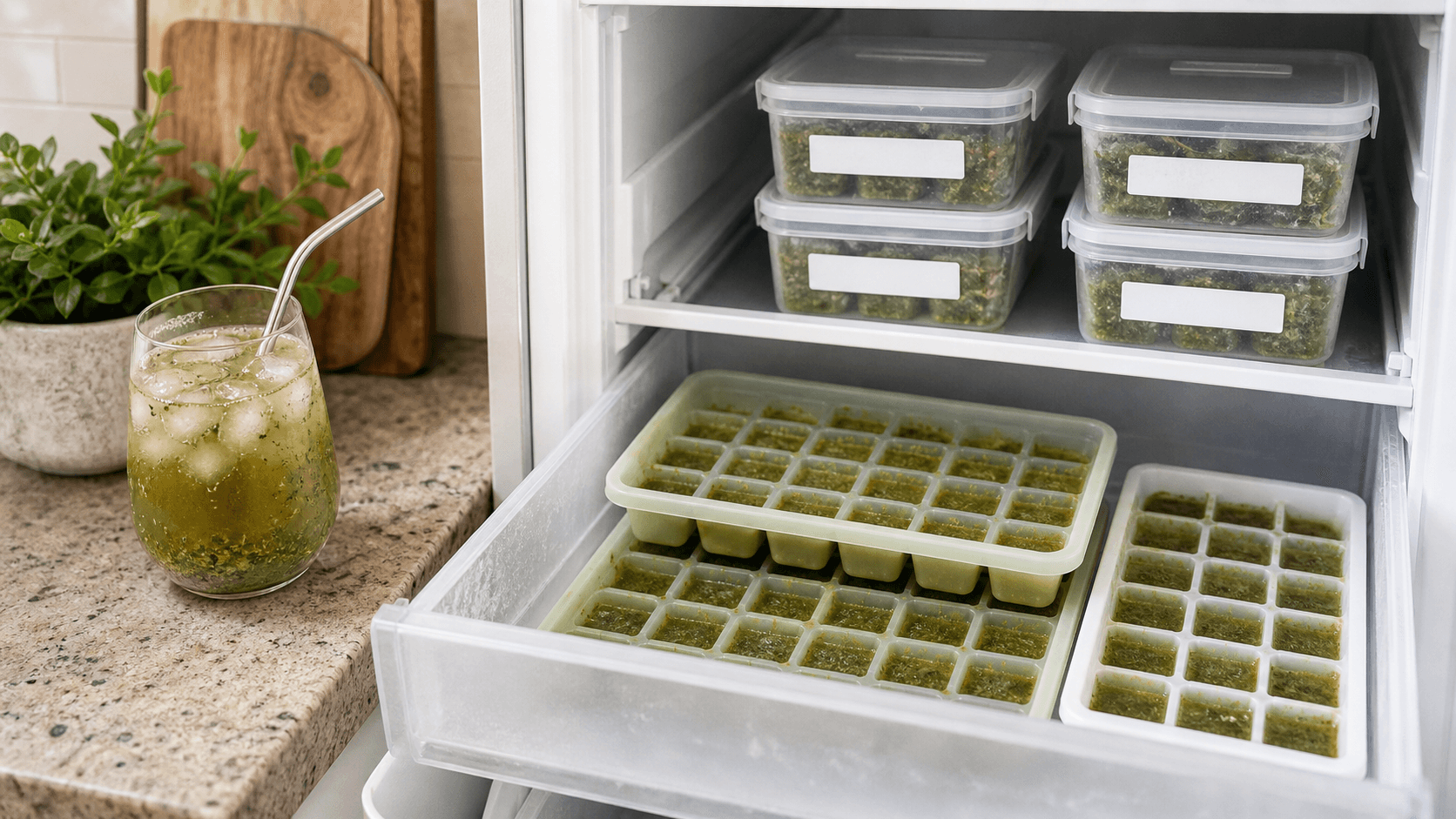
The best tray for yerba mate cubes is not necessarily the fanciest tray. It is the tray that gives you a repeatable cube size, fits your freezer, releases cleanly, and lets you cover or move the cubes into a sealed container.
That matters because mate cubes are only useful if the second batch is easier than the first. If the tray spills on the way to the freezer, takes up too much space, or makes cubes that taste like the freezer, the routine breaks.
This is an equipment and workflow guide, not a product ranking. Use it to choose a setup that makes homemade mate cubes easier to test.
Start with cube size
Cube size controls the finished glass more than people expect. A small cube melts faster and gives you finer control. A large cube can be useful for a slower drink, but it may be harder to count, melt, or fit into a narrow glass.
| Tray choice | Best fit | Watch for |
|---|---|---|
| Standard small cubes | Testing different cube counts in water, lemonade, or sparkling water. | Very small cubes can be fiddly to move into a container. |
| Larger cocktail-style cubes | A slower-melting cold glass or a stronger cube test. | One cube can change the drink a lot, so repeatability matters. |
| Narrow bottle cubes | Tumblers, bottles, or office bottles with smaller openings. | The shape may be less useful for mugs or wide glasses. |
| Flexible silicone molds | Easy release and unusual shapes. | Flexible trays can wobble when full and may need a firm base. |
For a homemade yerba mate batch, repeatability beats novelty. If you want to compare plain, lemon, mint, and berry batches, use the same tray style across tests.
Choose a tray you can carry full
Mate cubes start as liquid, so the tray has to survive the walk from counter to freezer.
A good tray for this use should be:
- stable when full
- easy to fill evenly
- small enough to place flat in your freezer
- easy to release without running every cube under water
- simple to wash before the next batch
Serious Eats' ice cube tray testing uses similar practical criteria: filling, carrying, release, freezer fit, taste, and cleanup. For mate cubes, those criteria are more useful than a brand recommendation because freezer layouts and drink habits vary.
Lids and containers matter
Yerba mate has its own flavor. You do not want the cubes picking up freezer odor or sitting uncovered beside other frozen foods.
FDA consumer storage guidance says a freezer should be kept at 0 F (-18 C). FoodSafety.gov's cold storage chart separates freezer storage from quality over time. For a drink cube, the quality question is usually taste: did the batch stay covered, and does the finished glass still taste clean?
Use this simple storage system:
| Stage | Better setup | Why it helps |
|---|---|---|
| Freezing liquid | A tray with a lid, or a tray placed carefully on a flat shelf. | Reduces spills and keeps the tray stackable. |
| After cubes are solid | A sealed freezer-safe container or bag. | Helps protect flavor and frees the tray for the next batch. |
| Multiple flavors | Separate containers with blank labels. | Keeps plain, citrus, mint, and stronger brews from blending together. |
| Repeating a batch | Same tray, same cube count, same container note. | Makes a good glass easier to make again. |
The lid does not need to be complicated. It just needs to fit well enough for your freezer routine.
What to write on the container
The container label is part of the tray decision. If a tray makes 14 small cubes and you usually use 3 cubes in a glass, that is useful information. If the next tray makes 6 large cubes, the old note will not translate cleanly.
Write four things:
| Label field | Example |
|---|---|
| Date | 2026-07-07 |
| Brew style | Usual hot brew, cooled before freezing |
| Cube count | 3 small cubes per glass |
| Flavor note | Plain, good with lemon, needs more water |
The freezer label guide has a fuller batch-card system, but a short label is enough for most home tests.
Plastic, silicone, or metal?
Each material has tradeoffs. The right answer is the one that works in your freezer and cleans up well after tea-like liquid.
| Material | Why people use it | Mate-cube tradeoff |
|---|---|---|
| Silicone | Flexible release and many shapes. | Can be wobbly when full, so a firm tray or shelf helps. |
| Rigid plastic | Often stackable and easy to carry. | Release can vary by design, and older trays can crack. |
| Metal | Durable and less flexible. | Release can be less familiar, and lids are less common. |
If you are testing homemade cubes, start with function: stable, covered, repeatable, and easy to clean.
Where a ready-made cube changes the problem
DIY trays are useful for learning the format, but they still ask you to brew, cool, pour, freeze, cover, label, release, store, and wash.
That is where a ready-made Yerba Melt cube should be different. The product should arrive portioned, clearly labeled, and easy to finish hot or iced. Until the final formula is tested, the public promise should stay practical: a freezer-stored caffeinated yerba mate format with clearer prep and less loose-leaf work at the point of use.
If you are testing cubes at home now, choose the tray that makes your notes easier to trust. The right setup is the one that helps you make the same glass twice.